Uganda & Rwanda: Three Treks, One Redemption
Six years ago in Uganda, I was carried down a mountain.
Not metaphorically. Literally.
My legs had stopped working somewhere on the descent from an eight-hour gorilla trek in Bwindi Impenetrable Forest, and two porters slipped under my arms to guide me the rest of the way down.
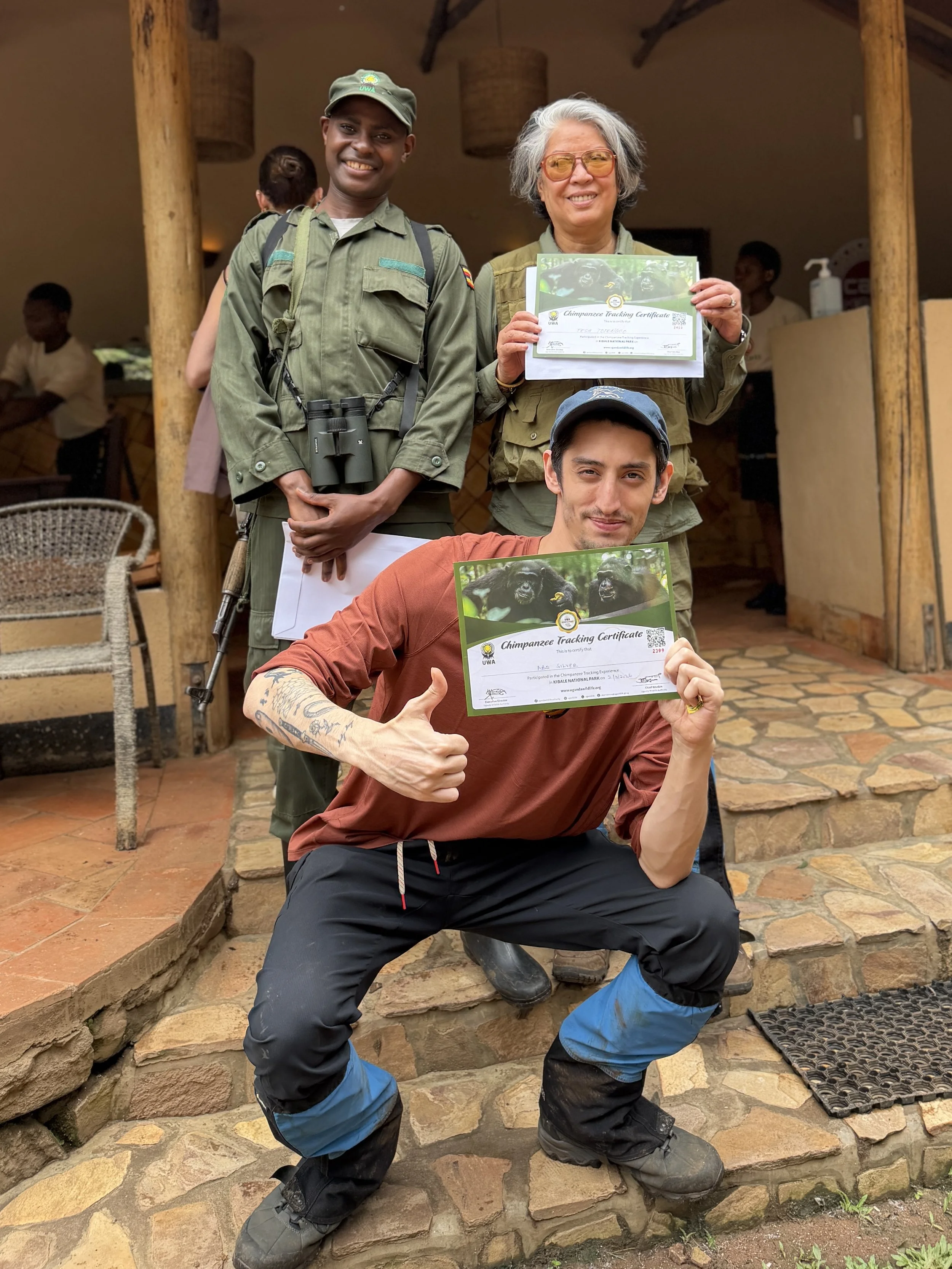
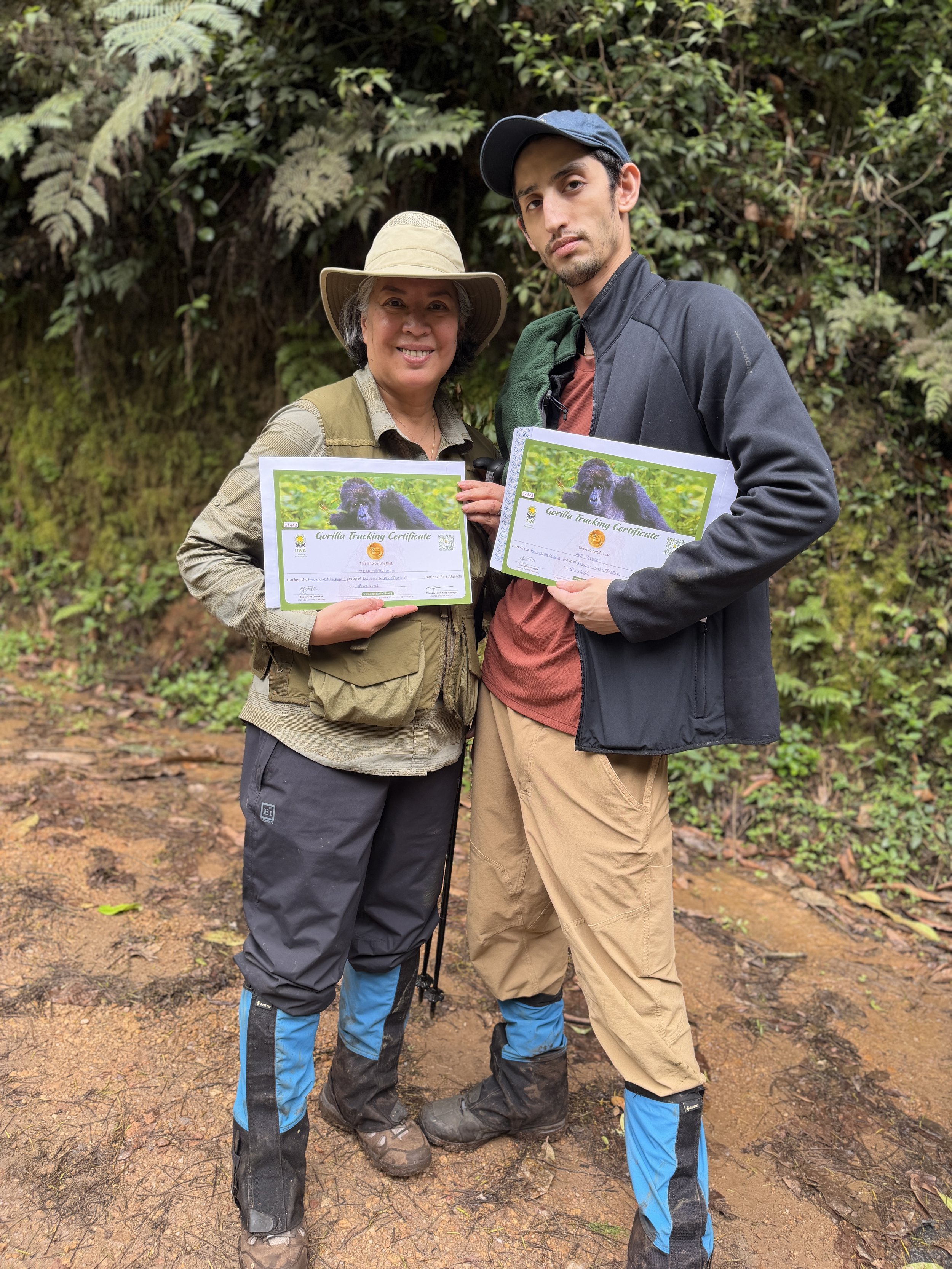
When we reached the trailhead where certificates are handed out, I asked them to let me walk the last few steps alone—to salvage what little dignity I had left.
Back at the lodge, people asked how it went. I raised my hand to signal: please don’t ask. I sat on the stairs while someone removed my boots, and then I burst into tears.
In that moment I understood why marathon runners cry at the finish line. When your body and spirit have been pushed beyond their limits, sometimes the only response left is release.
I swore I would never do it again.
And yet—six years later—here I was.
This time with my son Abe, who is turning thirty this year and visiting Africa for the first time. I wanted him to experience the wonder of this place. And perhaps, quietly, I also wanted redemption.
As if one trek weren’t ambitious enough, I signed up to track gorillas in both Uganda and Rwanda.
By the end of this journey, I would complete my third gorilla trek.
“Sometimes the only way through the mountain is forward.”
A Return to the Forest
This trip also introduced me to the story of Praveen Moman, founder of Volcanoes Safaris, whom I met in New York in May 2025.
Born and raised in Uganda, Moman spent his childhood exploring the wilderness with his father, who worked in the British colonial administration. In 1972, when Idi Amin ordered the expulsion of Uganda’s Asian community, his family—like tens of thousands of others—was forced to flee to the United Kingdom.
Years later, after a career in the British government and European Union, Moman returned to East Africa. Drawn back by memories of the landscapes he had known as a child, he founded Volcanoes Safaris in the late 1990s, helping revive gorilla tourism in Uganda and Rwanda through a model built around conservation, community partnerships, and small eco-lodges.
What struck me most when I met him was that Volcanoes Safaris isn’t simply a safari company—it’s a return home.
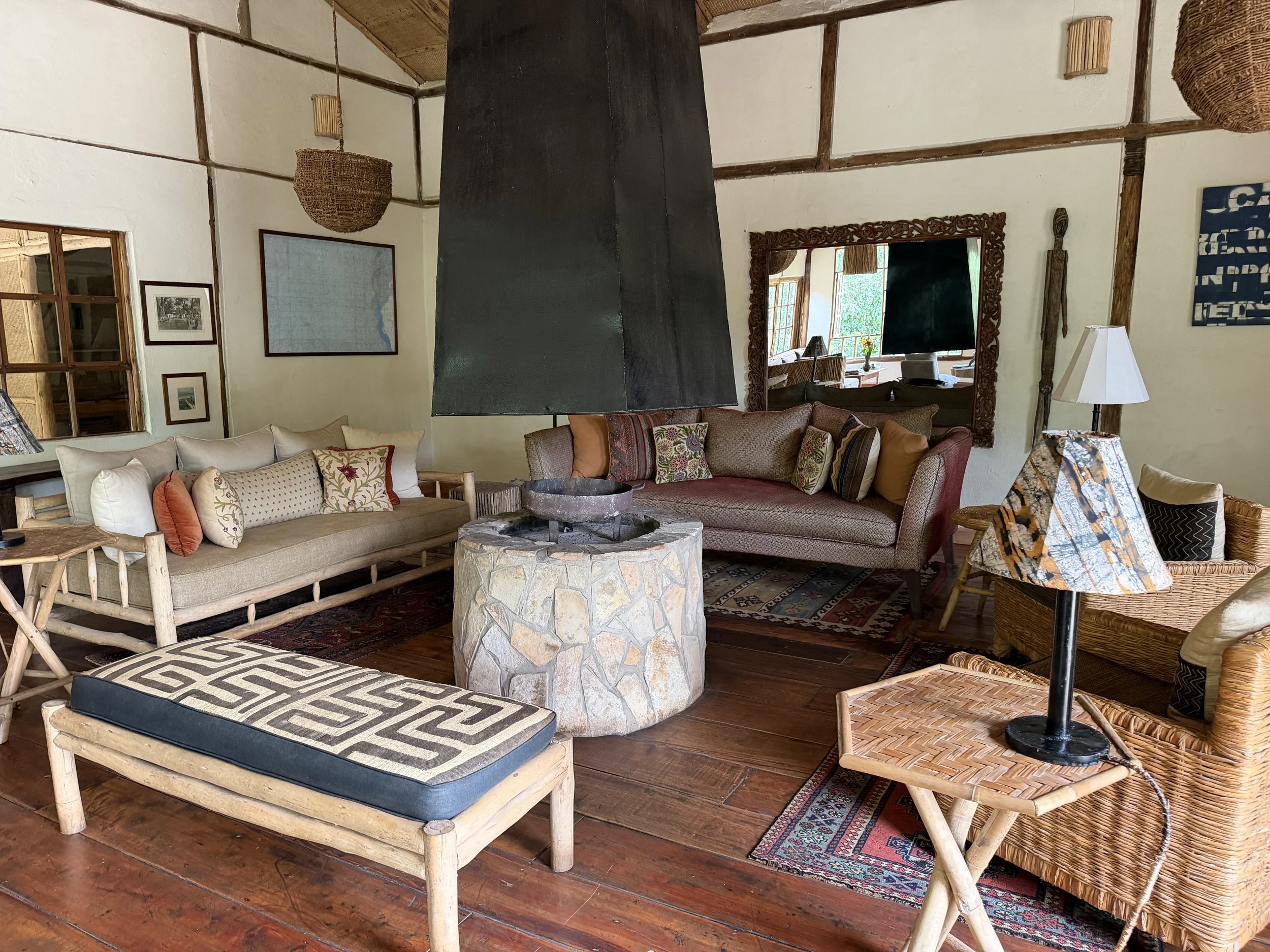
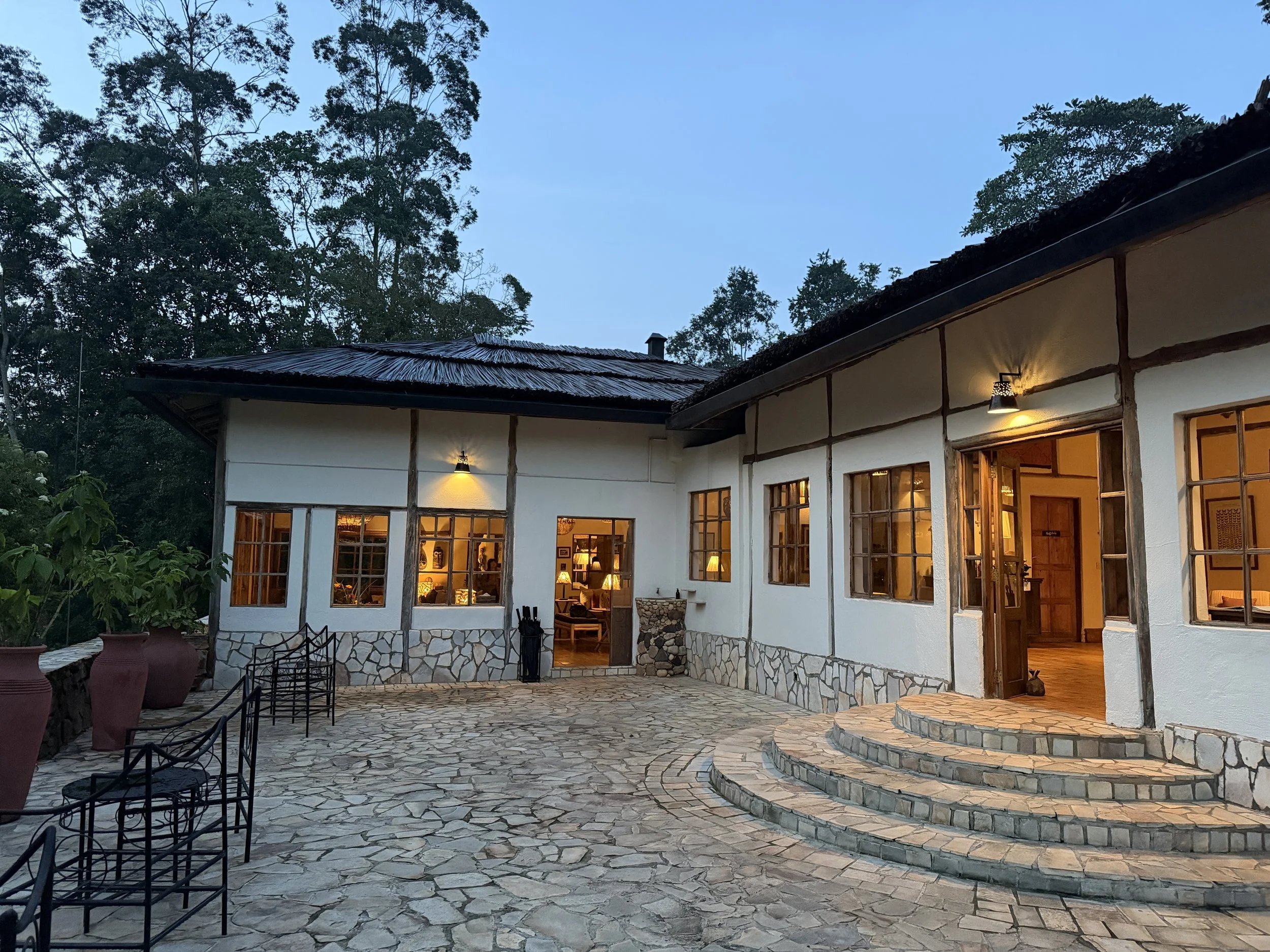
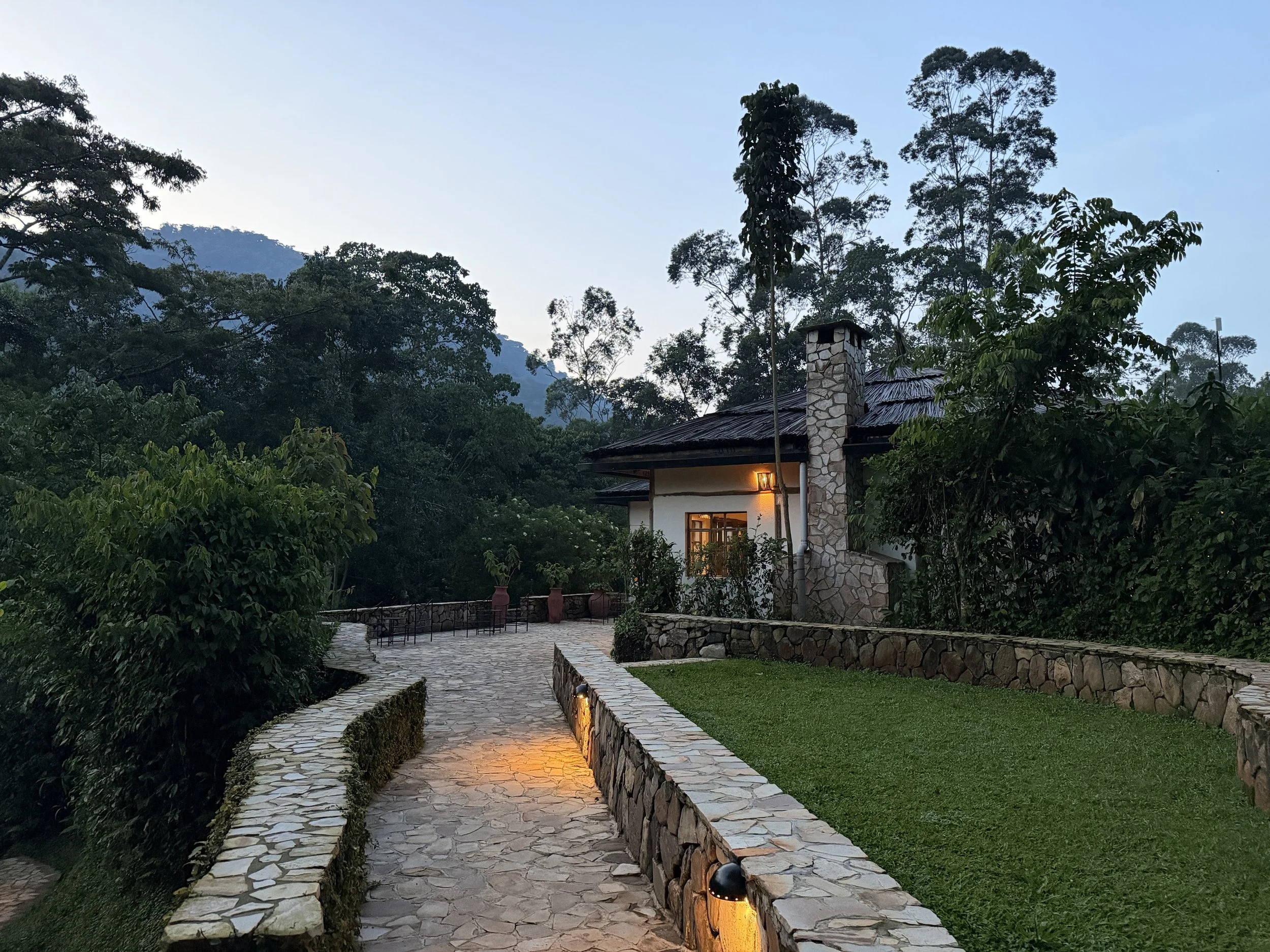
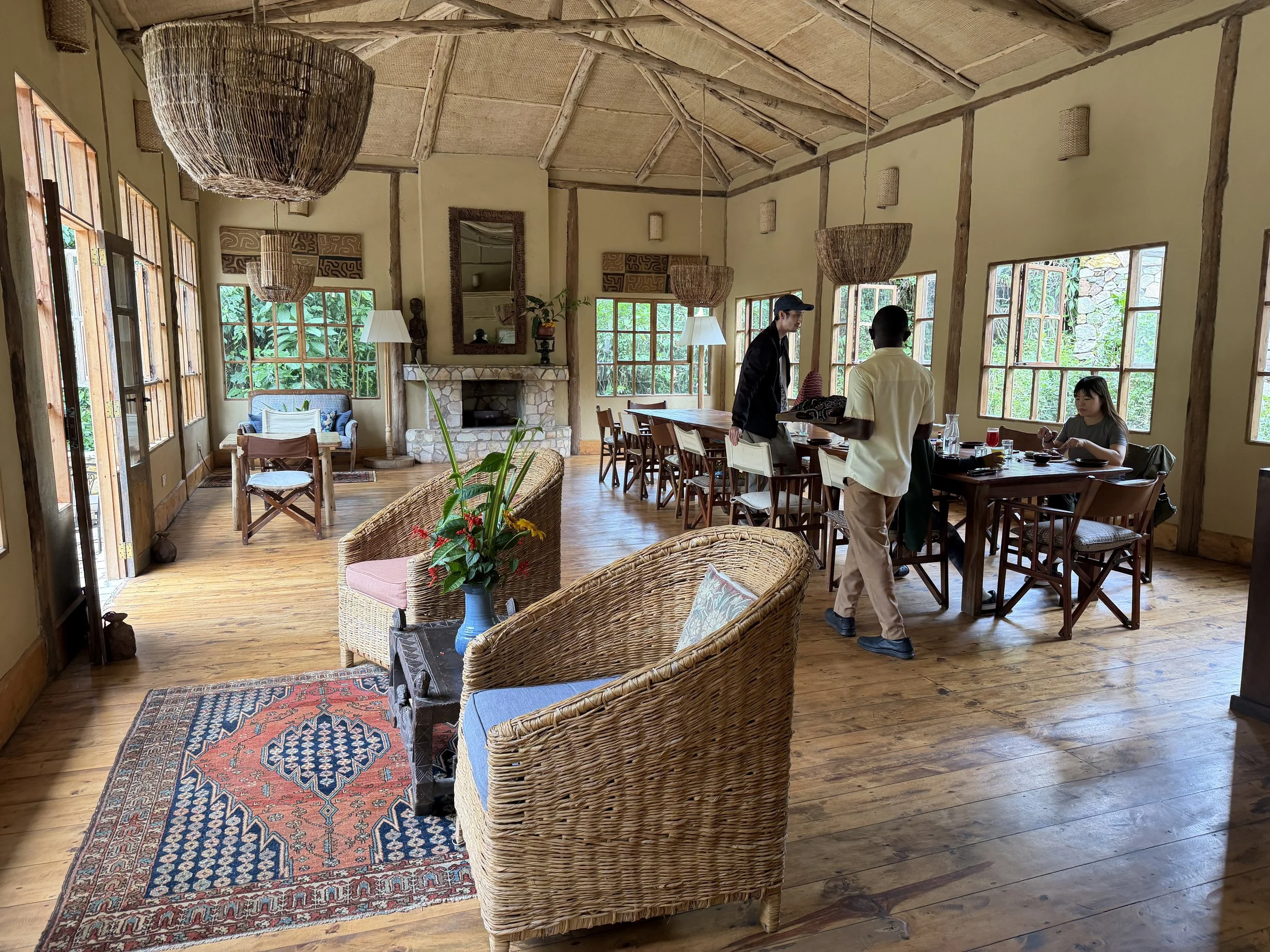
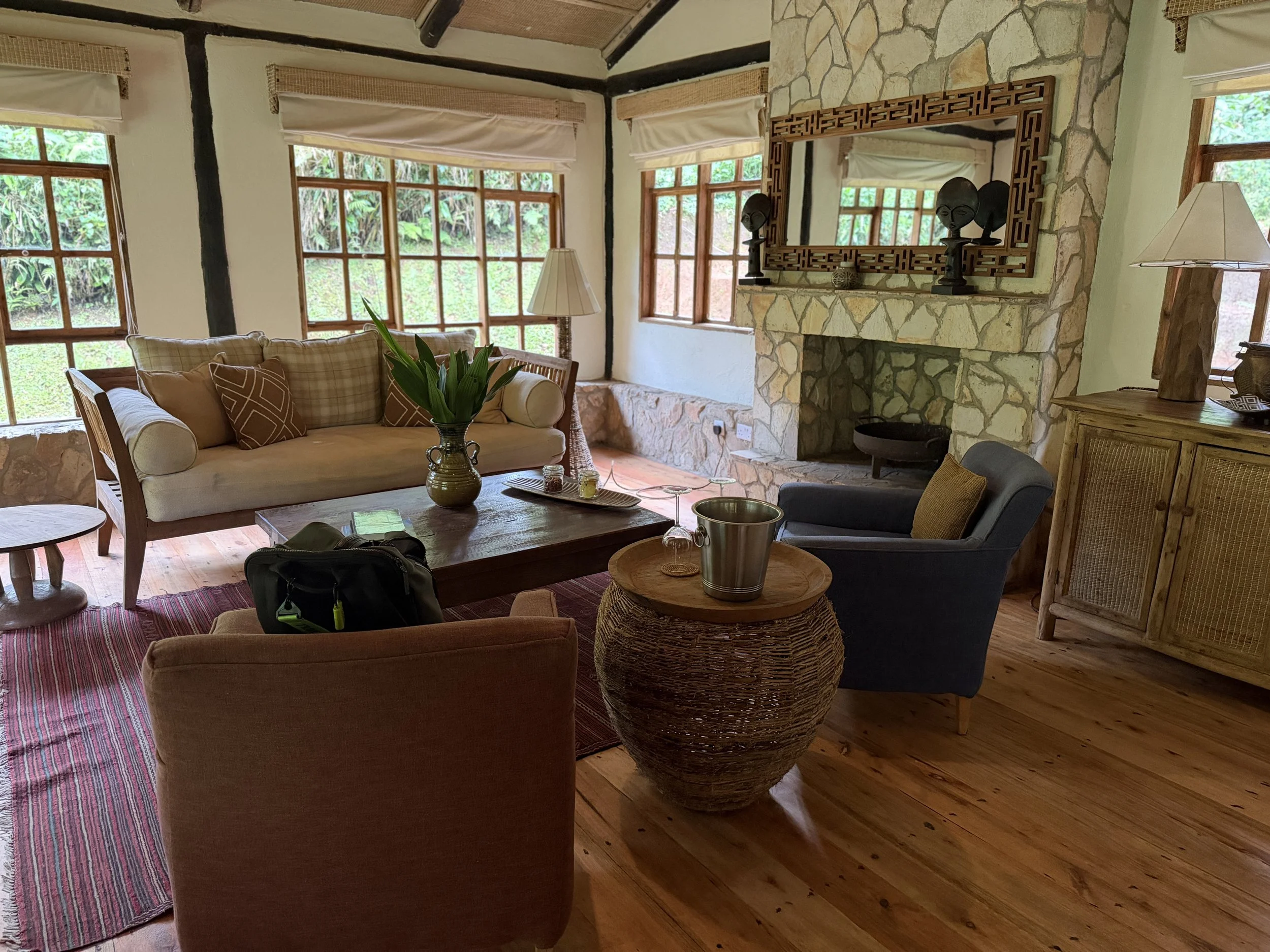
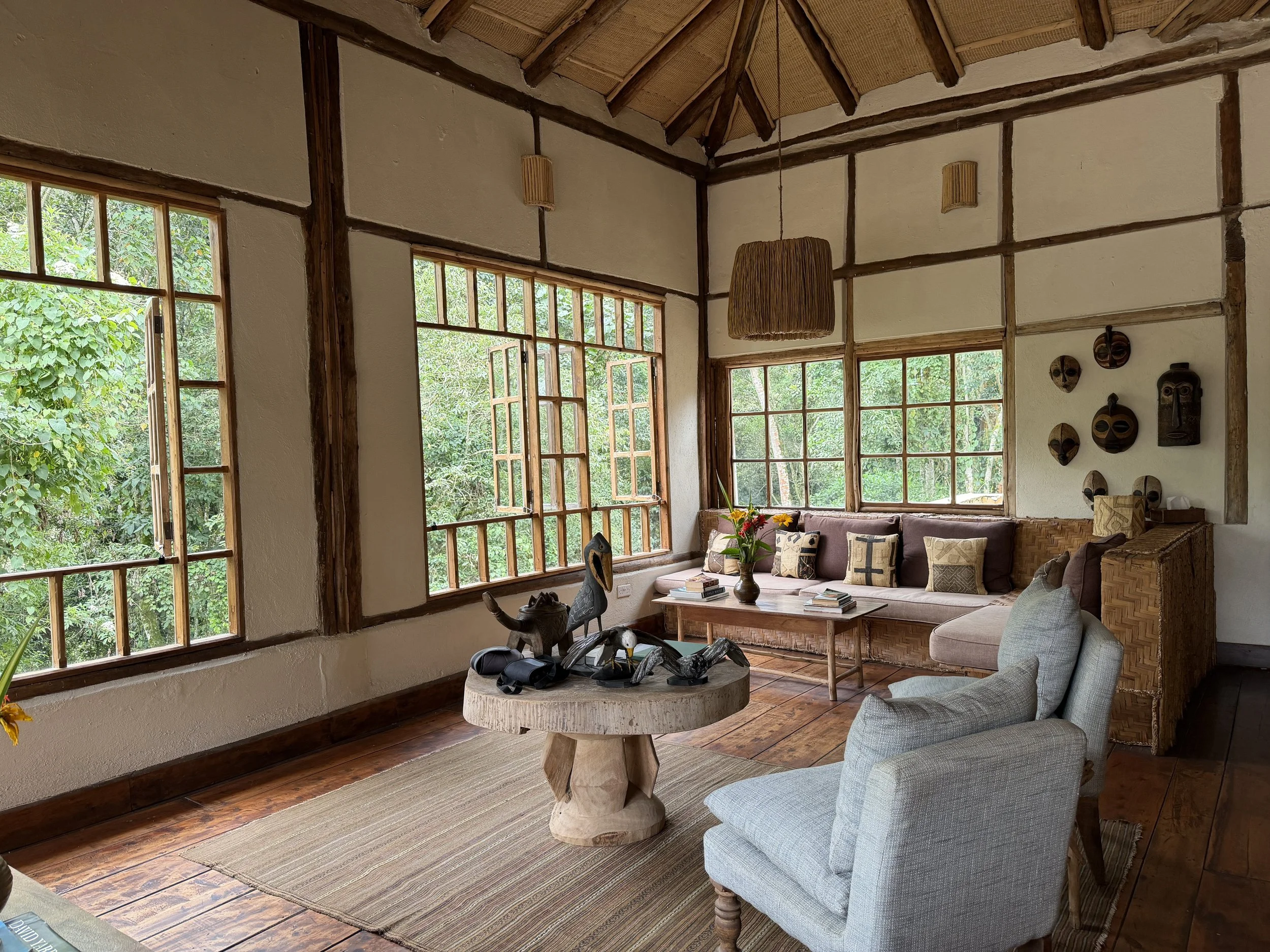
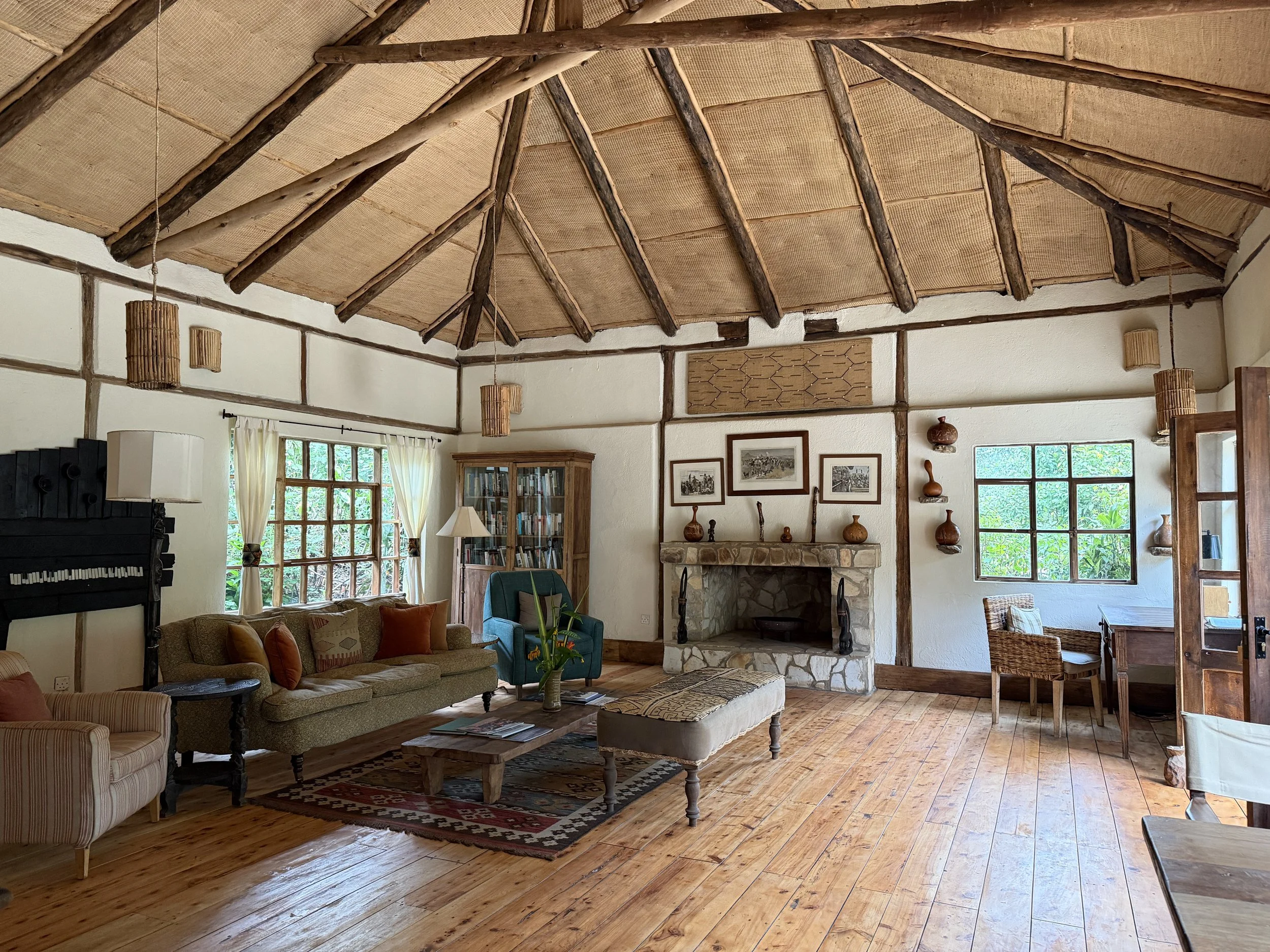
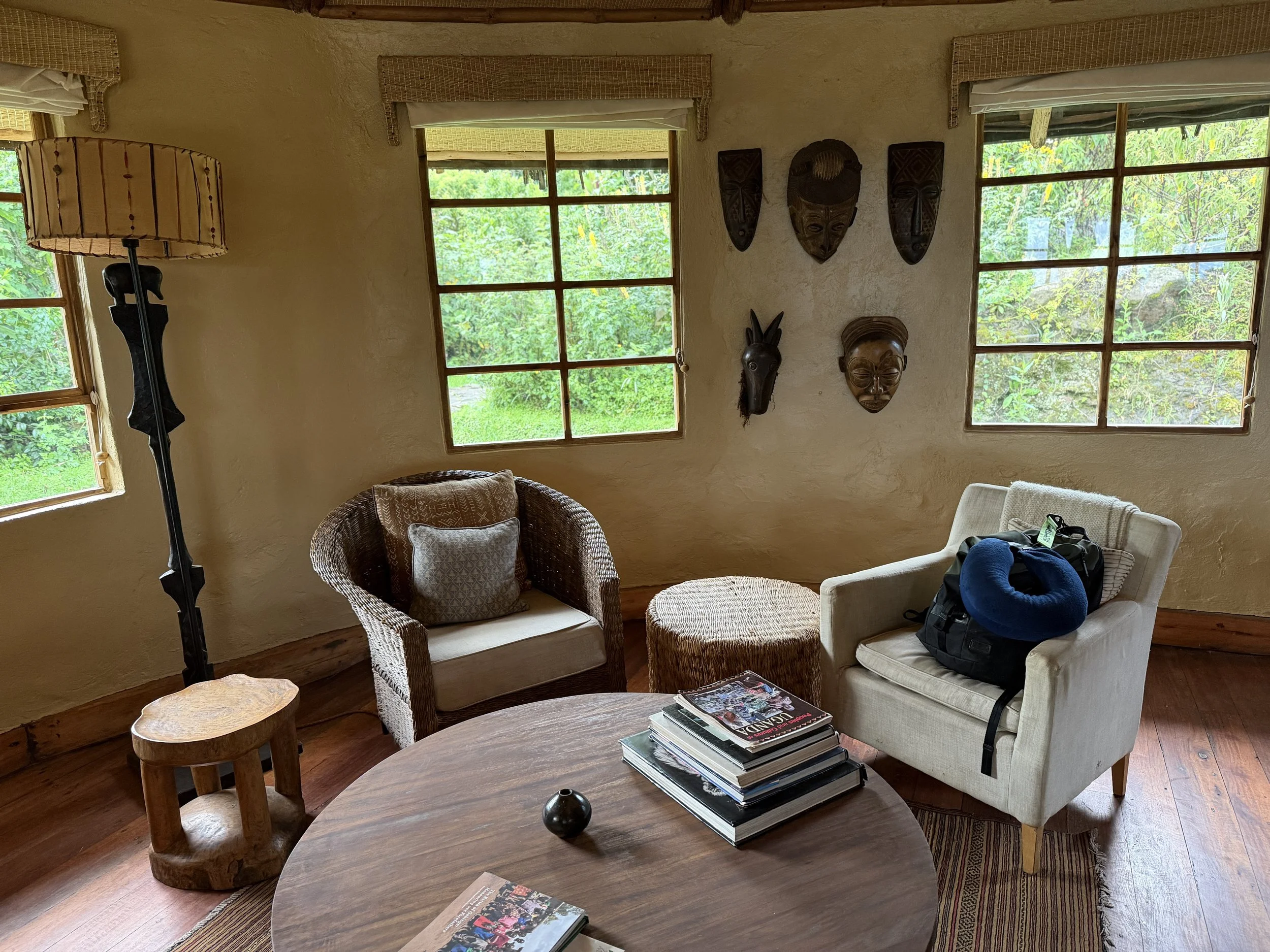
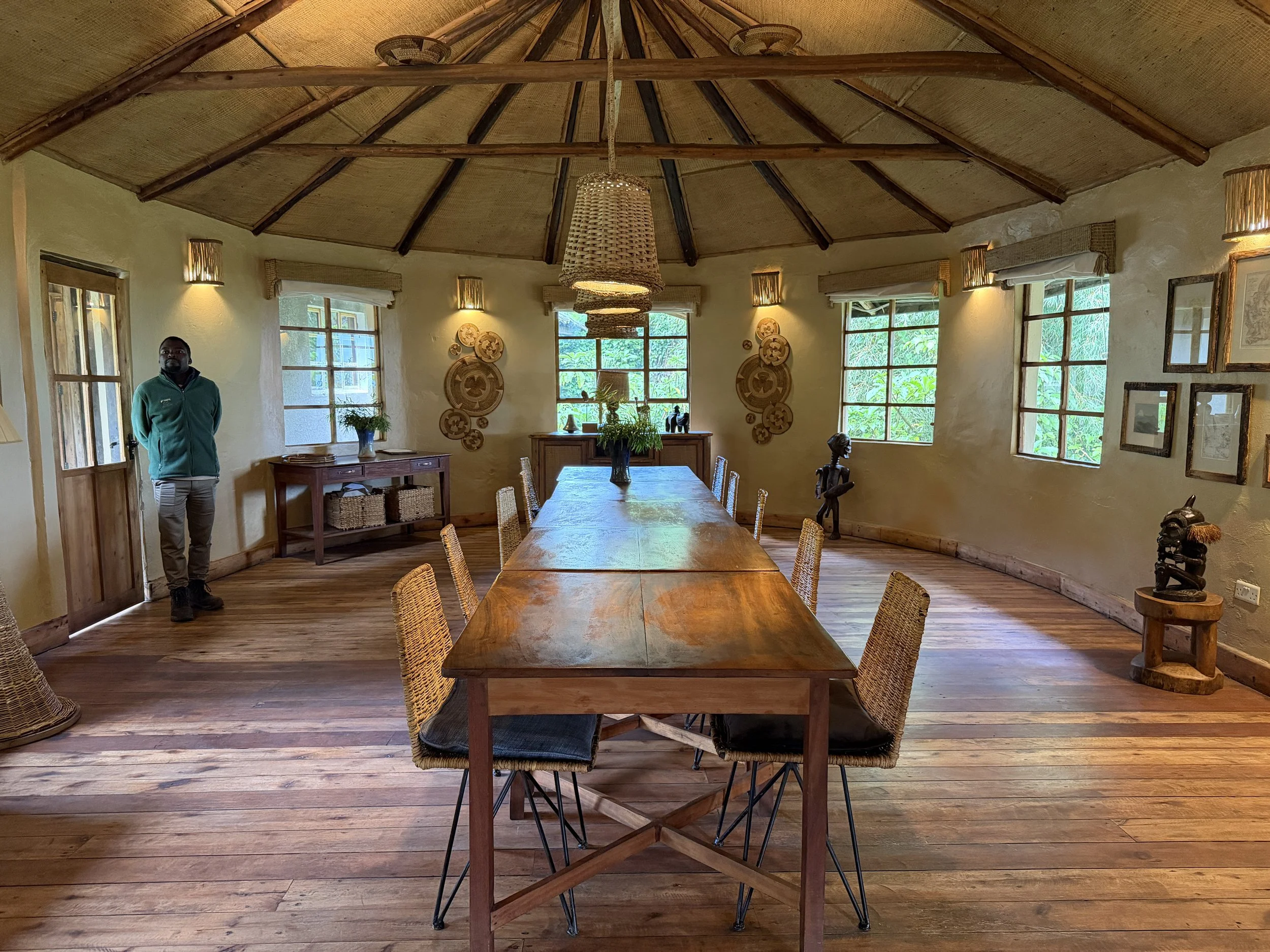
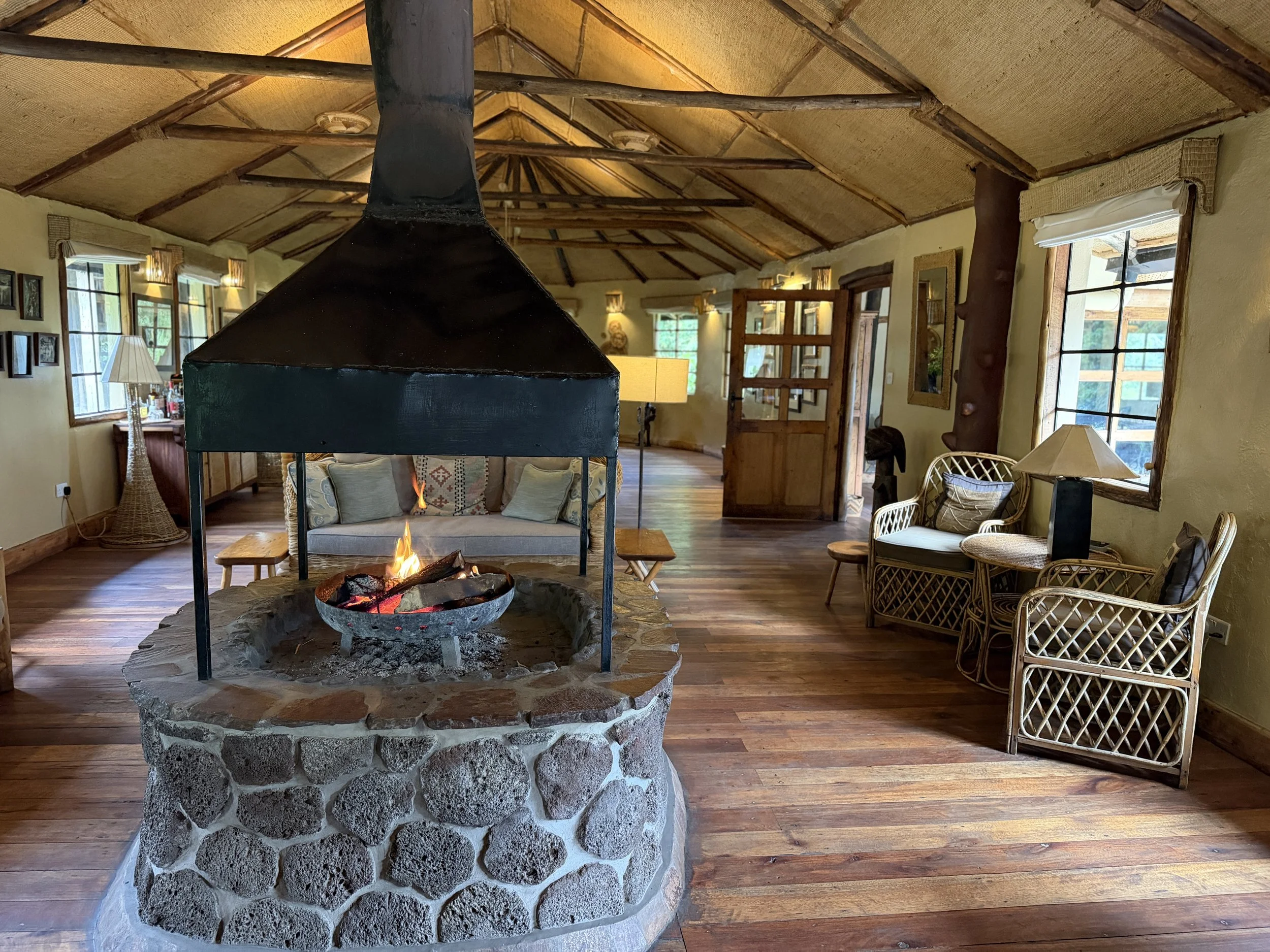
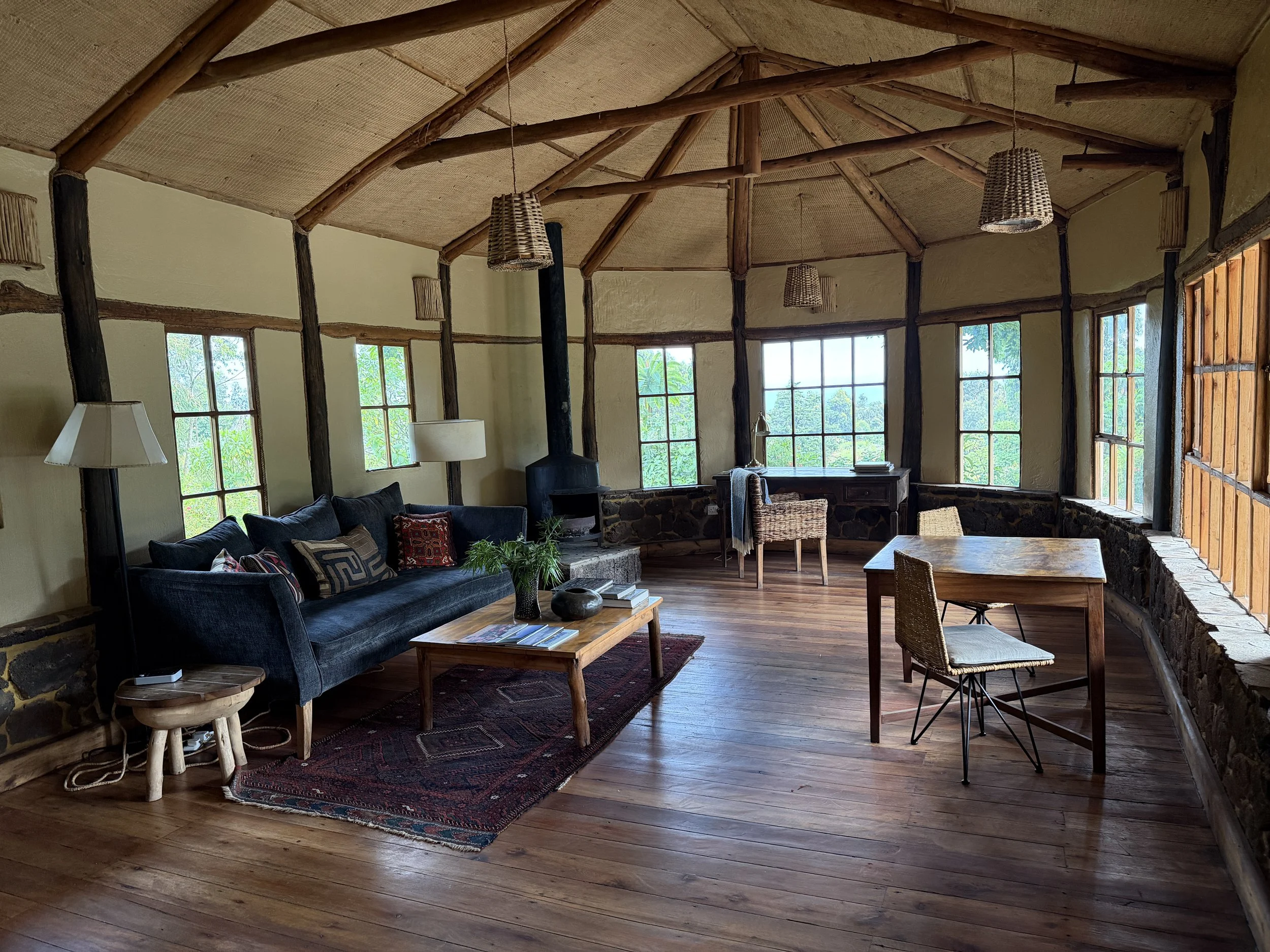
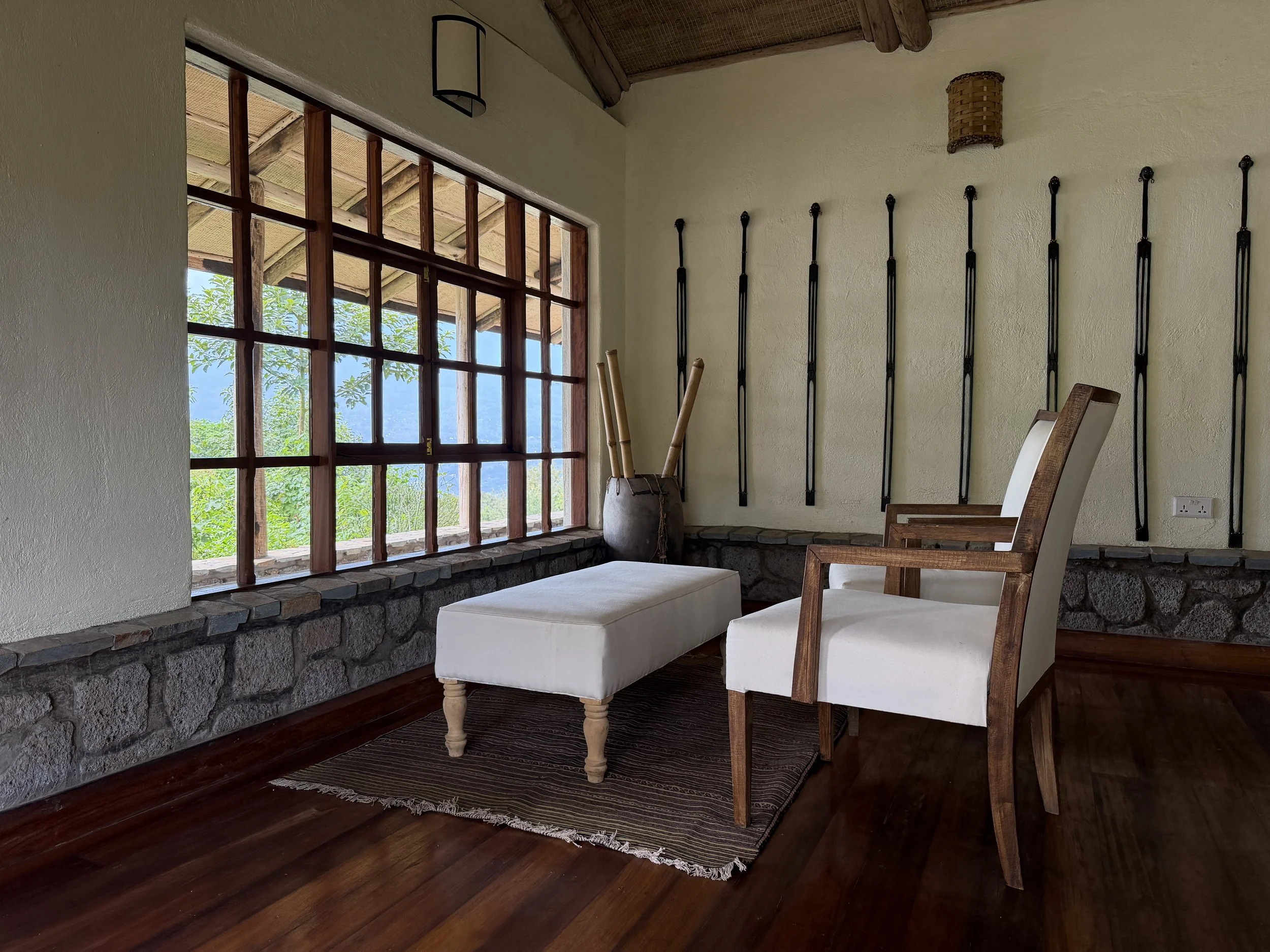
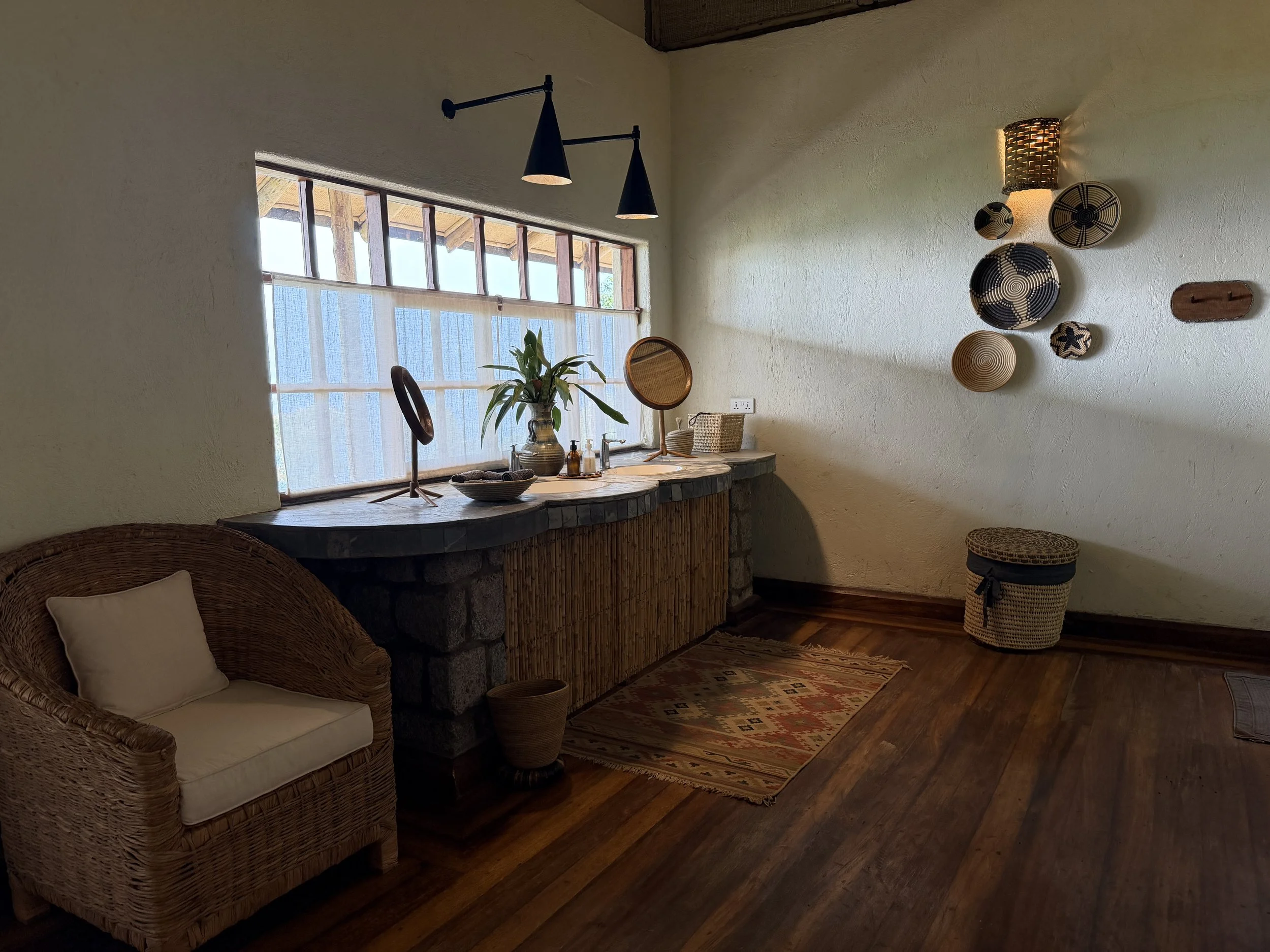
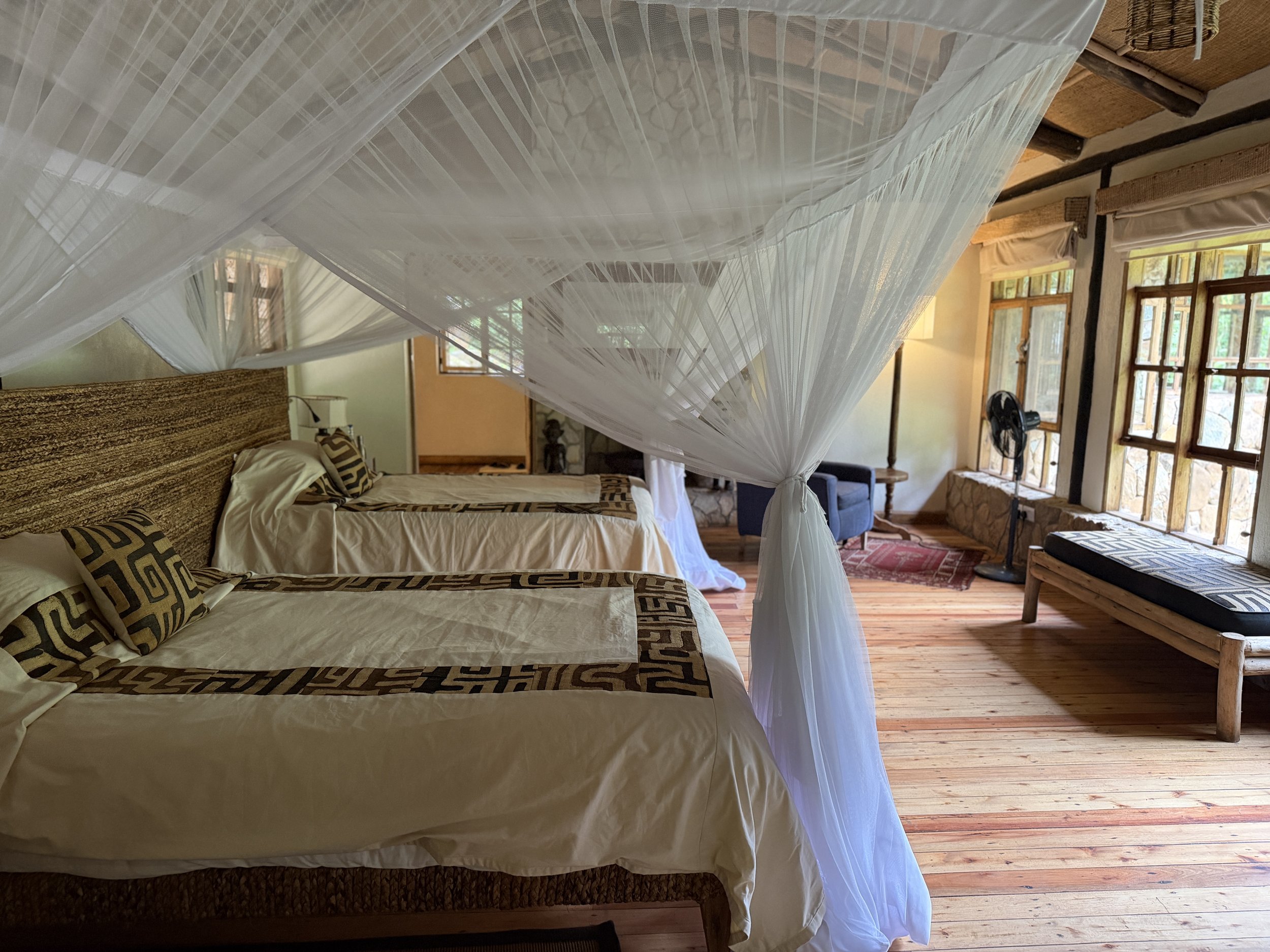
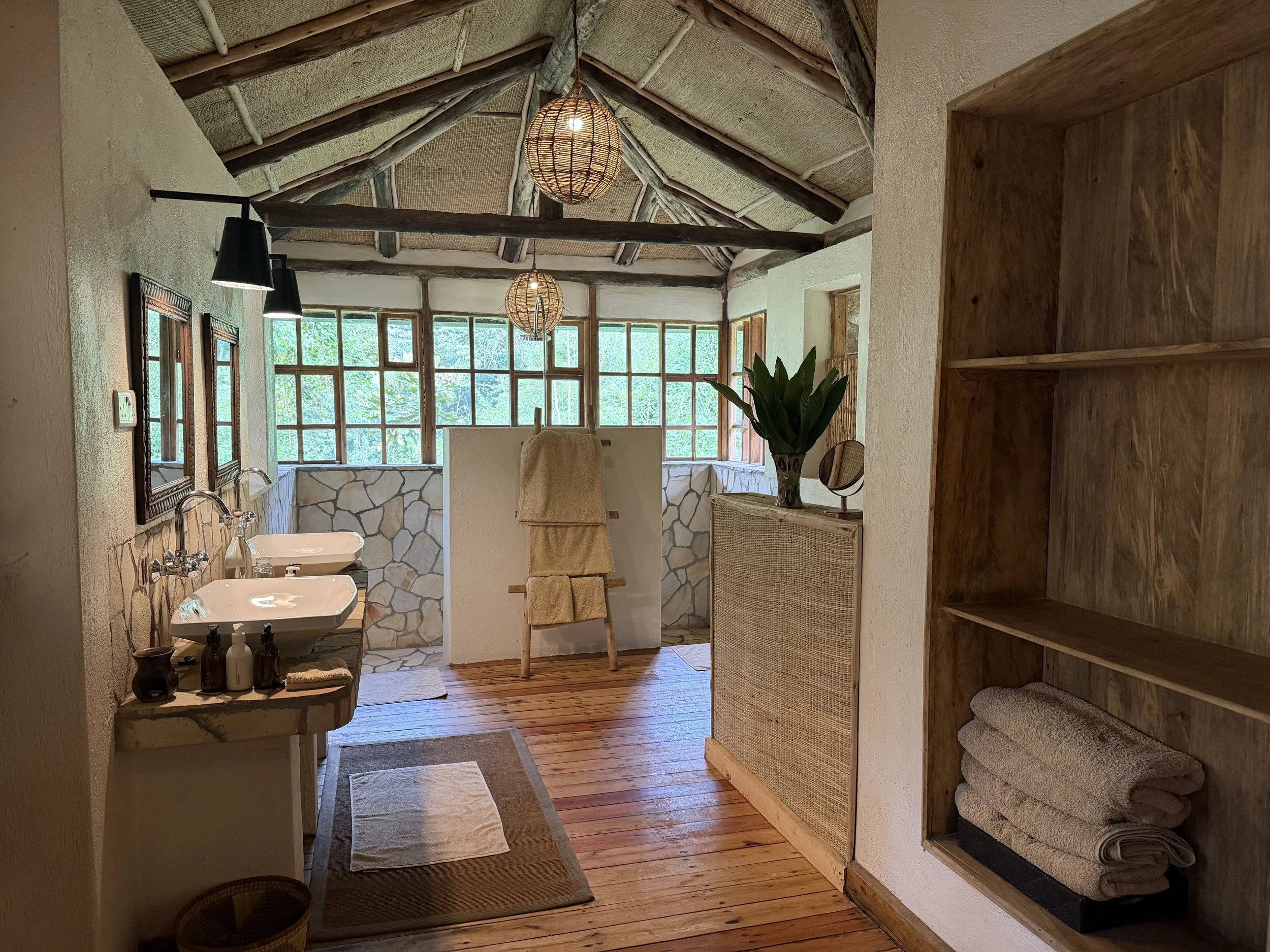
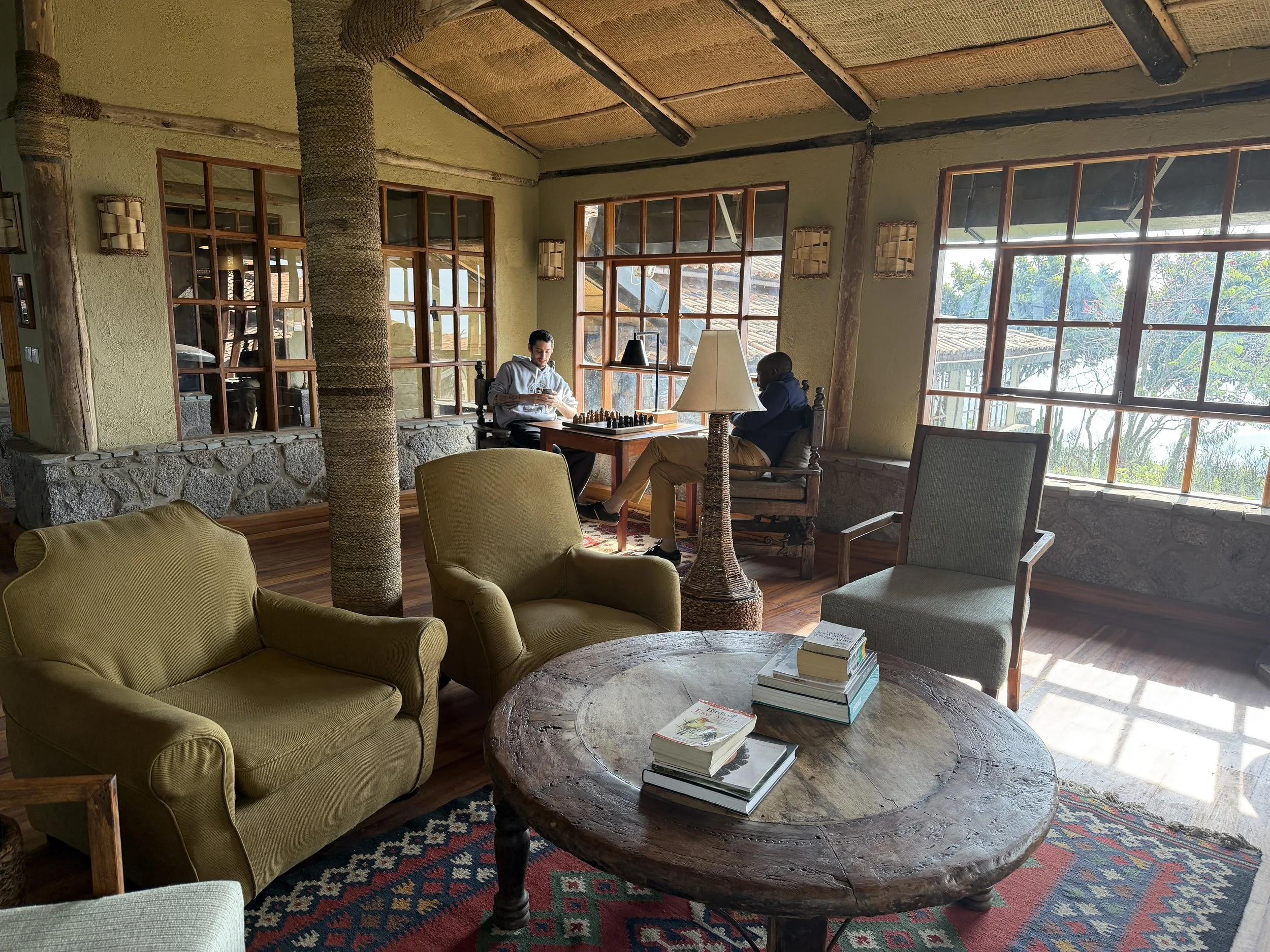
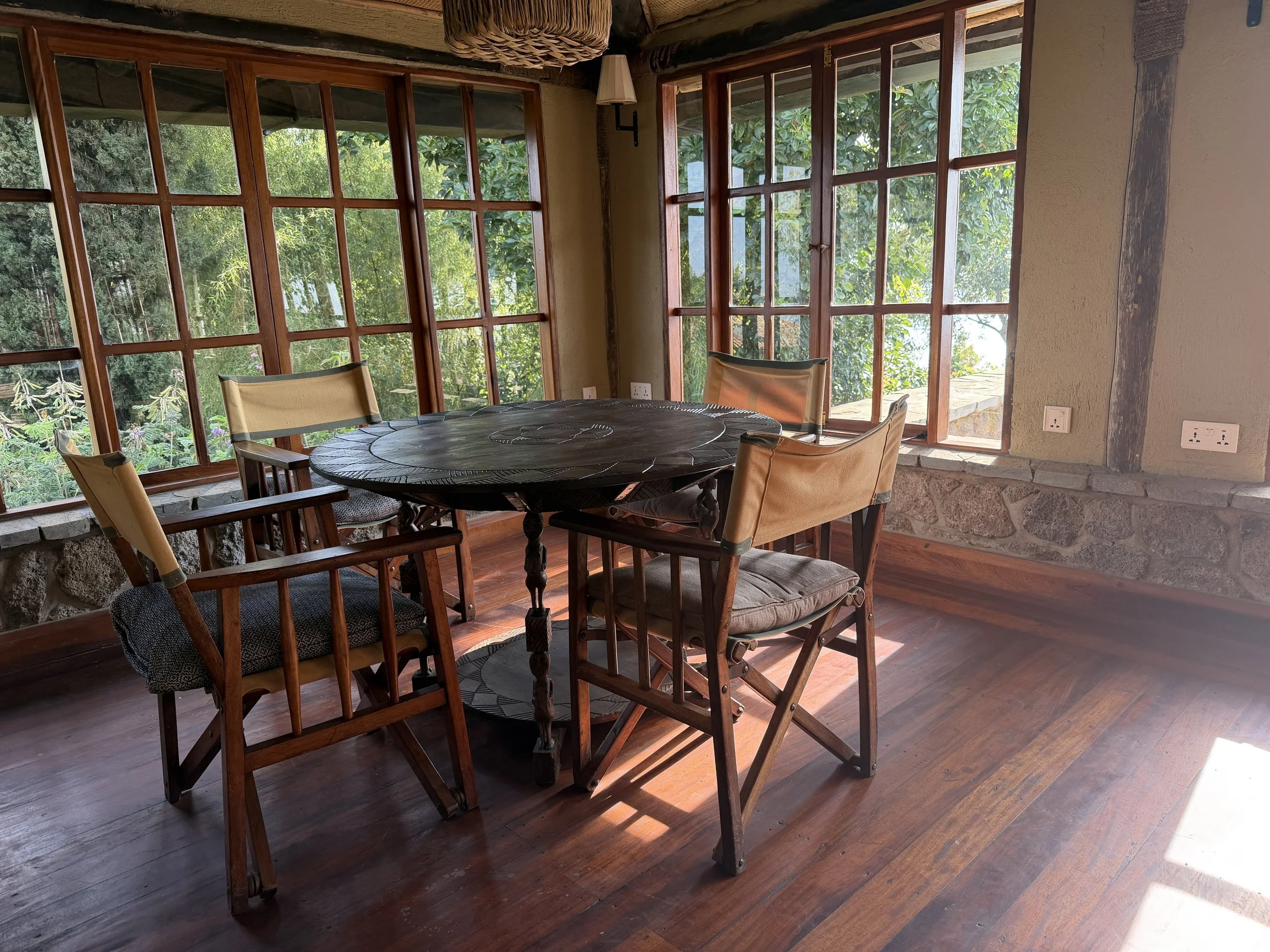
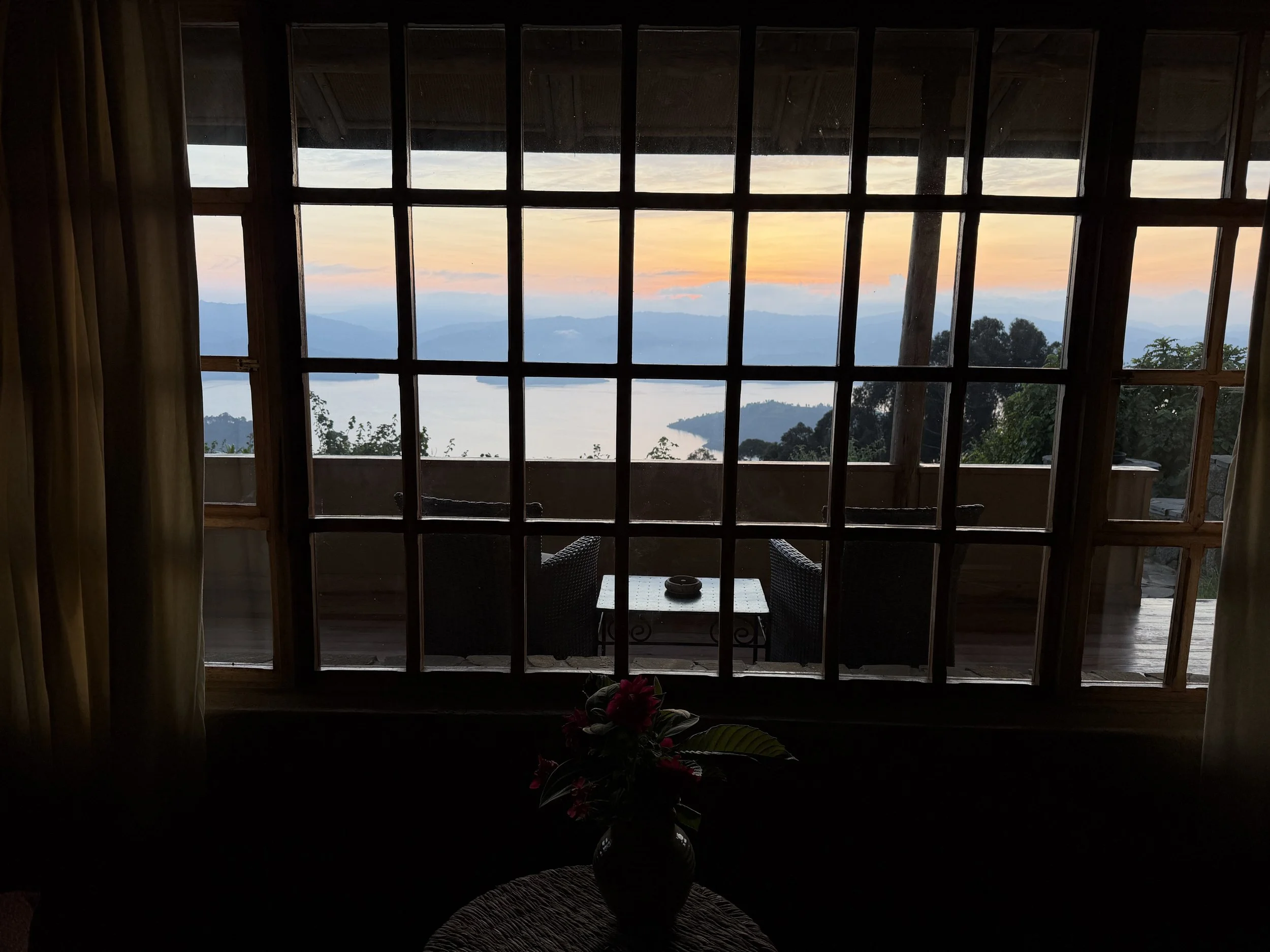
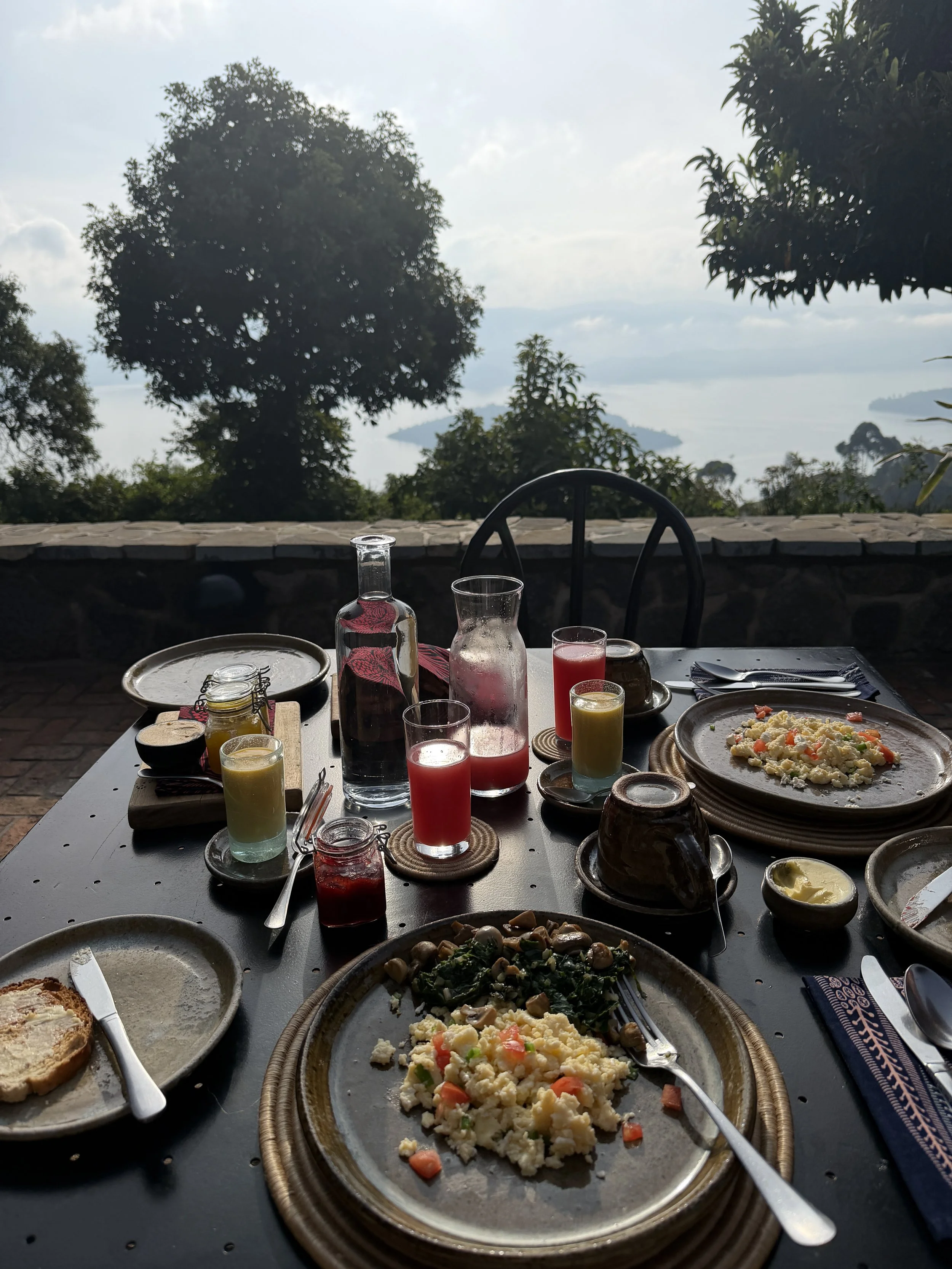
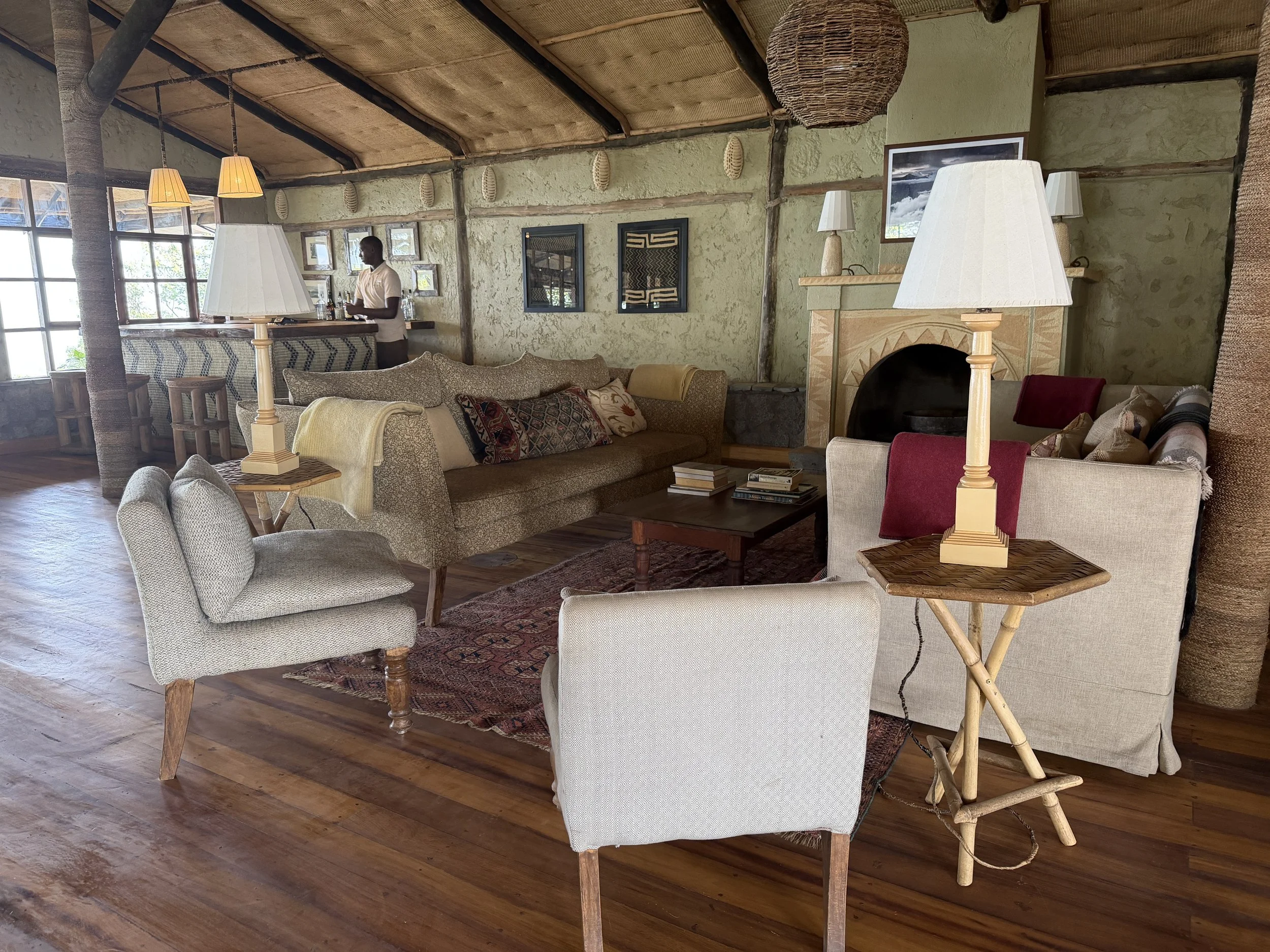
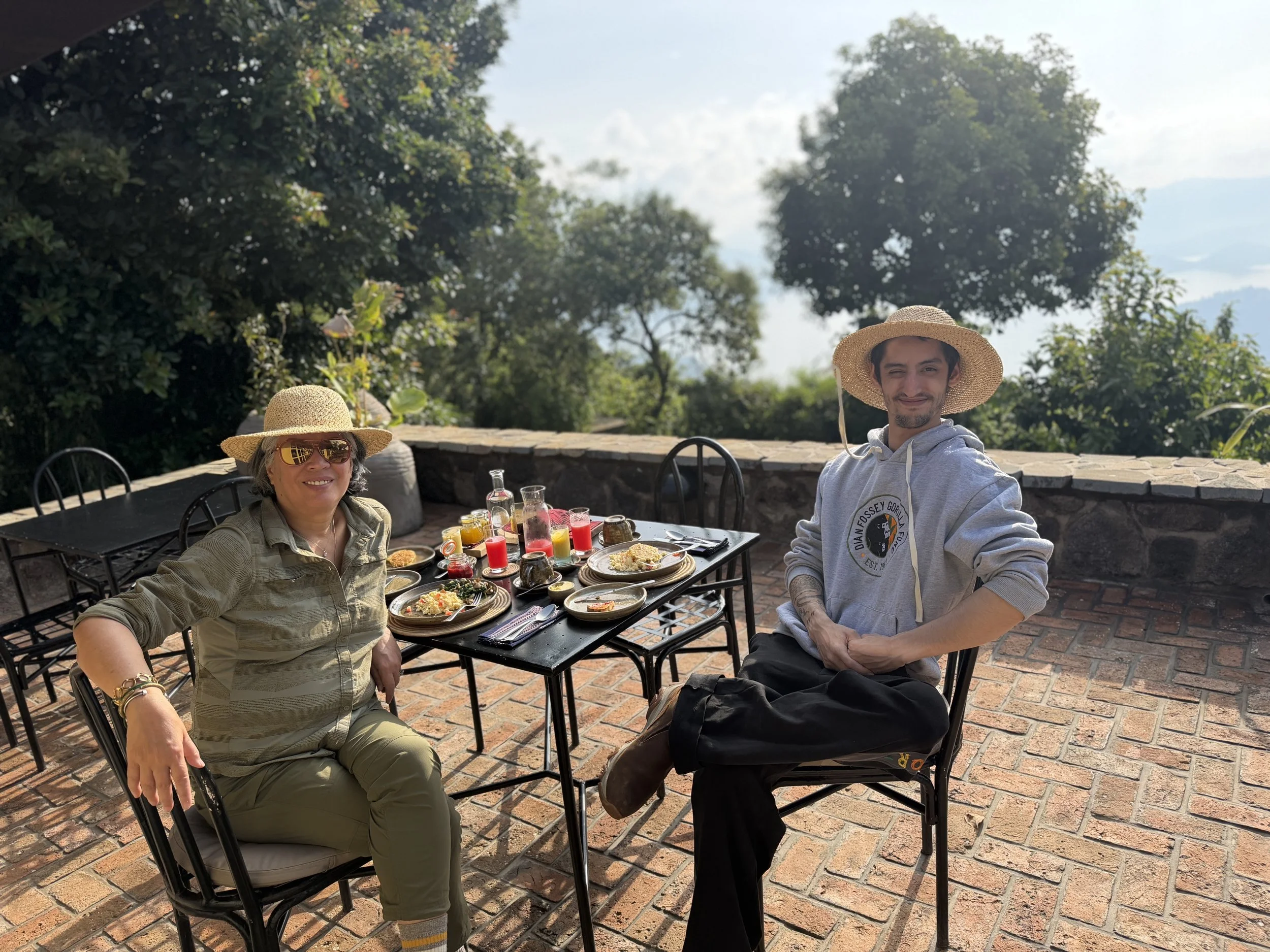
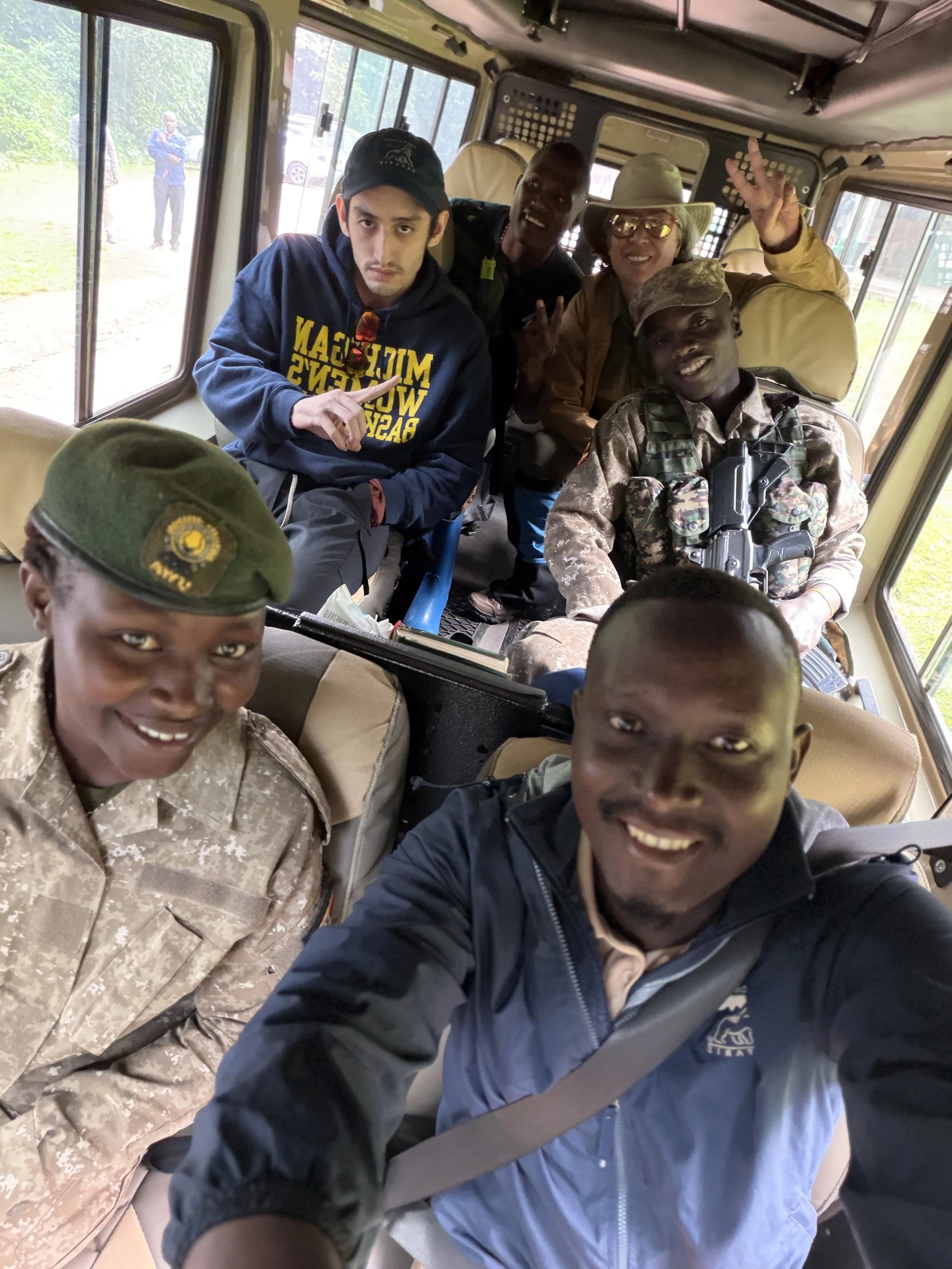
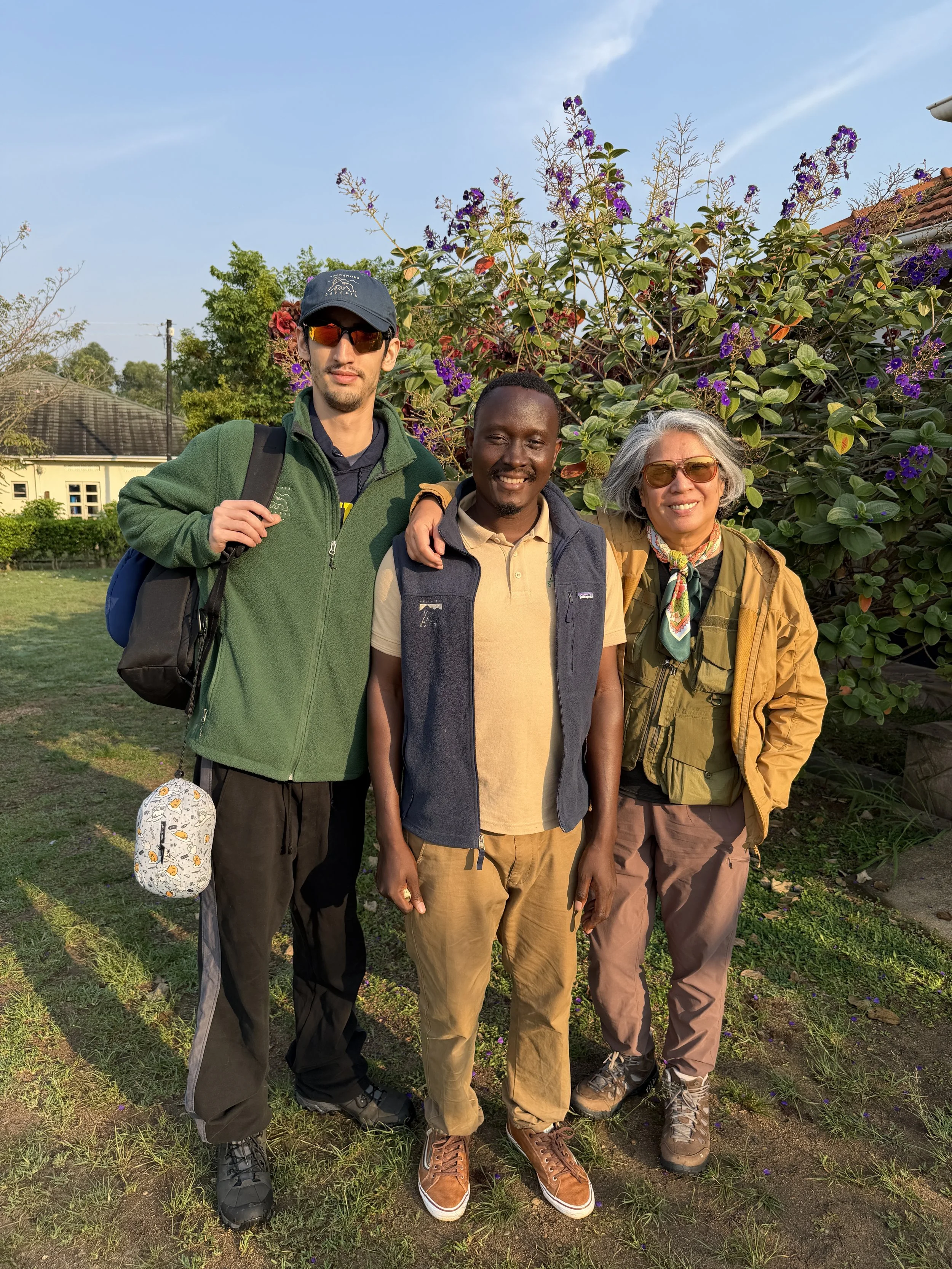
Our journey began at Kibale Lodge, the newest addition to the Volcanoes Safaris collection. Opened in 2024, the lodge was hand-built by local artisans in the company’s signature style and sits high on a ridge overlooking the Rwenzori Mountains. It is the perfect base for exploring Kibale National Park—often called the primate capital of the world.
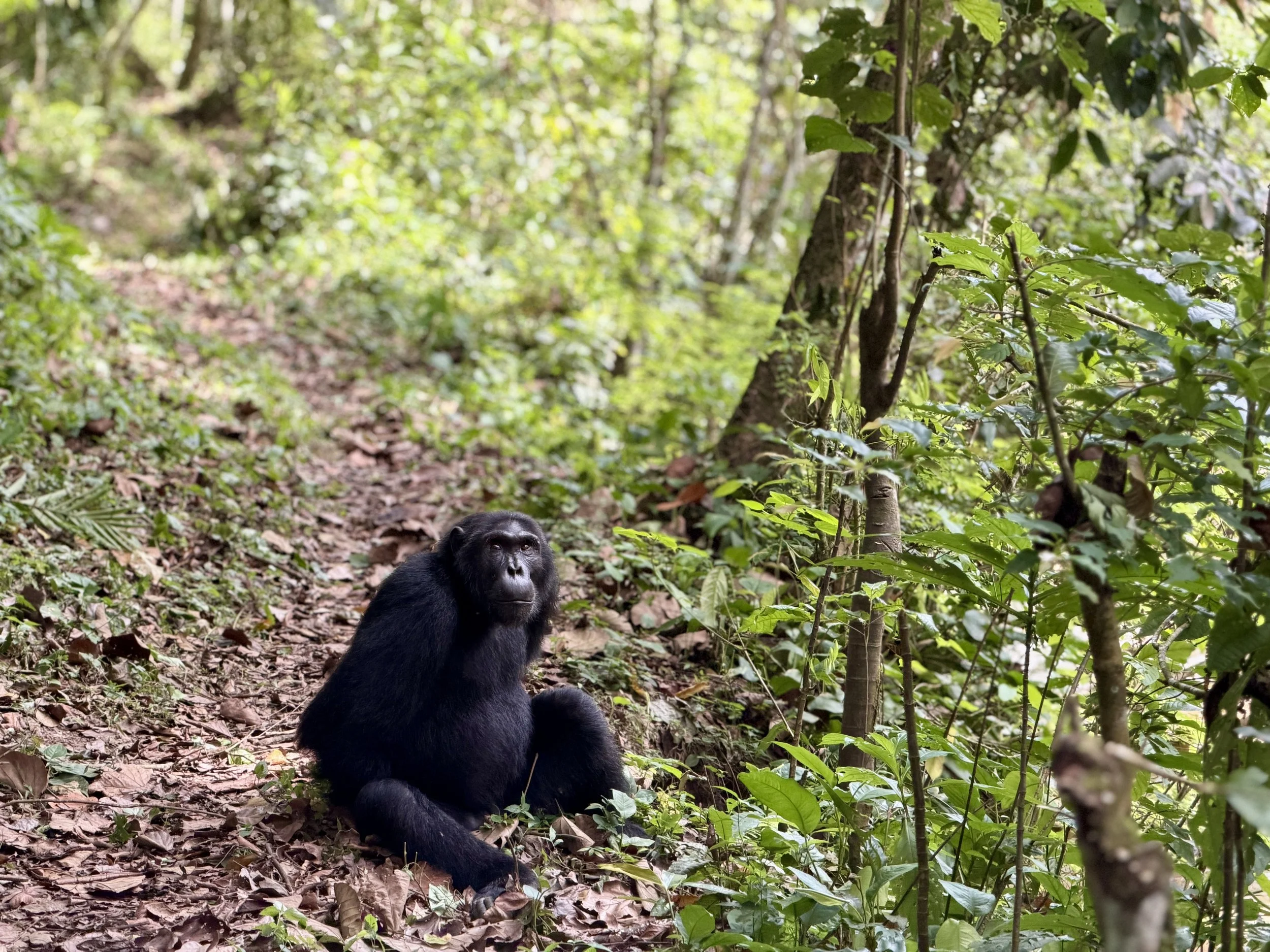
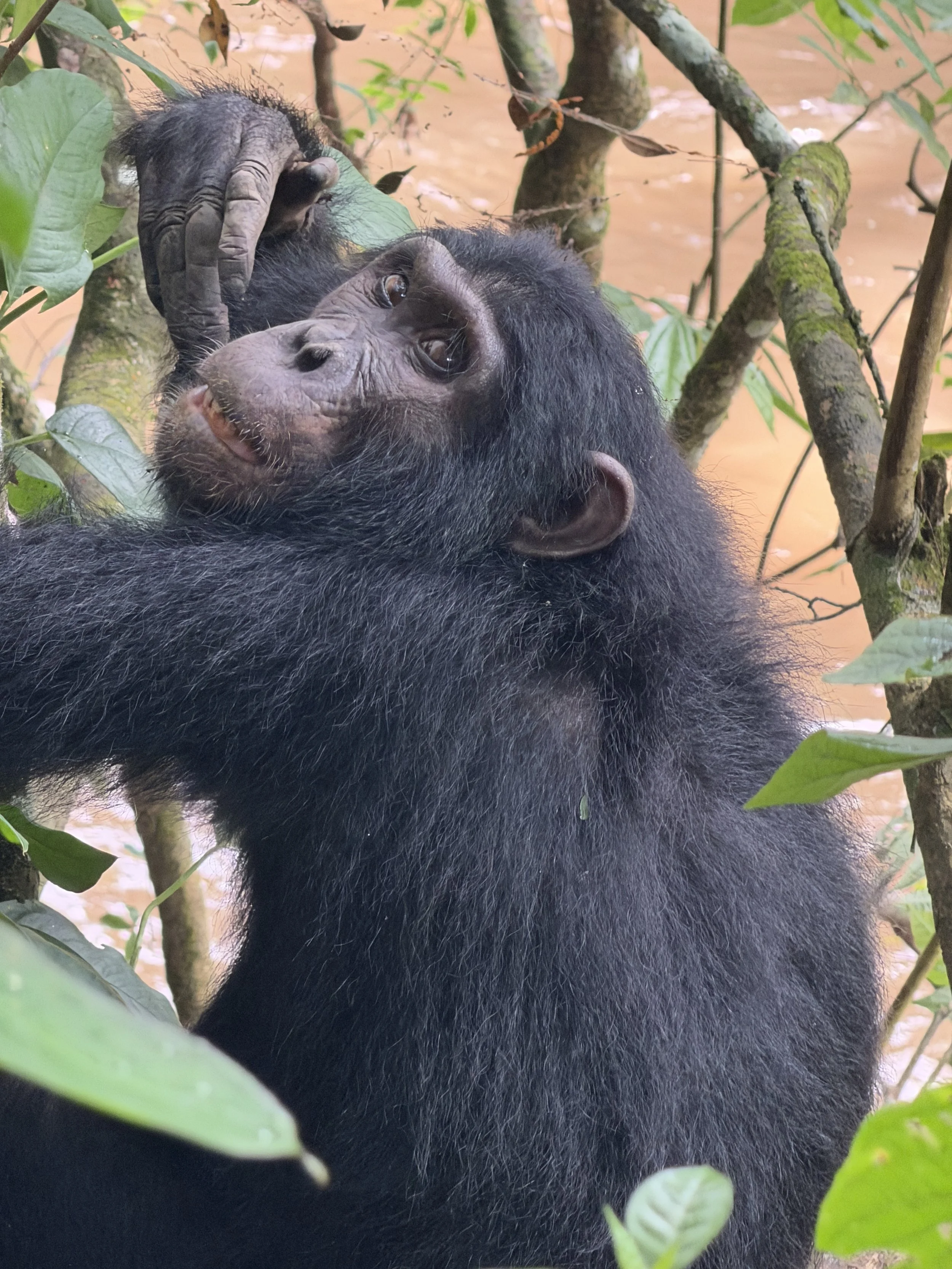
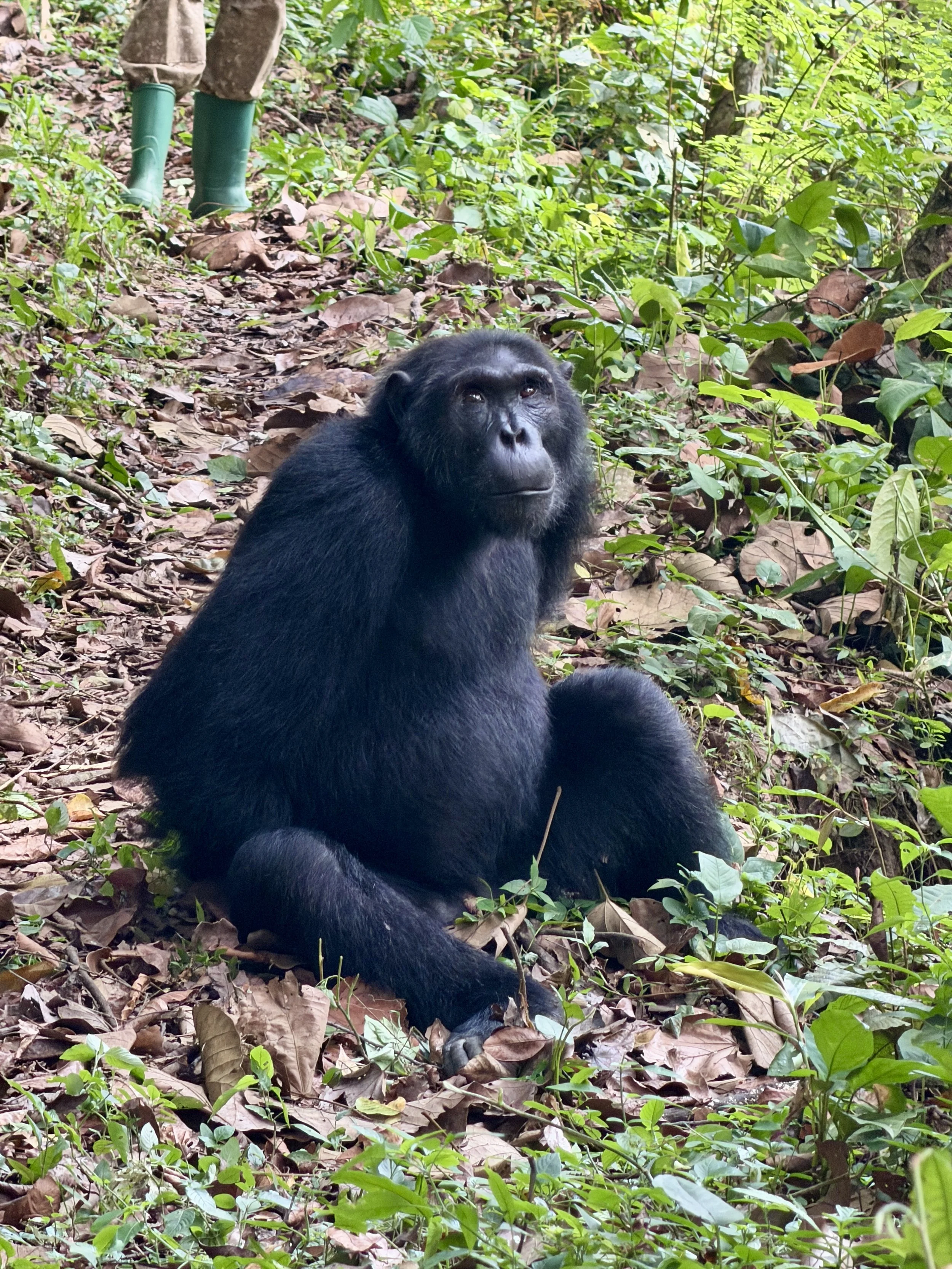
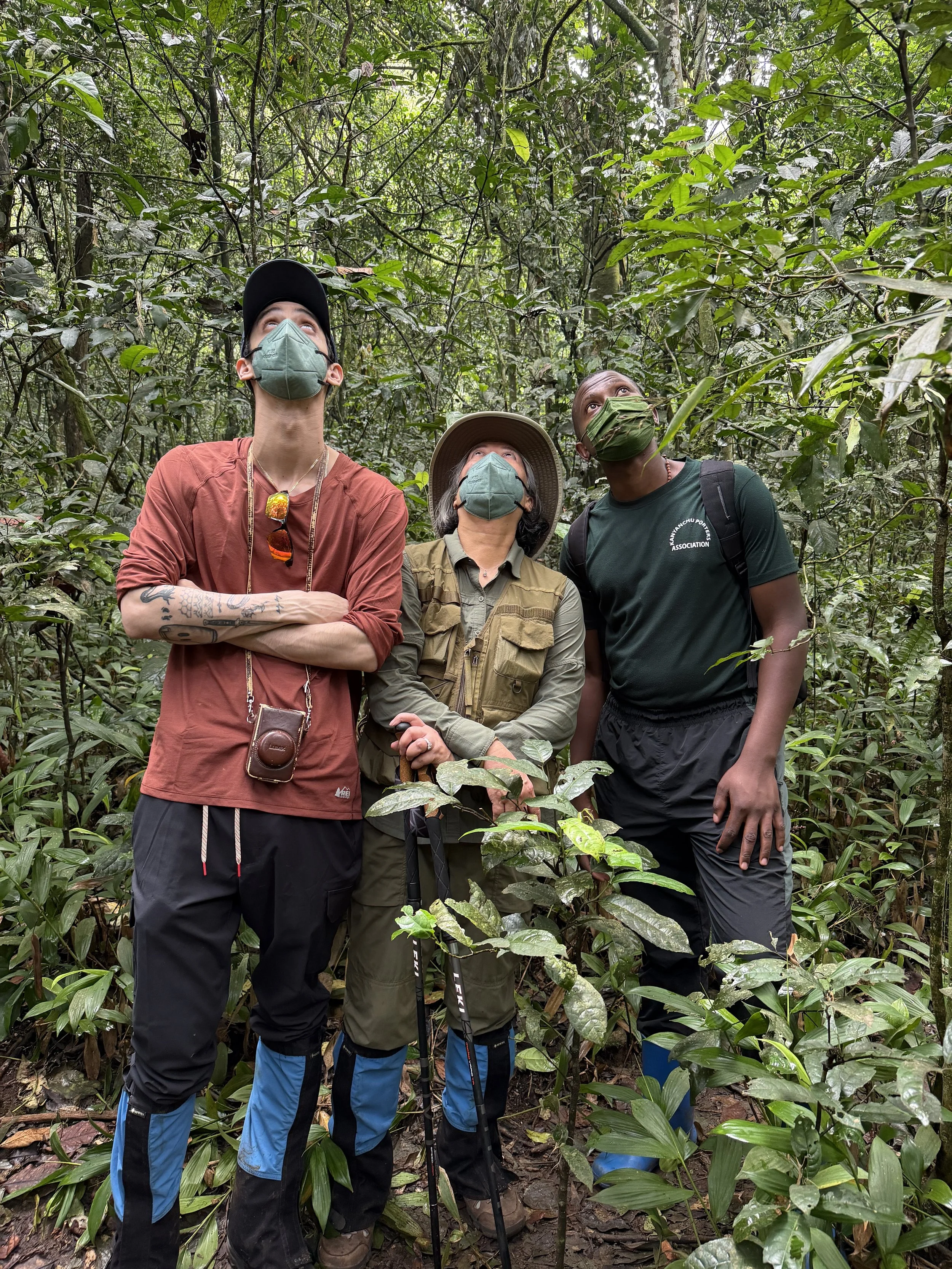
From there we traveled to Kyambura Gorge Lodge, descending steeply into a rainforest gorge in search of chimpanzees. The trek was challenging, but we were rewarded with the rare luxury of having the forest almost entirely to ourselves.
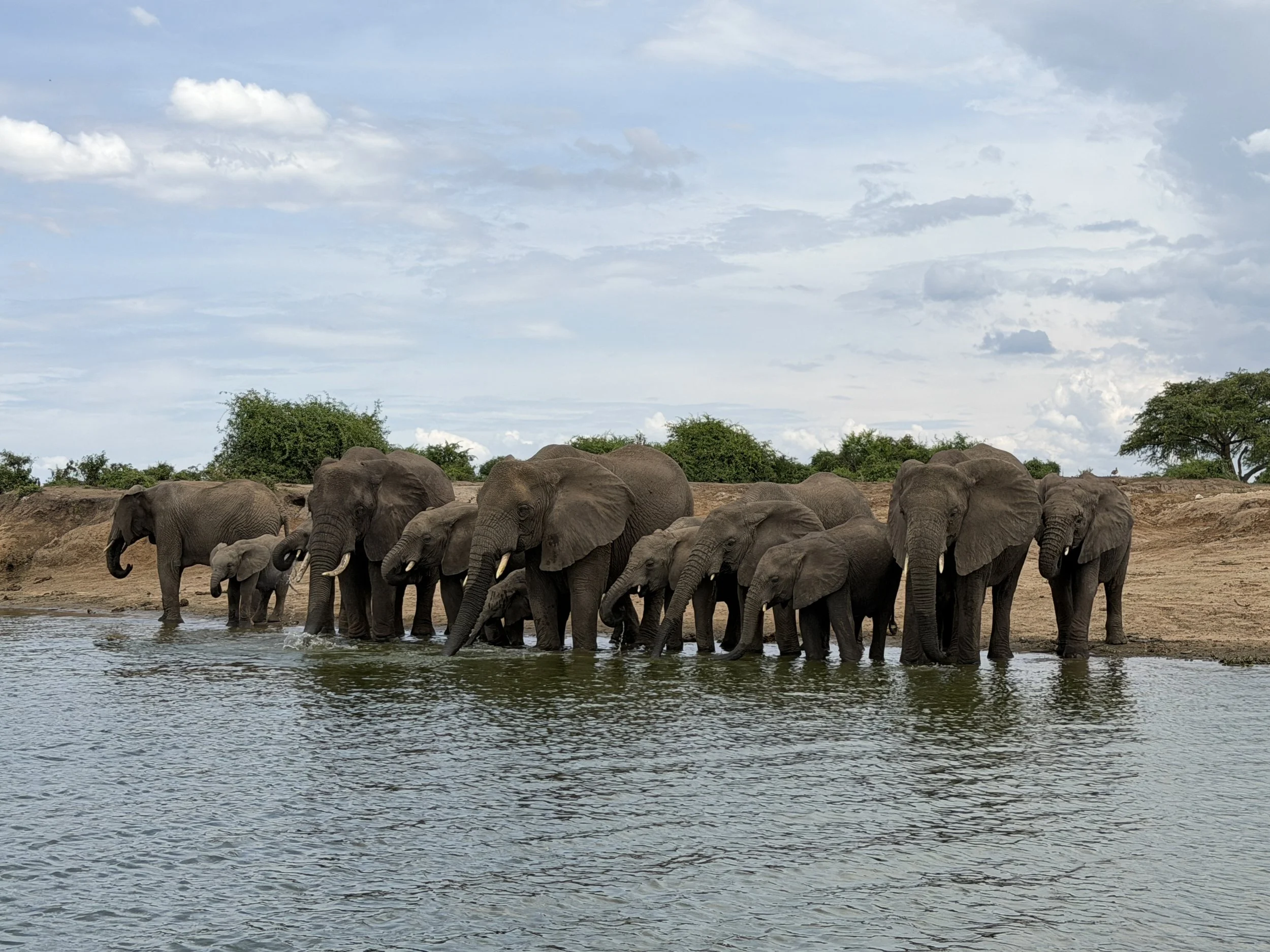
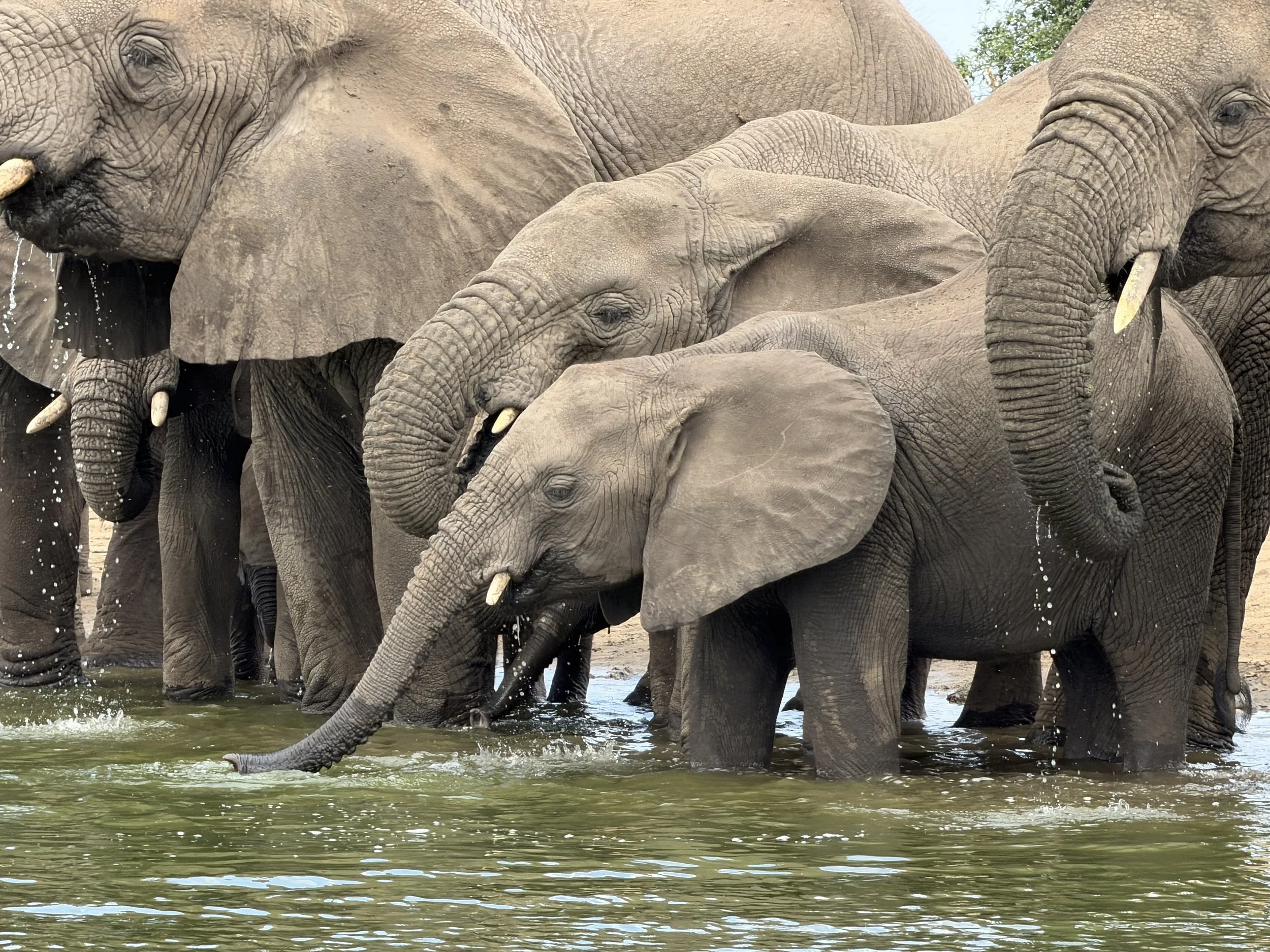
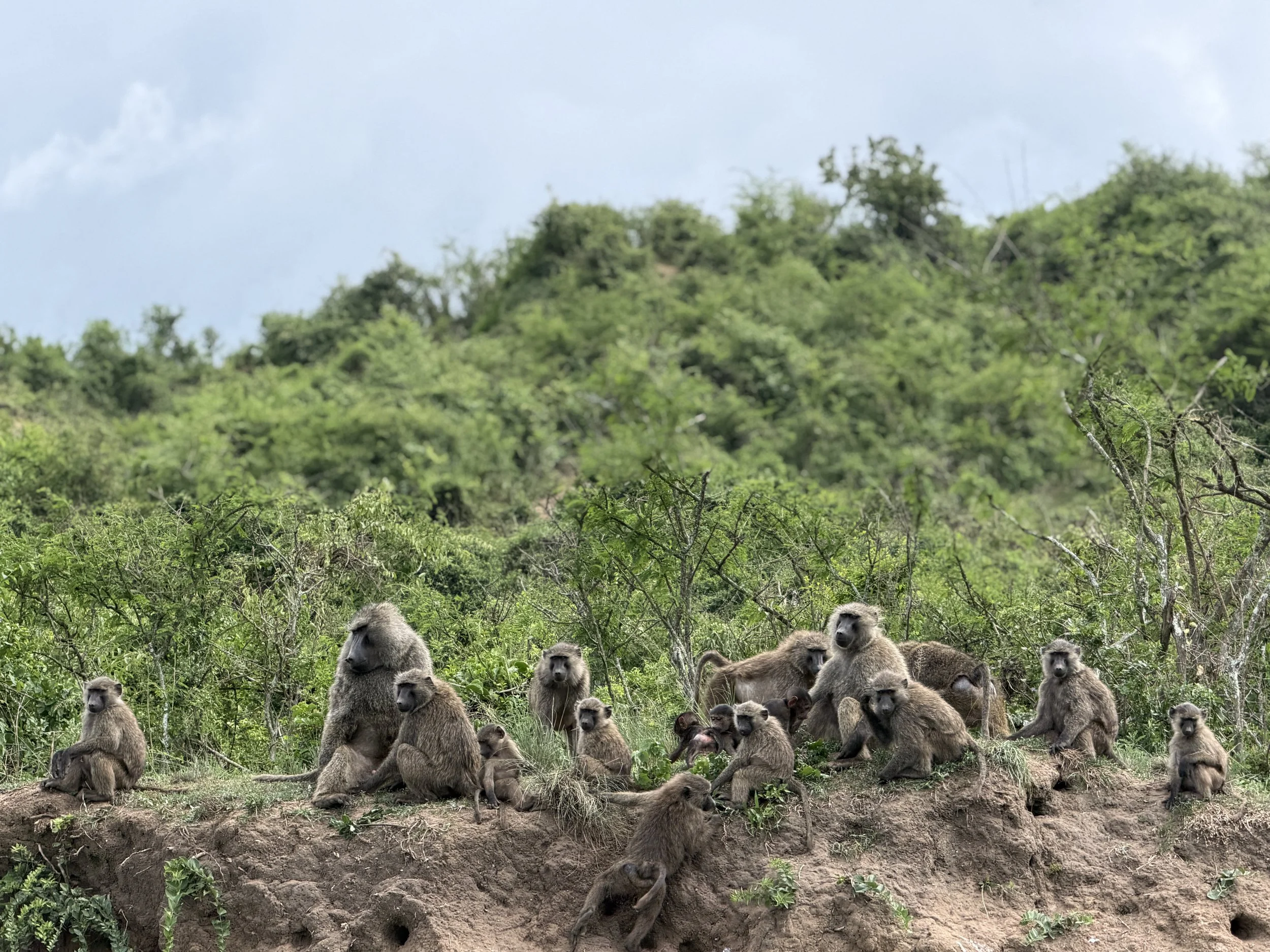
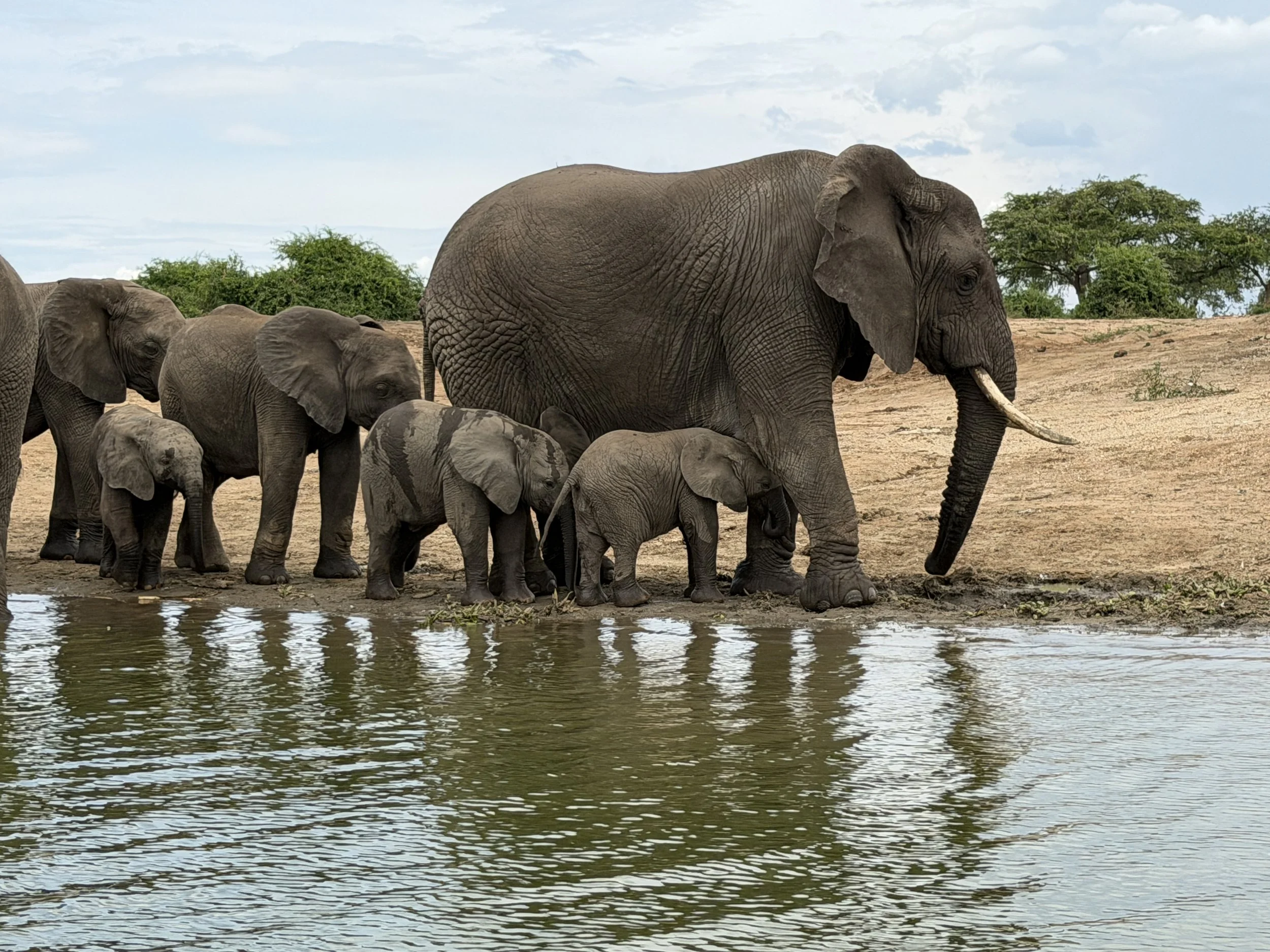
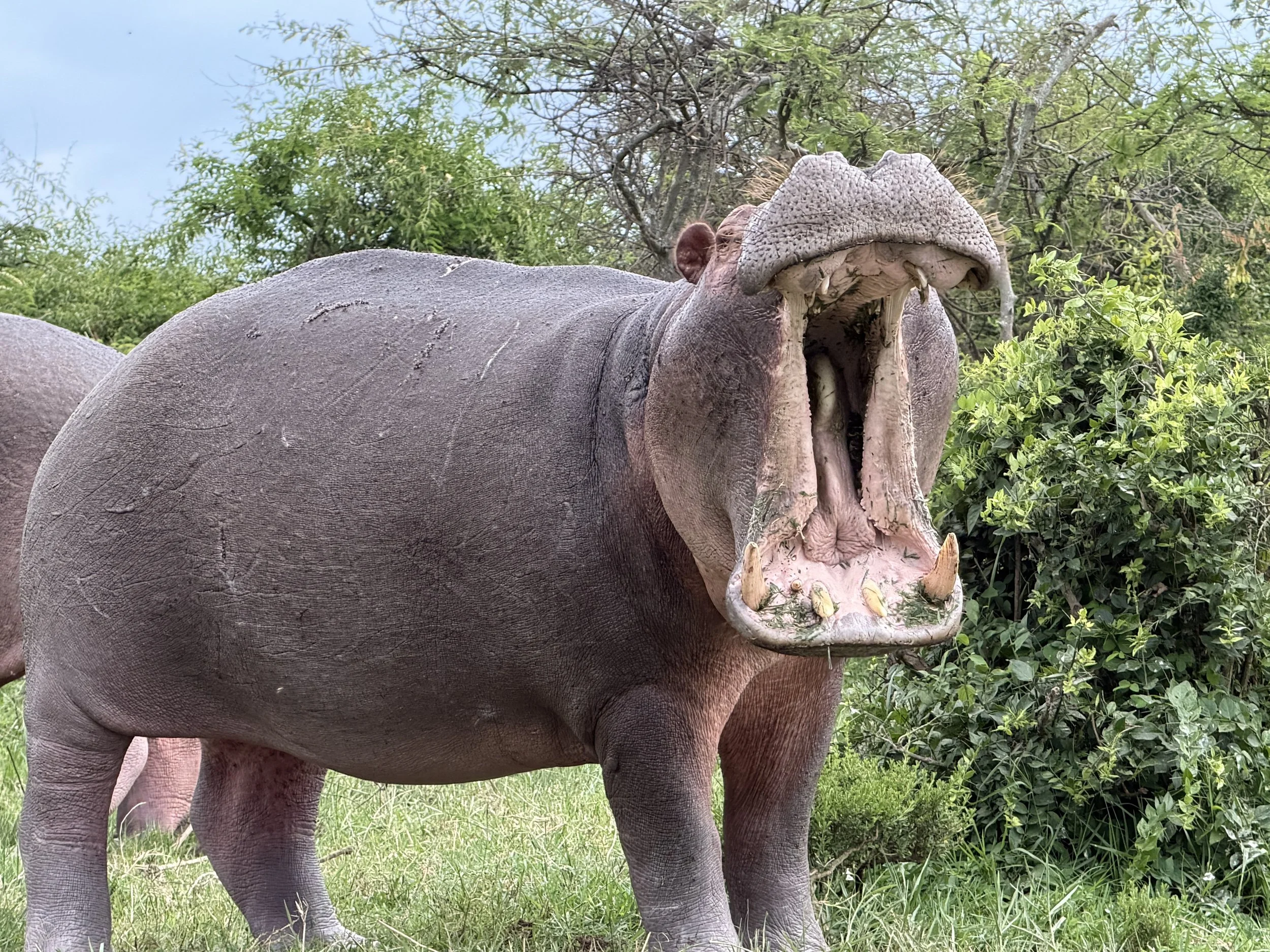
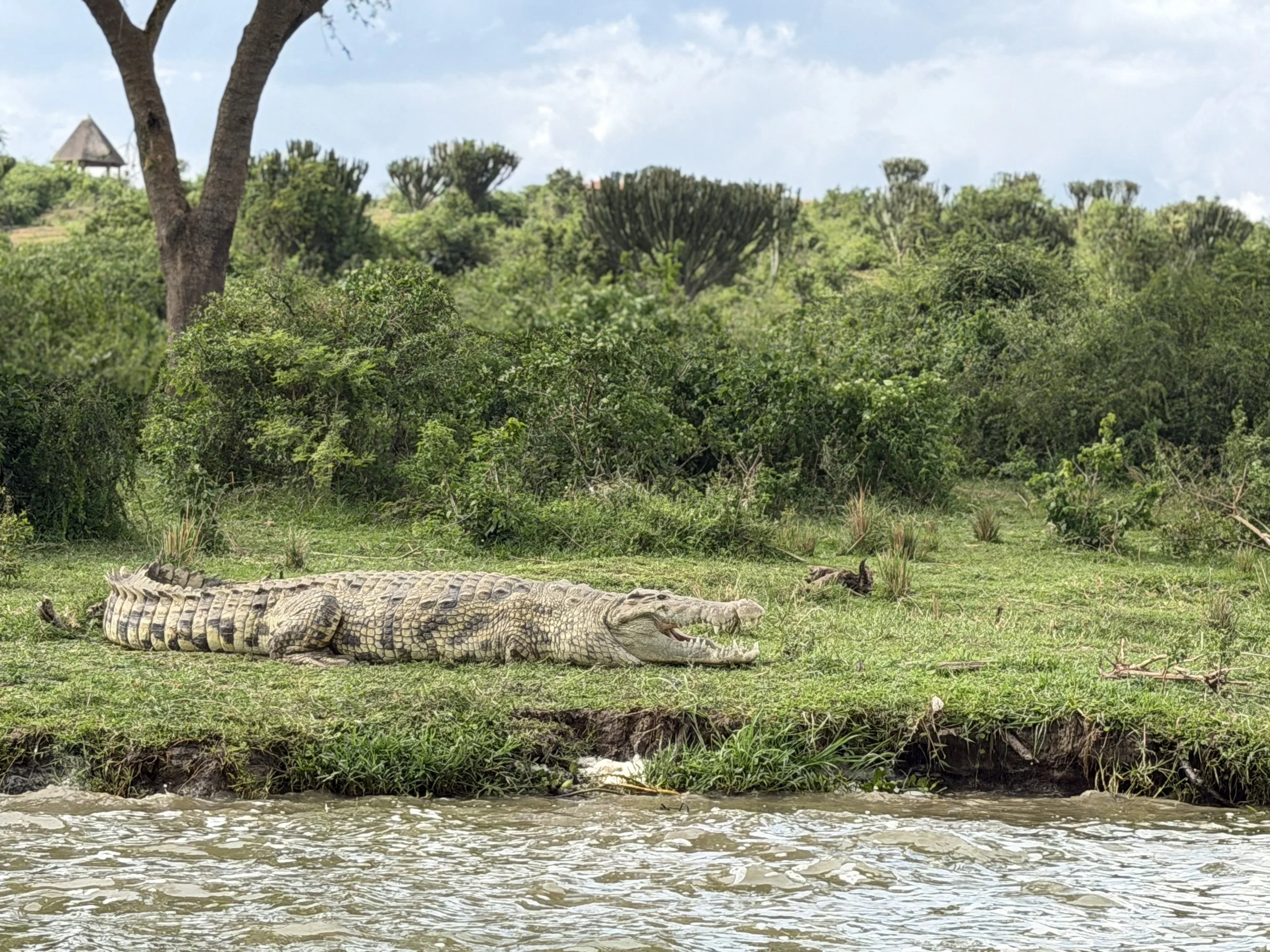
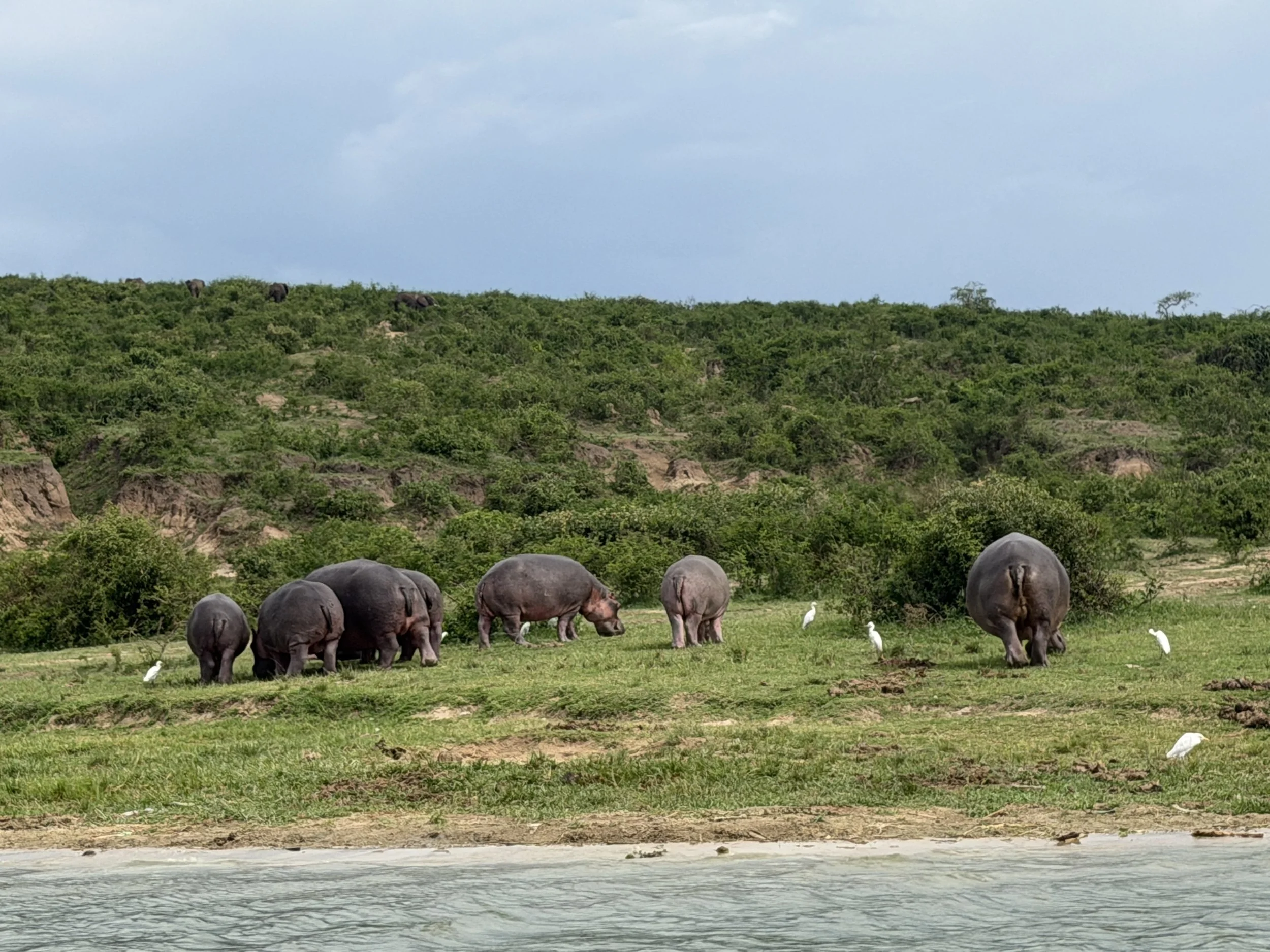
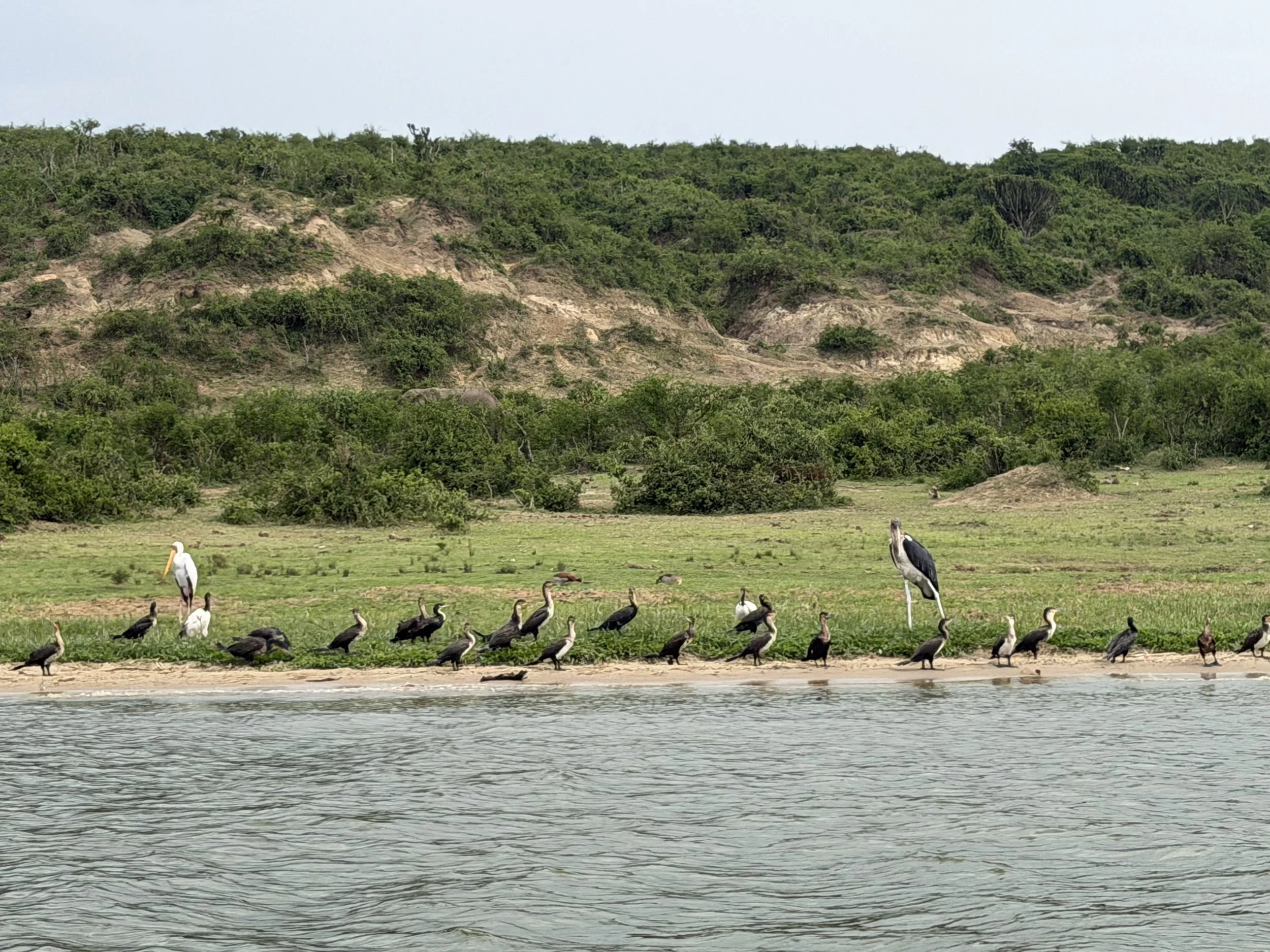
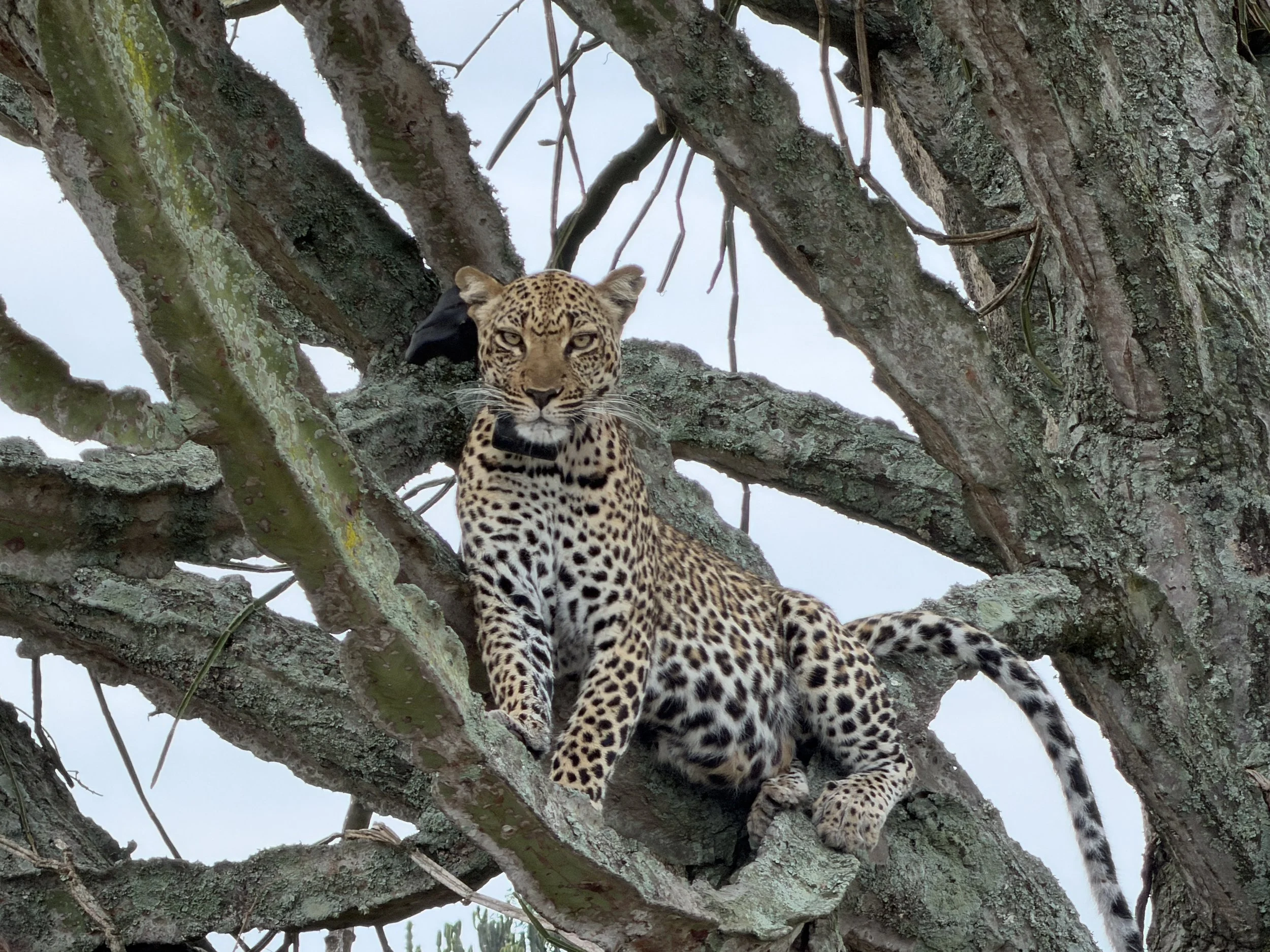
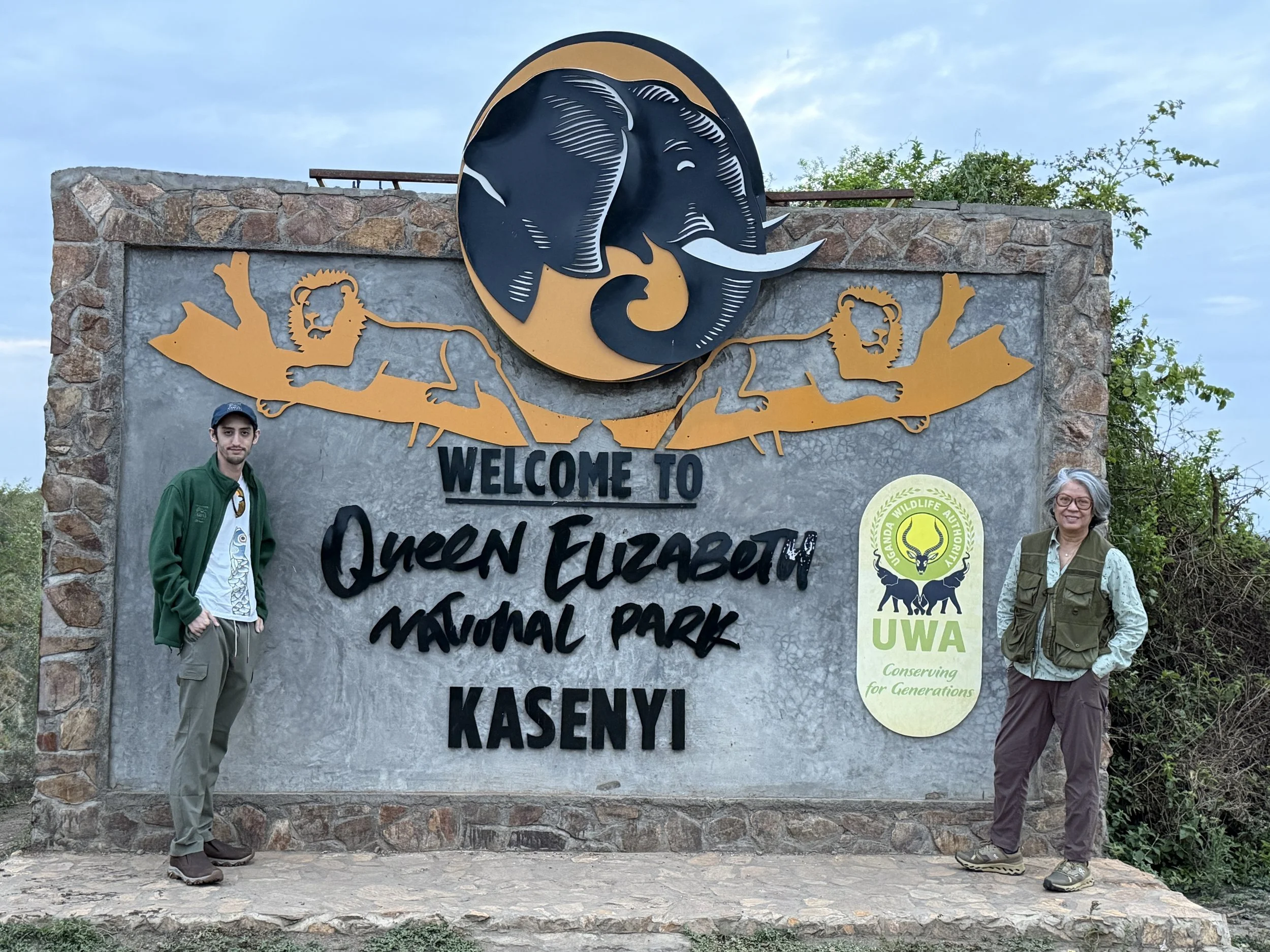
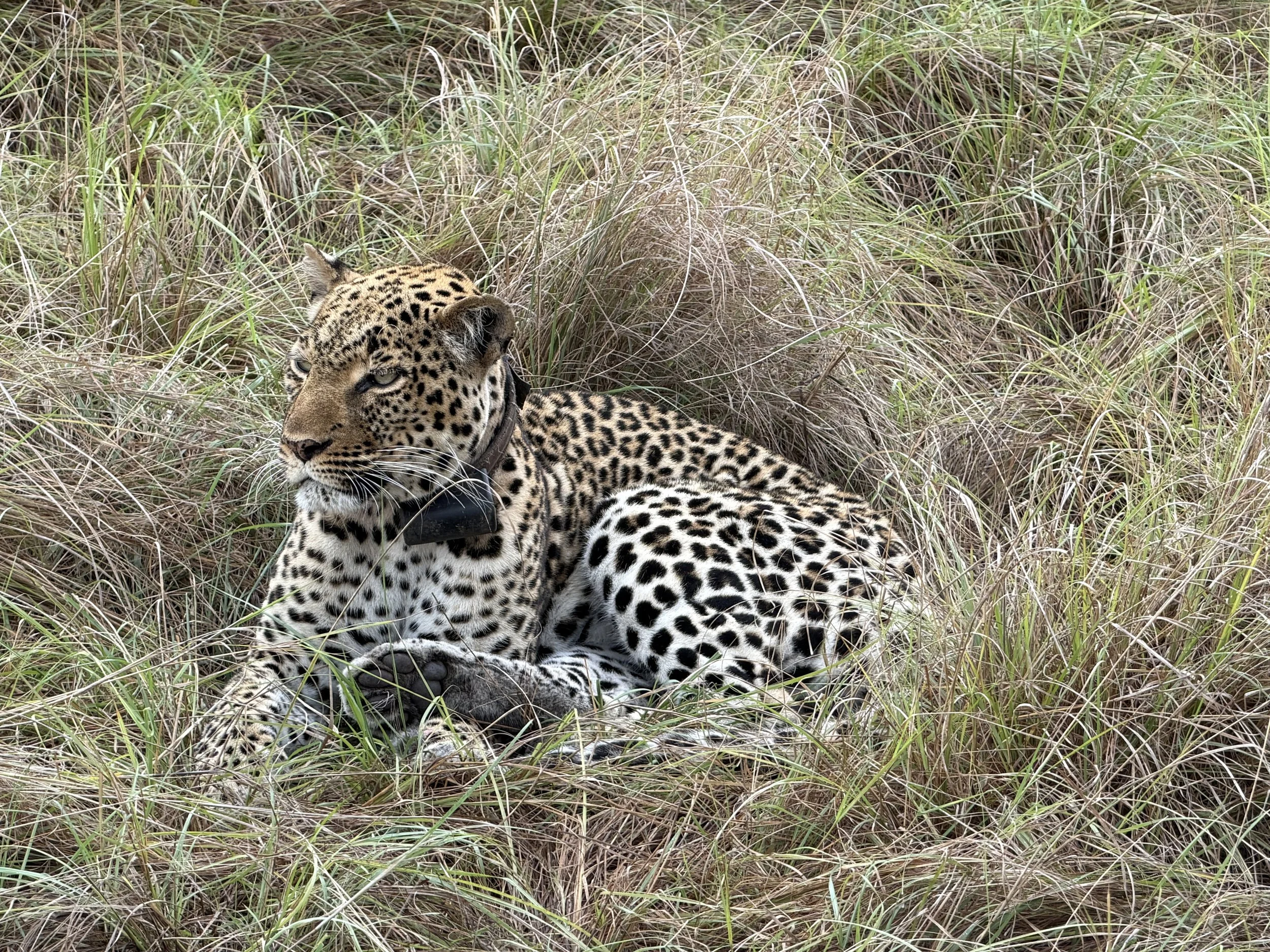
Driving south through Queen Elizabeth National Park, we cruised along the Kazinga Channel past elephants, buffalo, hippos, and crocodiles living alongside communities that have called this landscape home for generations.
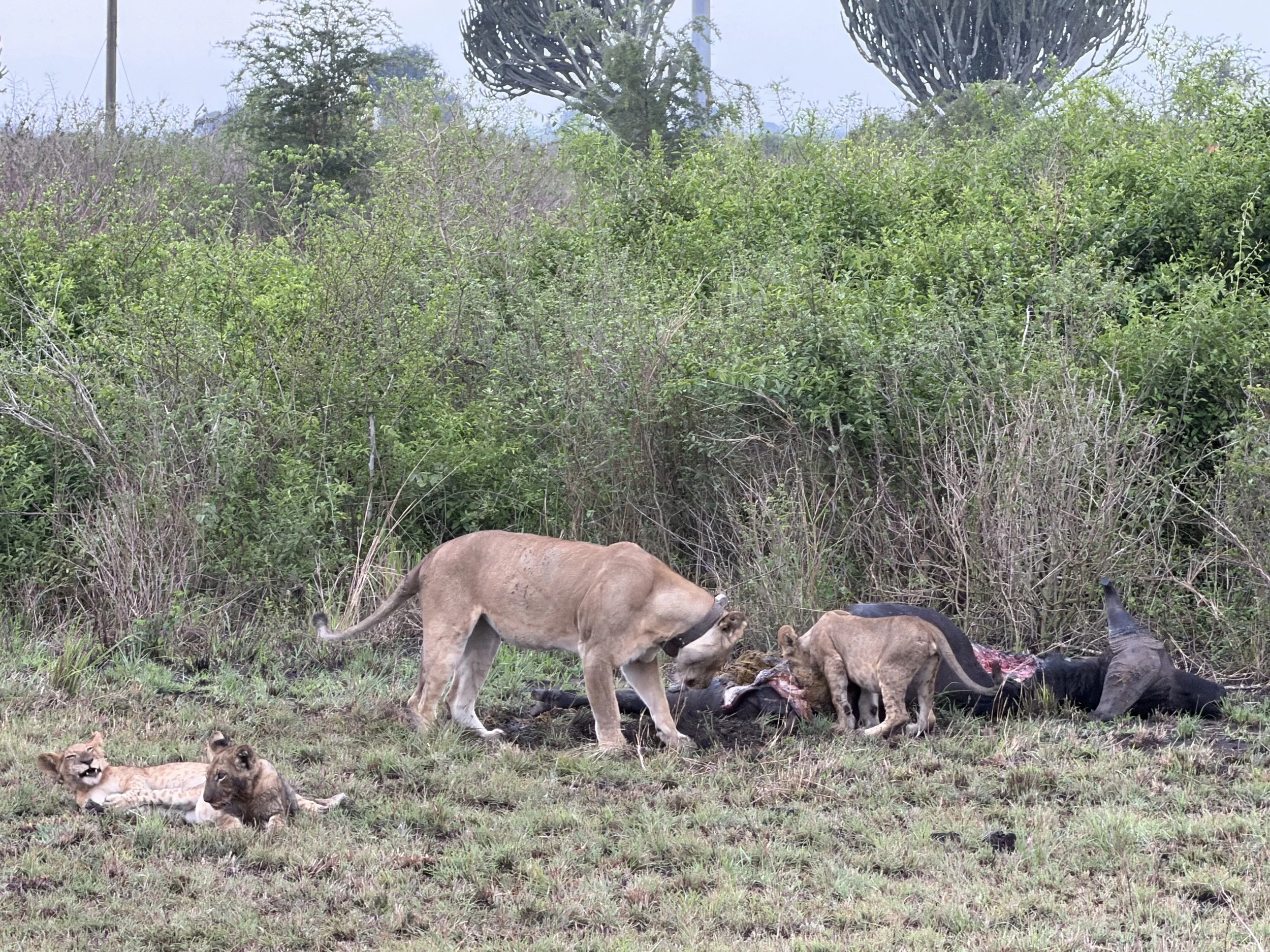
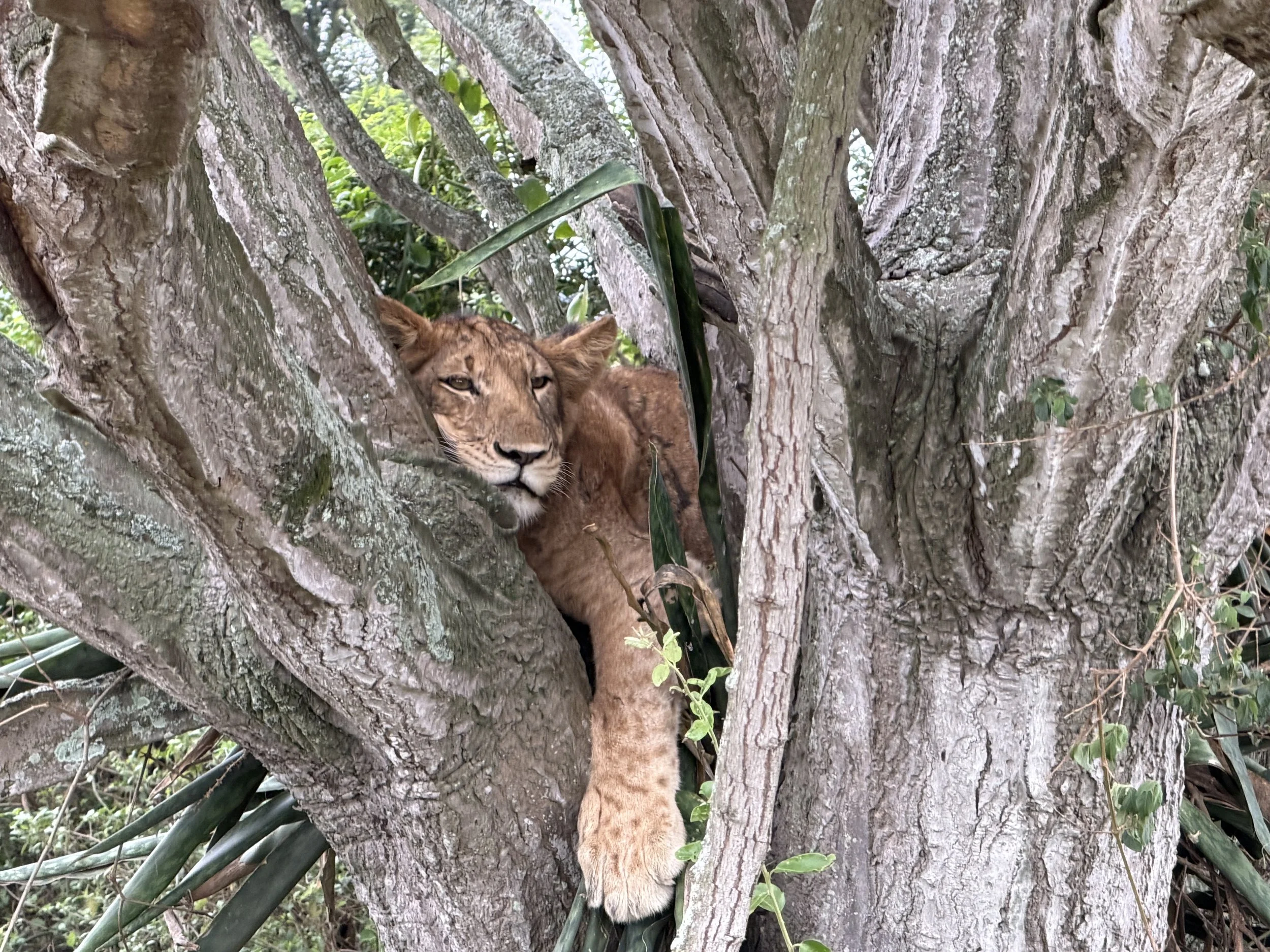
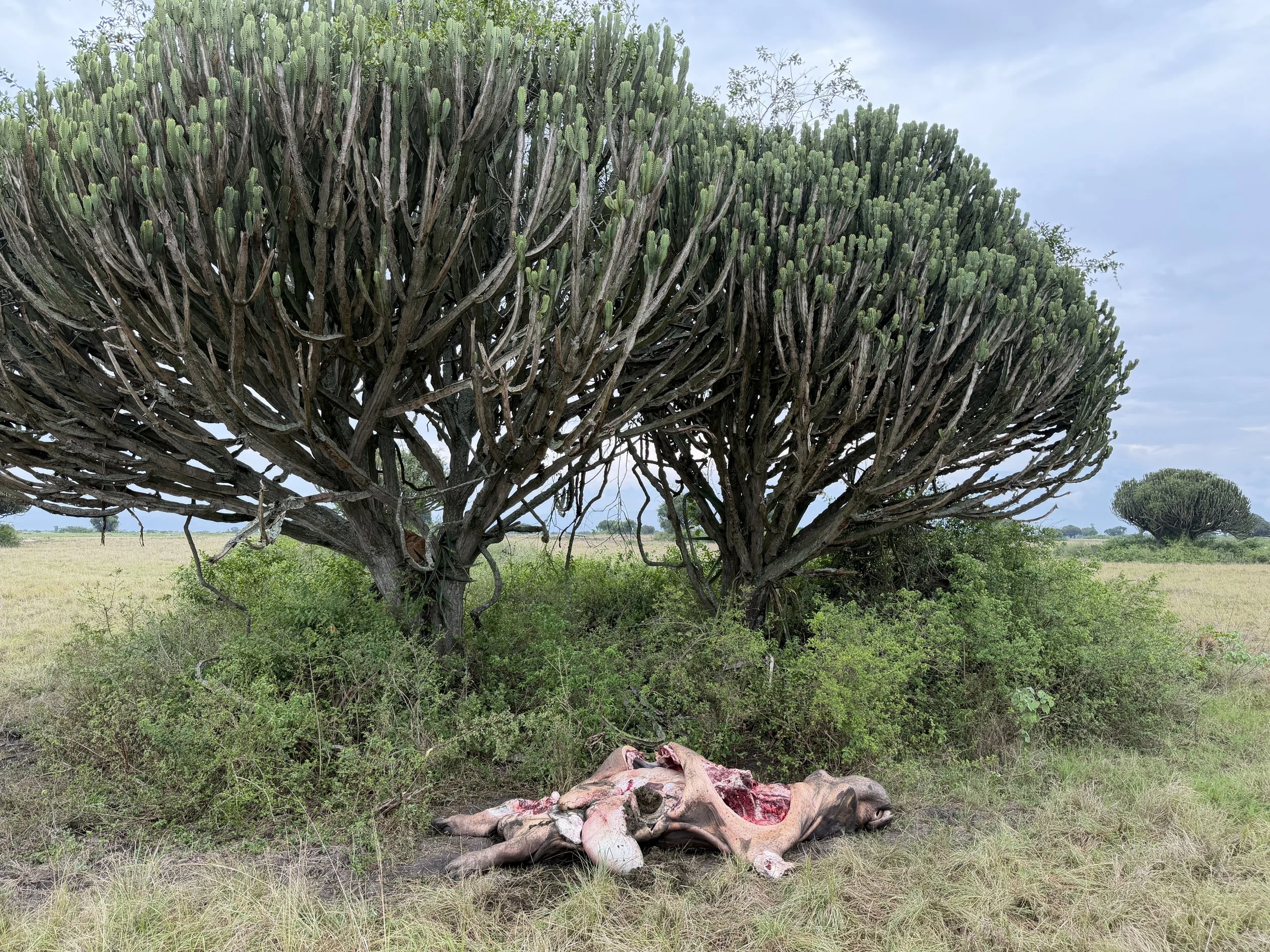
At one point we came upon a pride of lions feeding on a hippo—something even our guide said he had never seen before.
Bwindi: Redemption
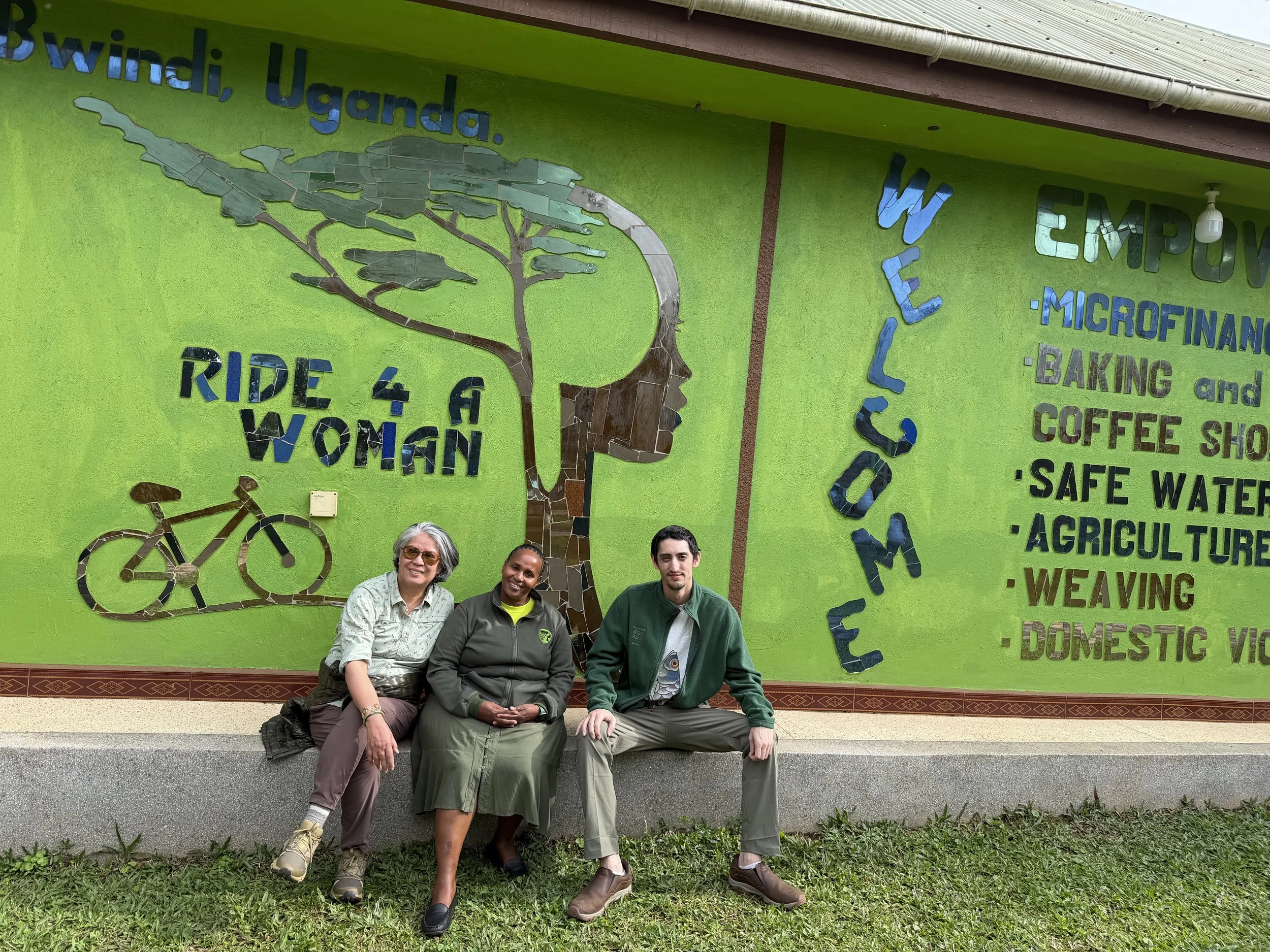
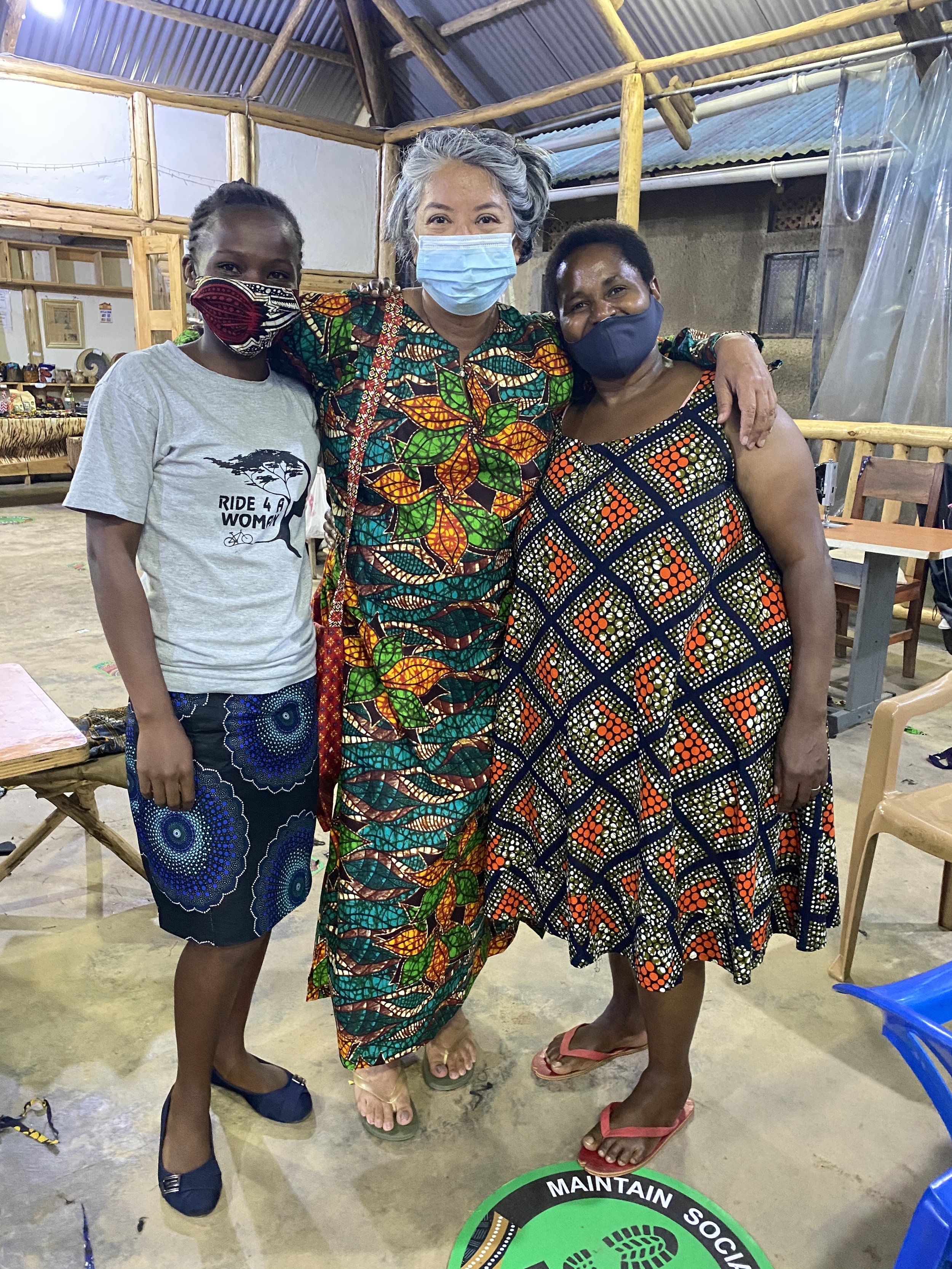
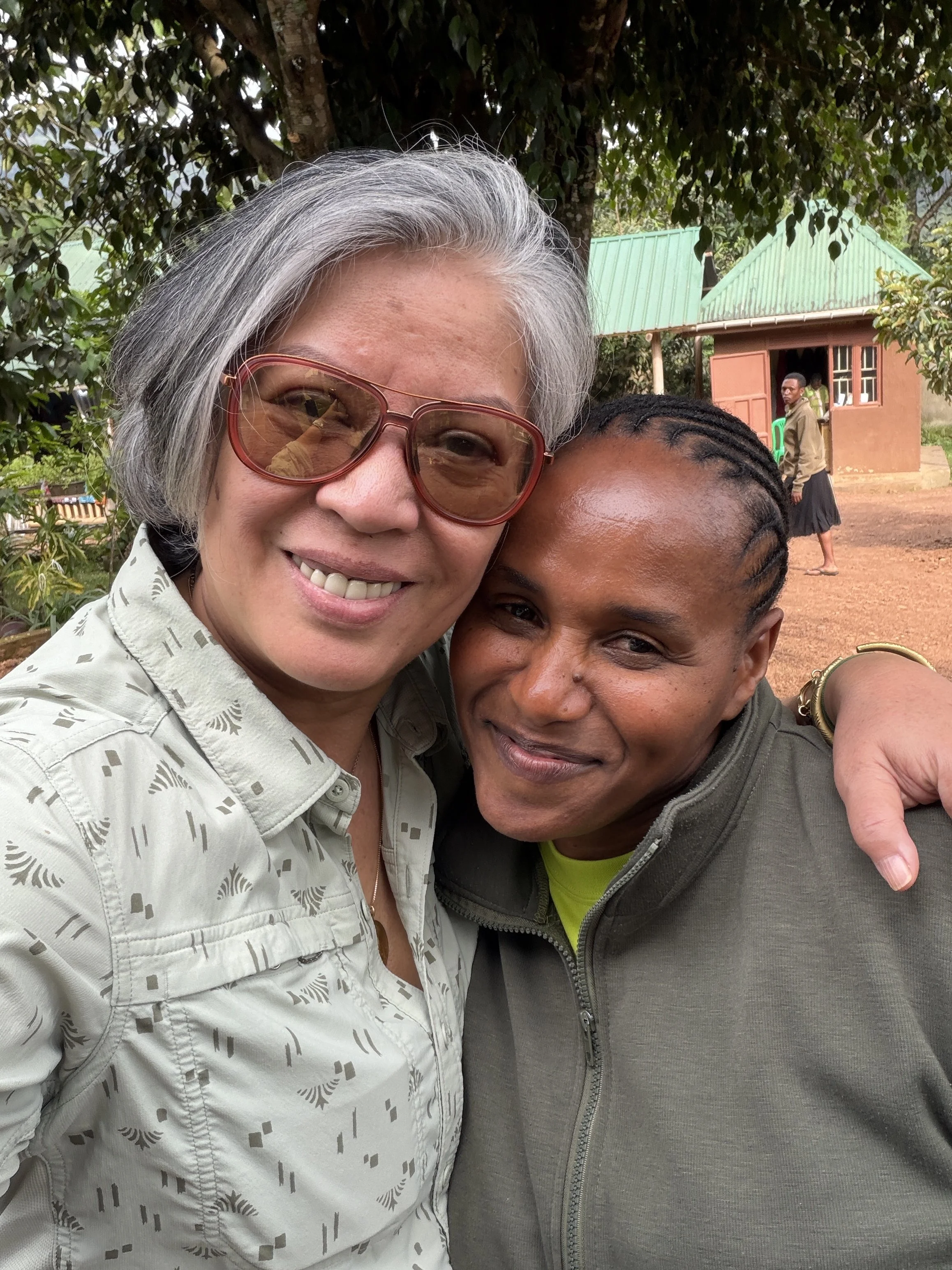
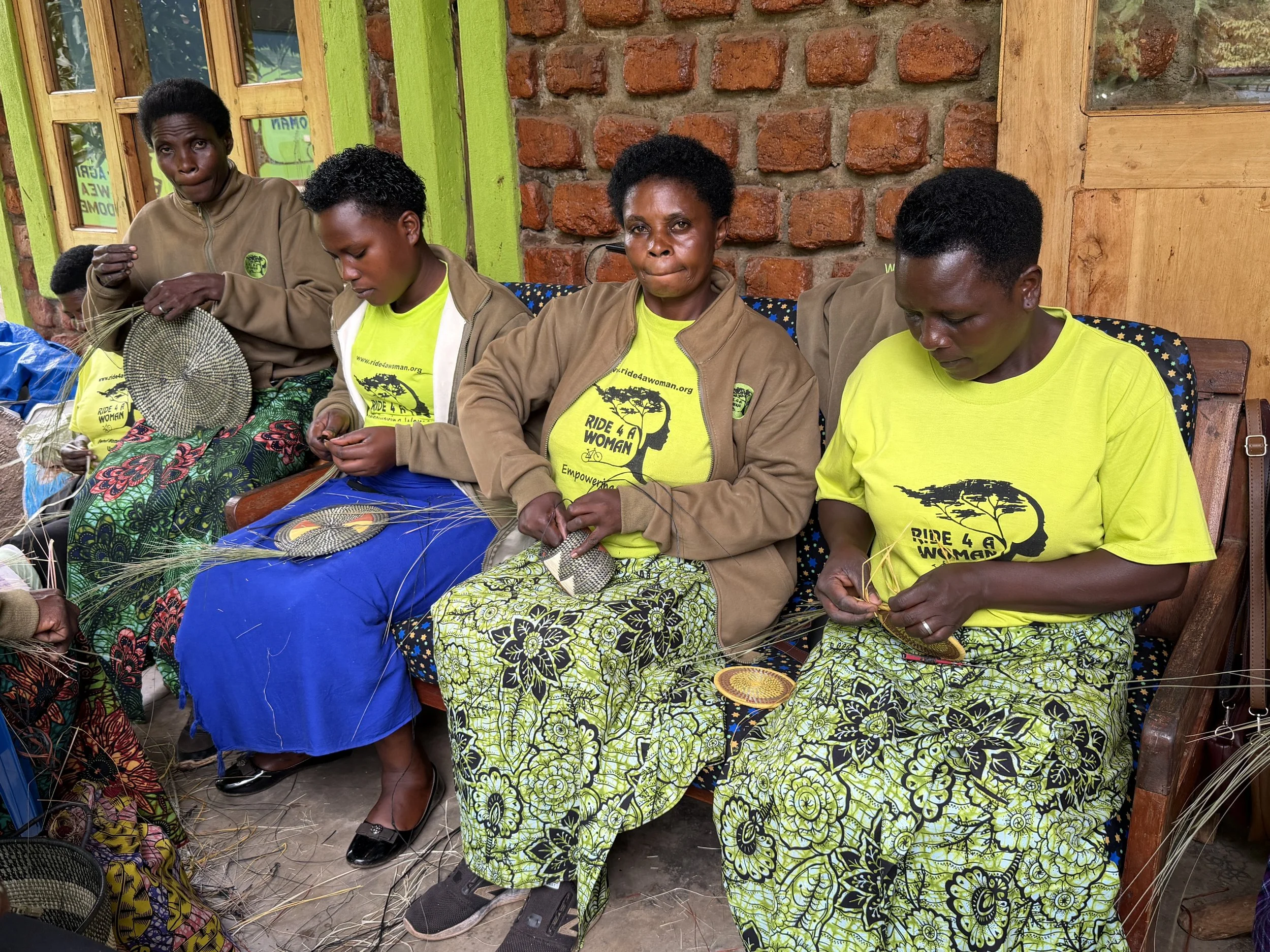
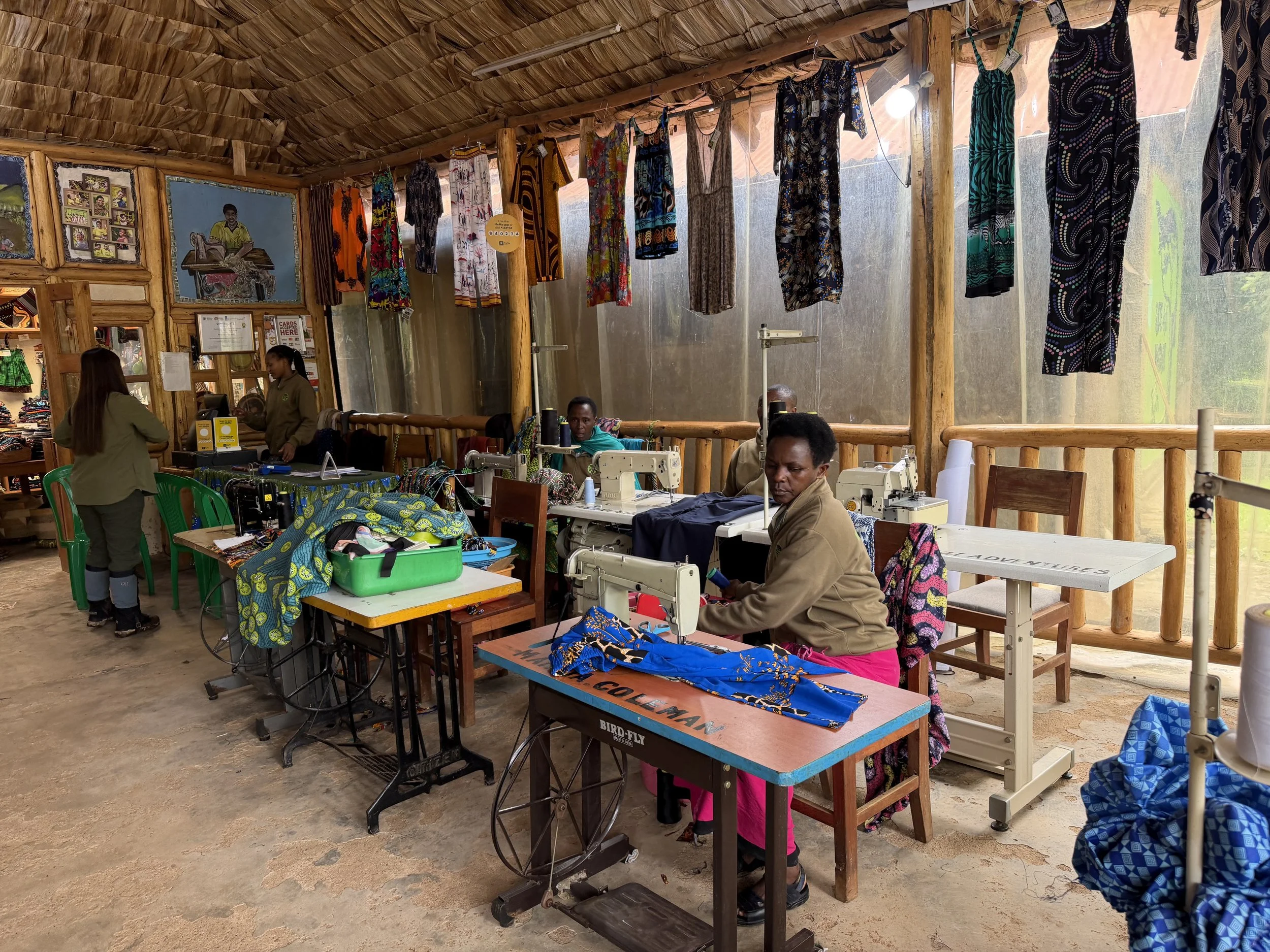
In Bwindi I returned to Ride 4 a Woman, the community enterprise founded by Evelyn Habasa.
Years ago, I had several dresses custom-made there. When I walked back in this time, Evelyn immediately recognized me.
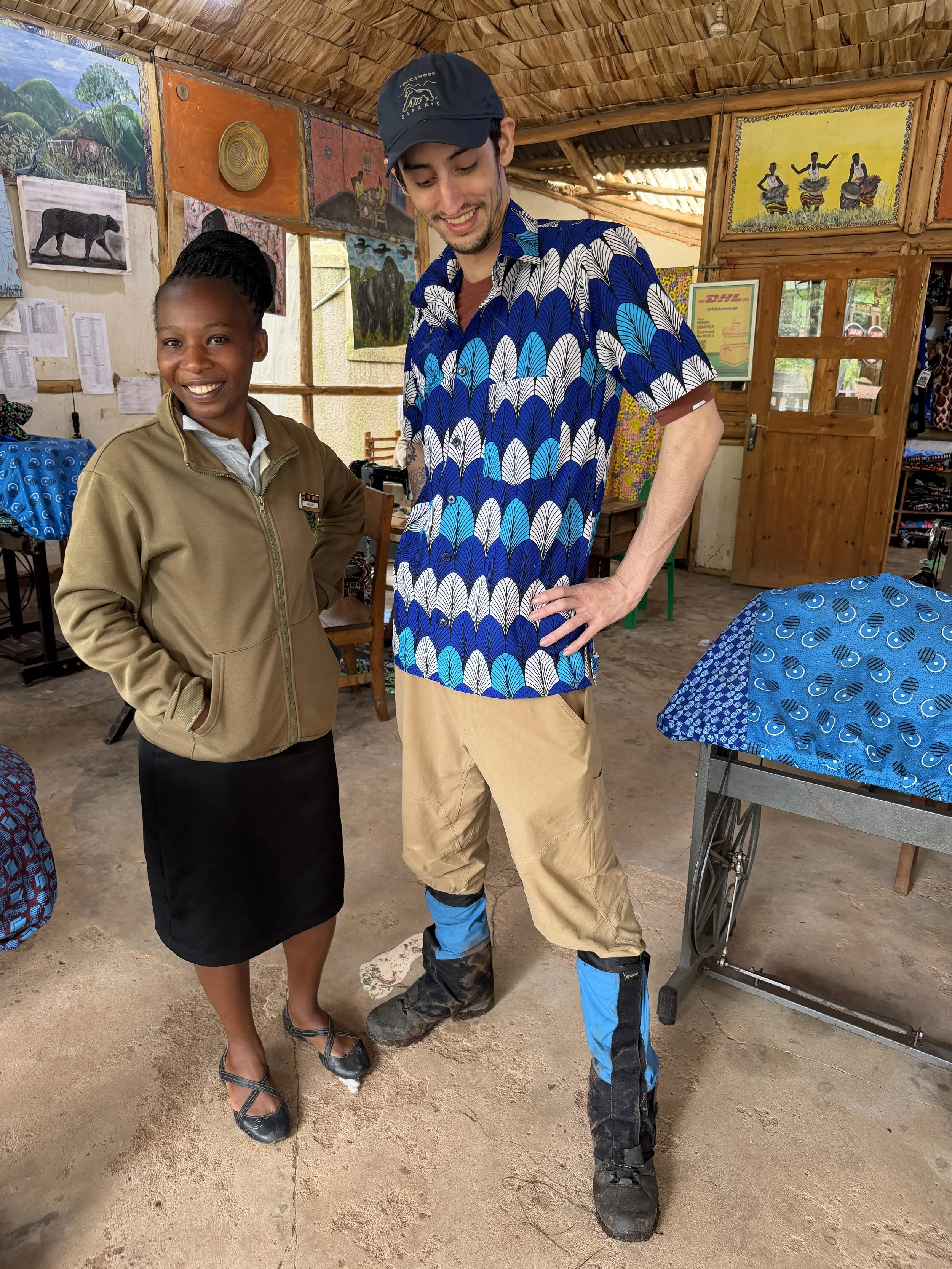
Then she turned to my son.
“Abe needs a shirt,” she declared.
Before he knew it, Auntie Evelyn had him measured for a custom shirt, gifted with the same warmth that has helped her organization grow into a thriving center supporting widows and single mothers through sewing, weaving, and hospitality.
Seeing it flourish was one of the most moving moments of the trip.
And the gorilla trek?
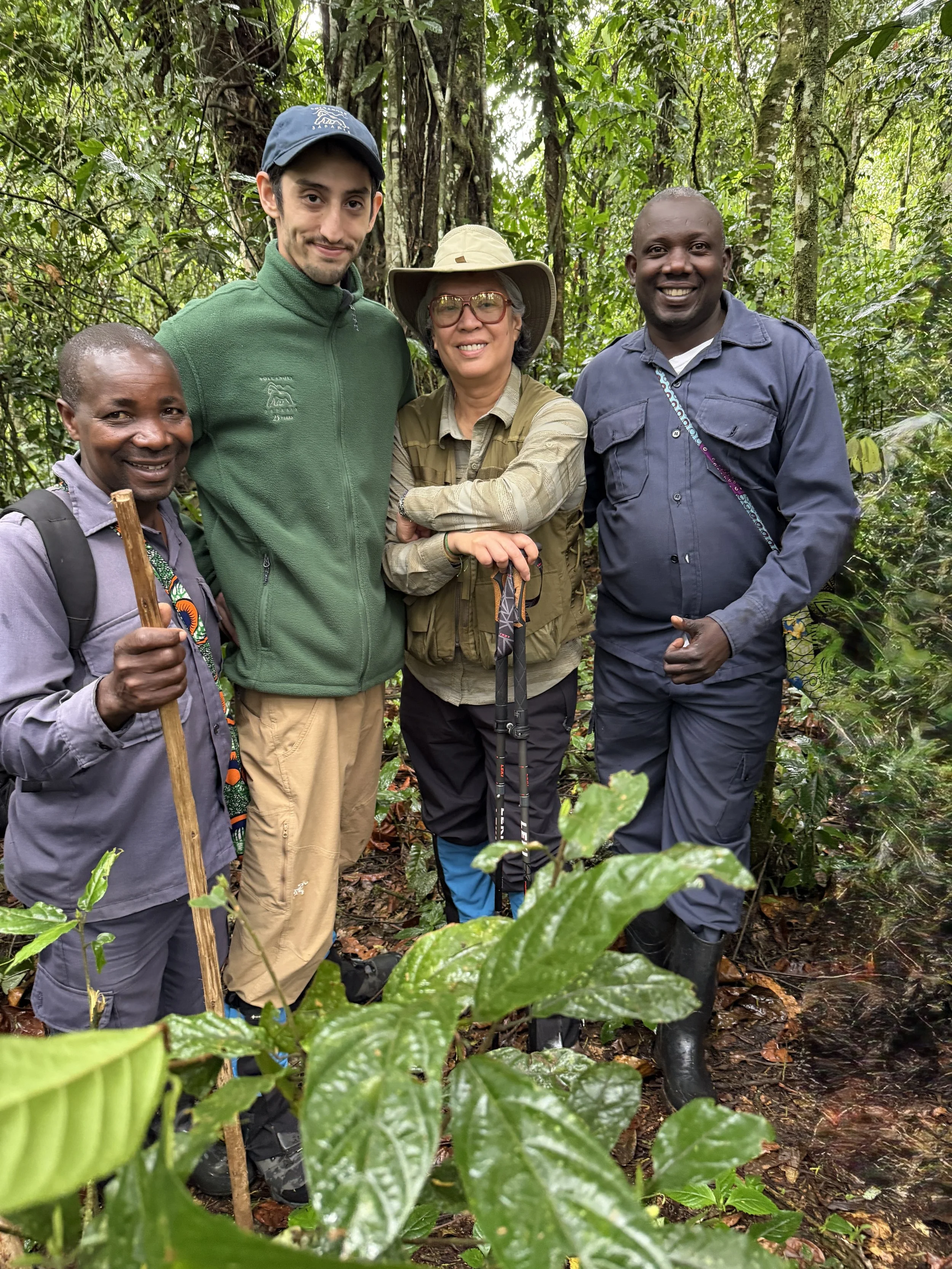
This time we truly did get an easy family.
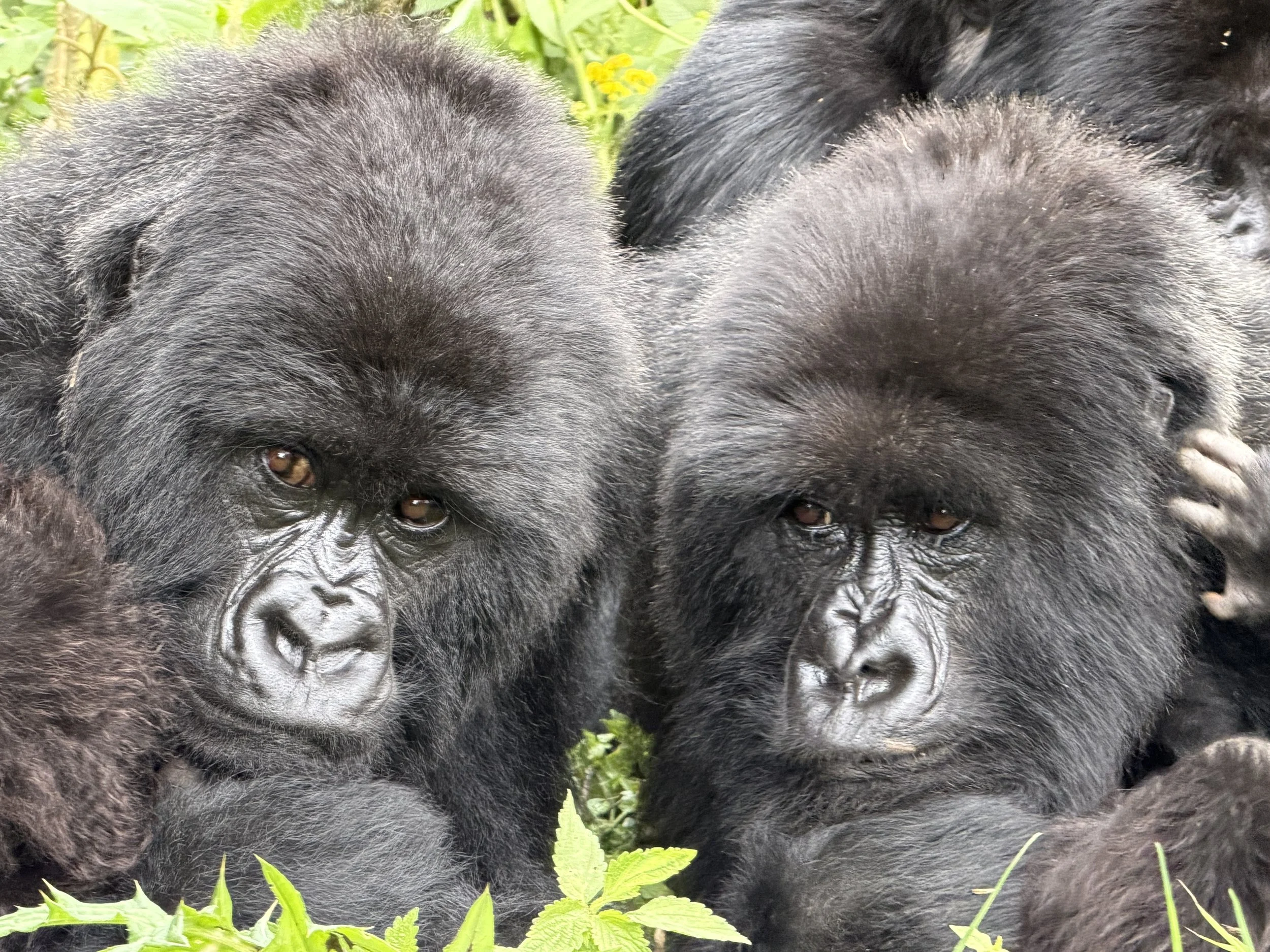
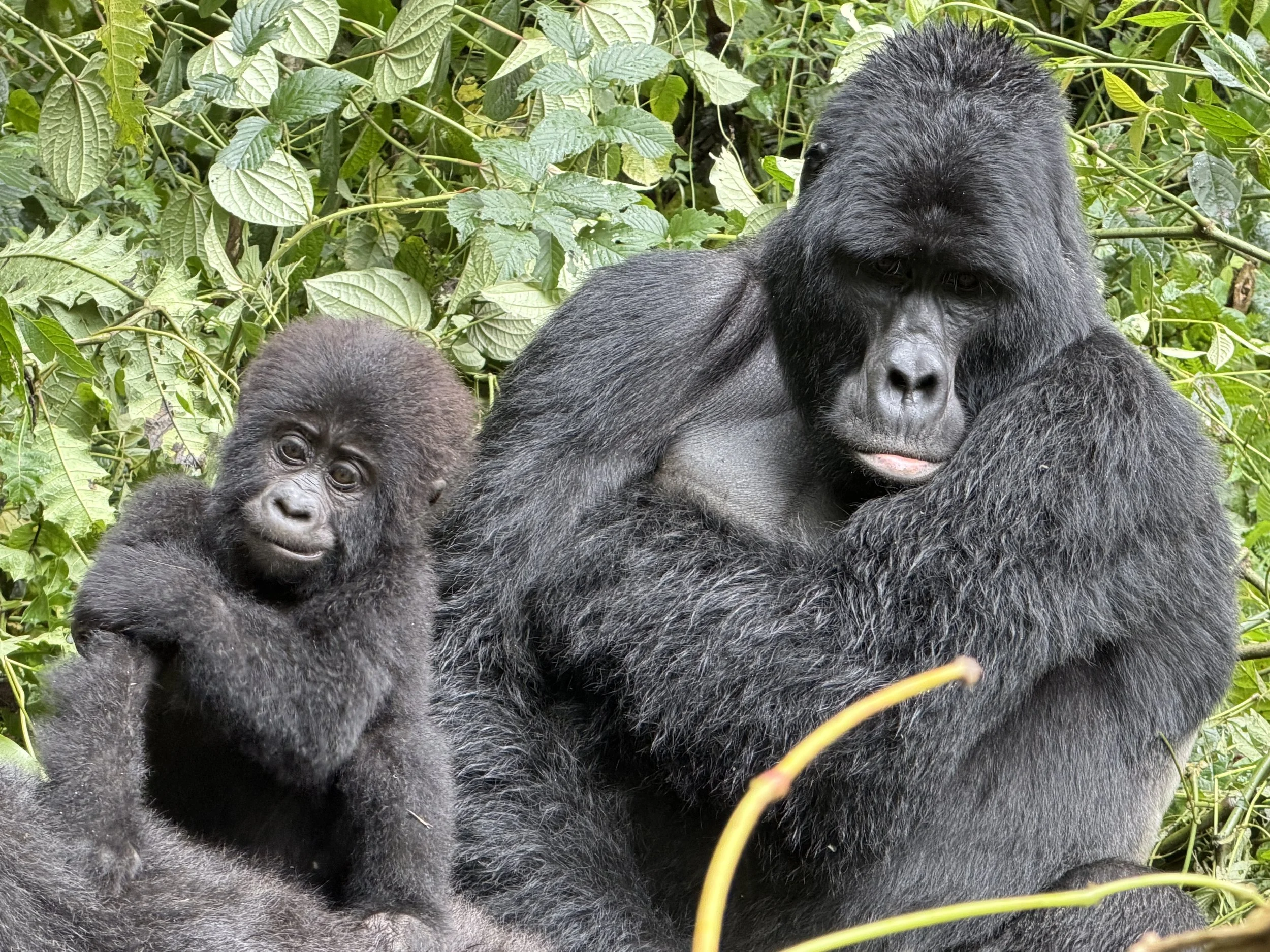
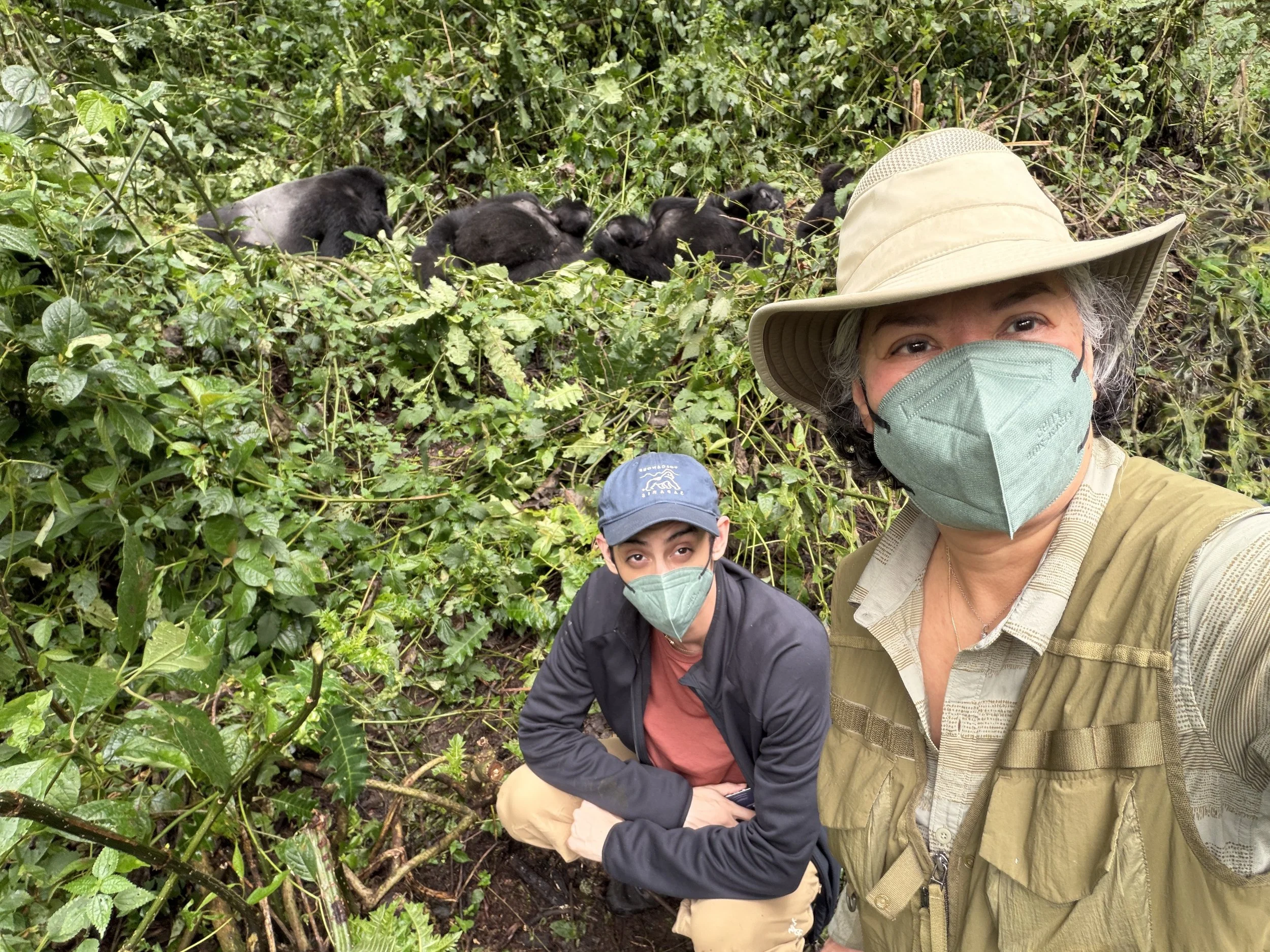
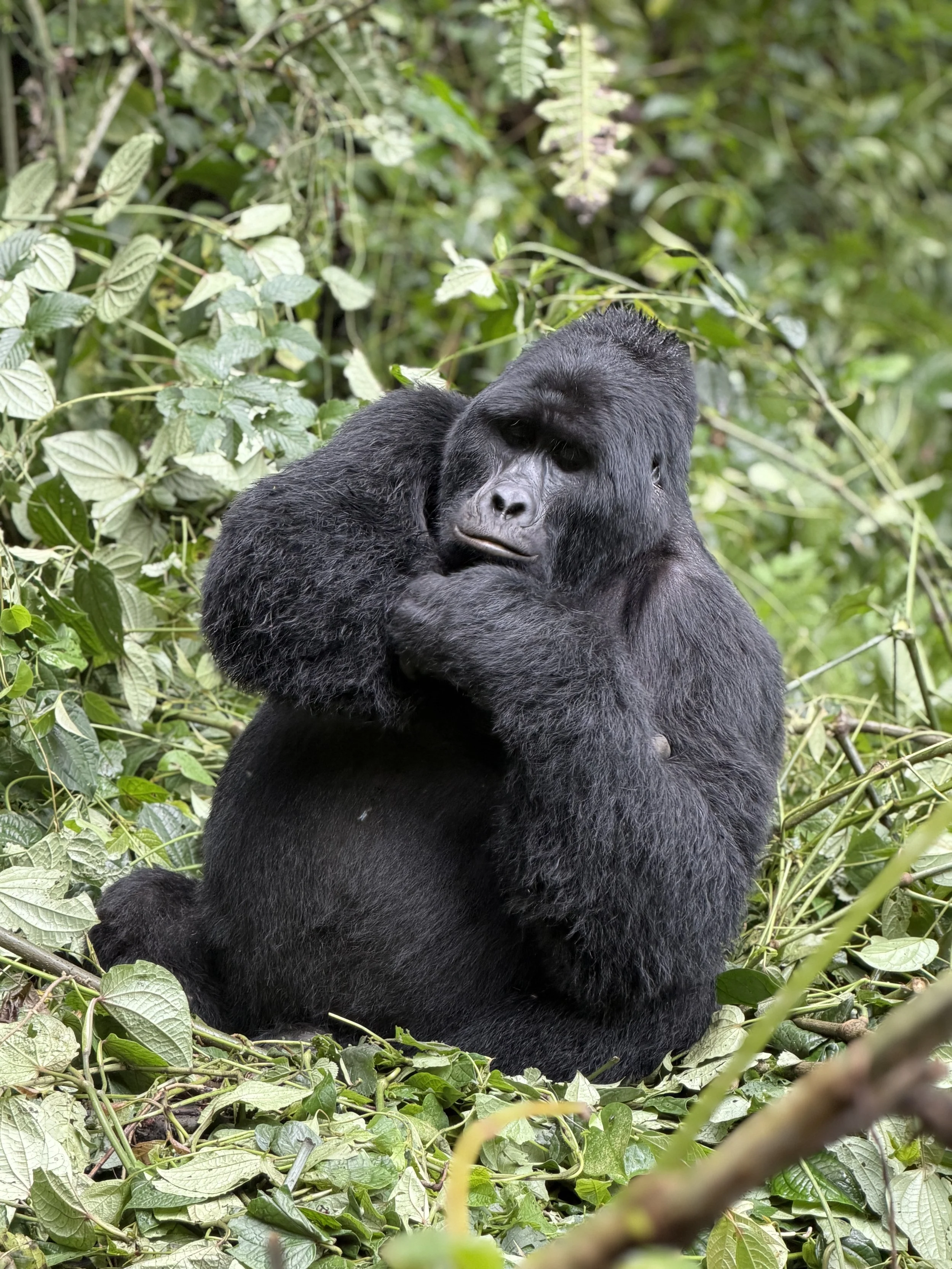
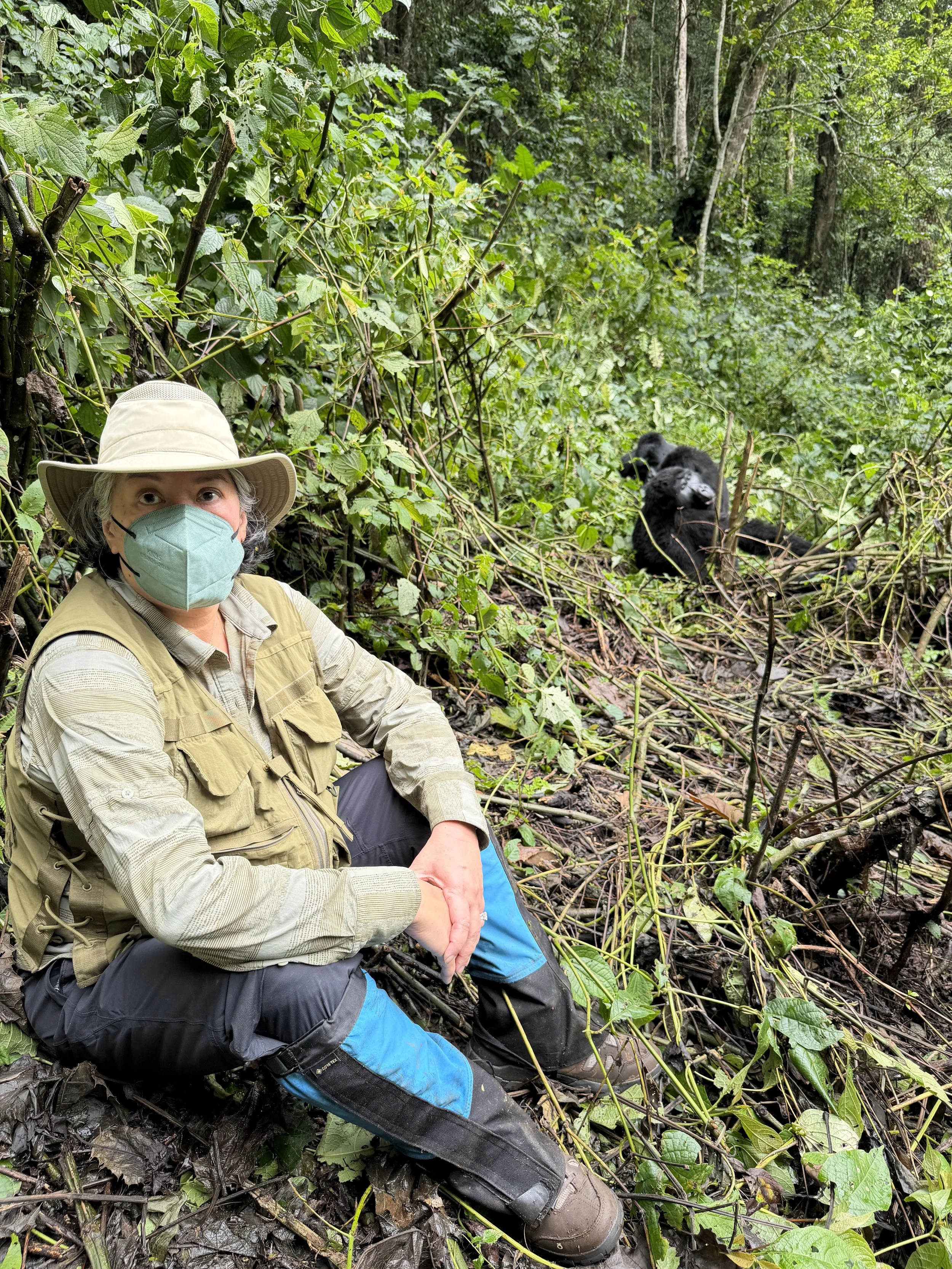
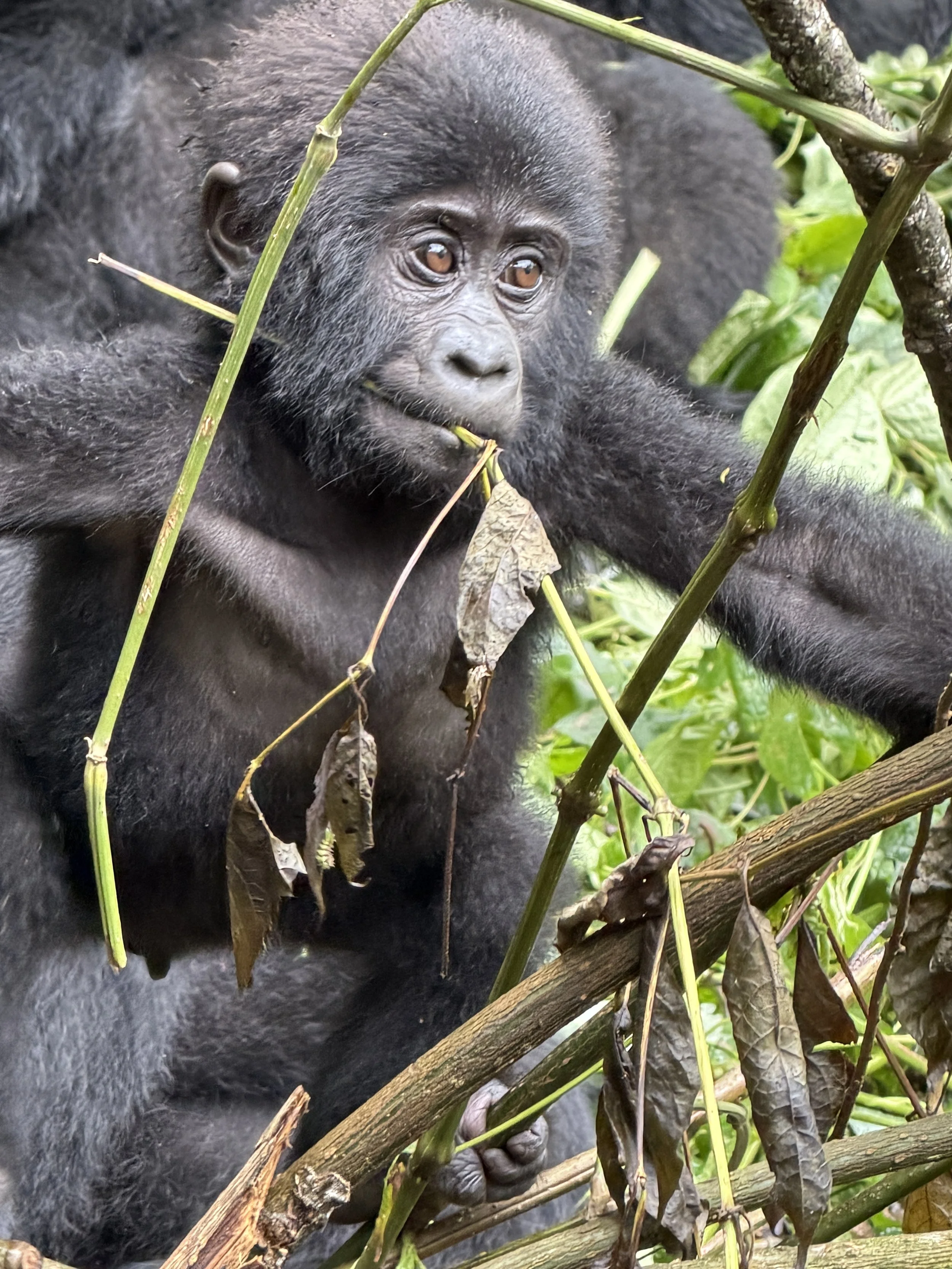
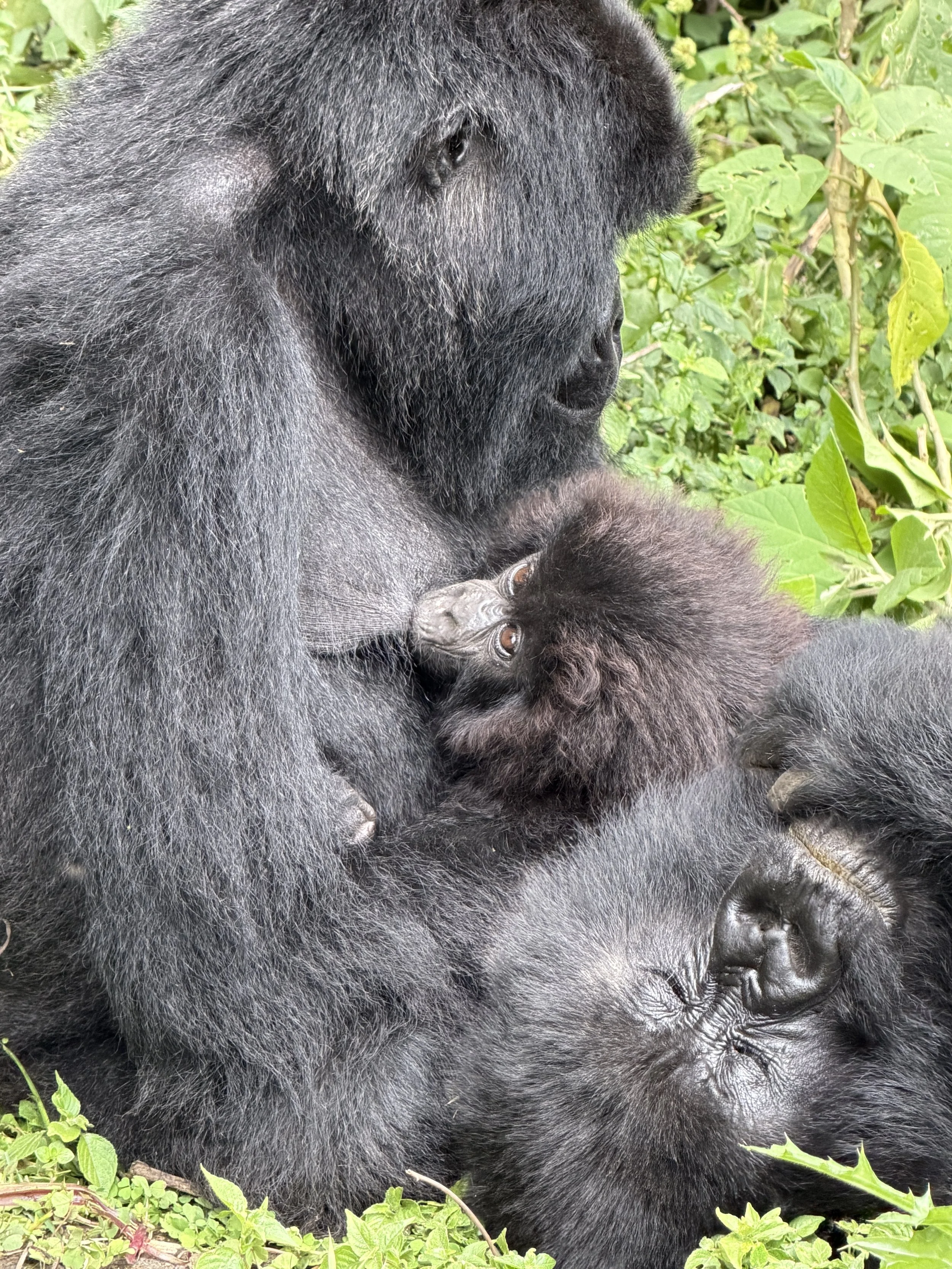
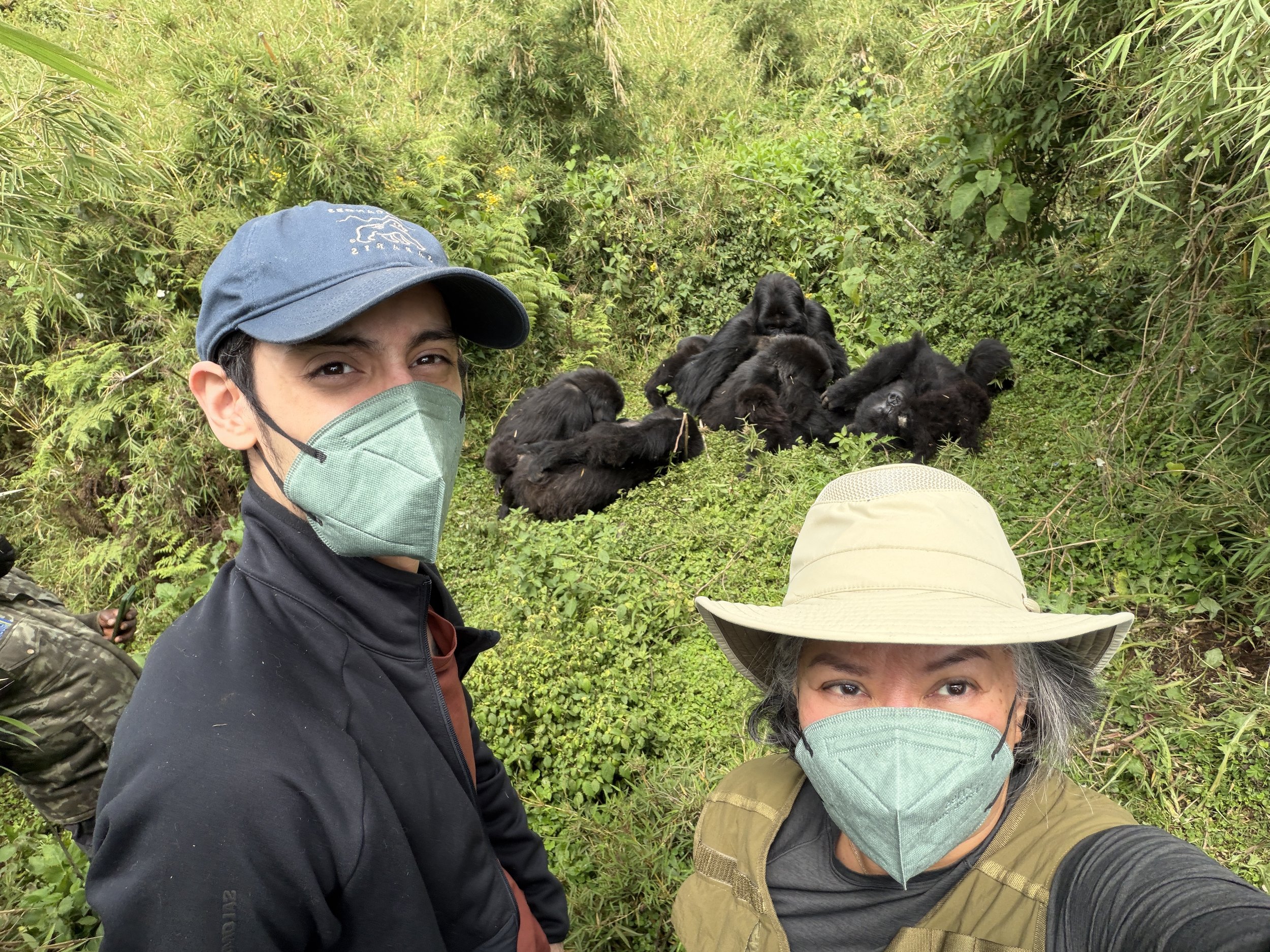
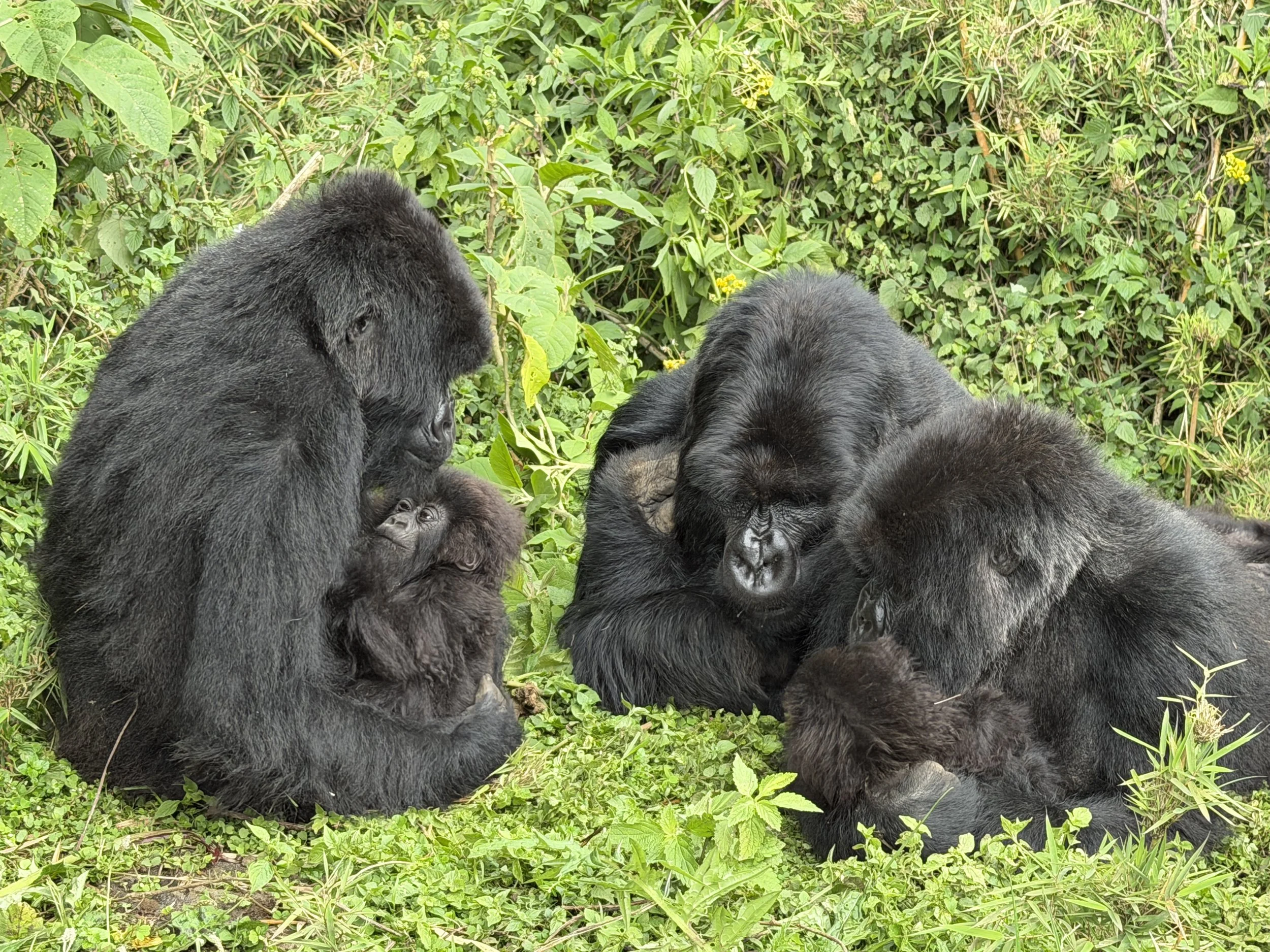
Our entire outing lasted about three hours—just one hour of hiking followed by the magical hour you’re allowed with the gorillas. Watching the silverback and his family move quietly through the forest felt almost surreal.
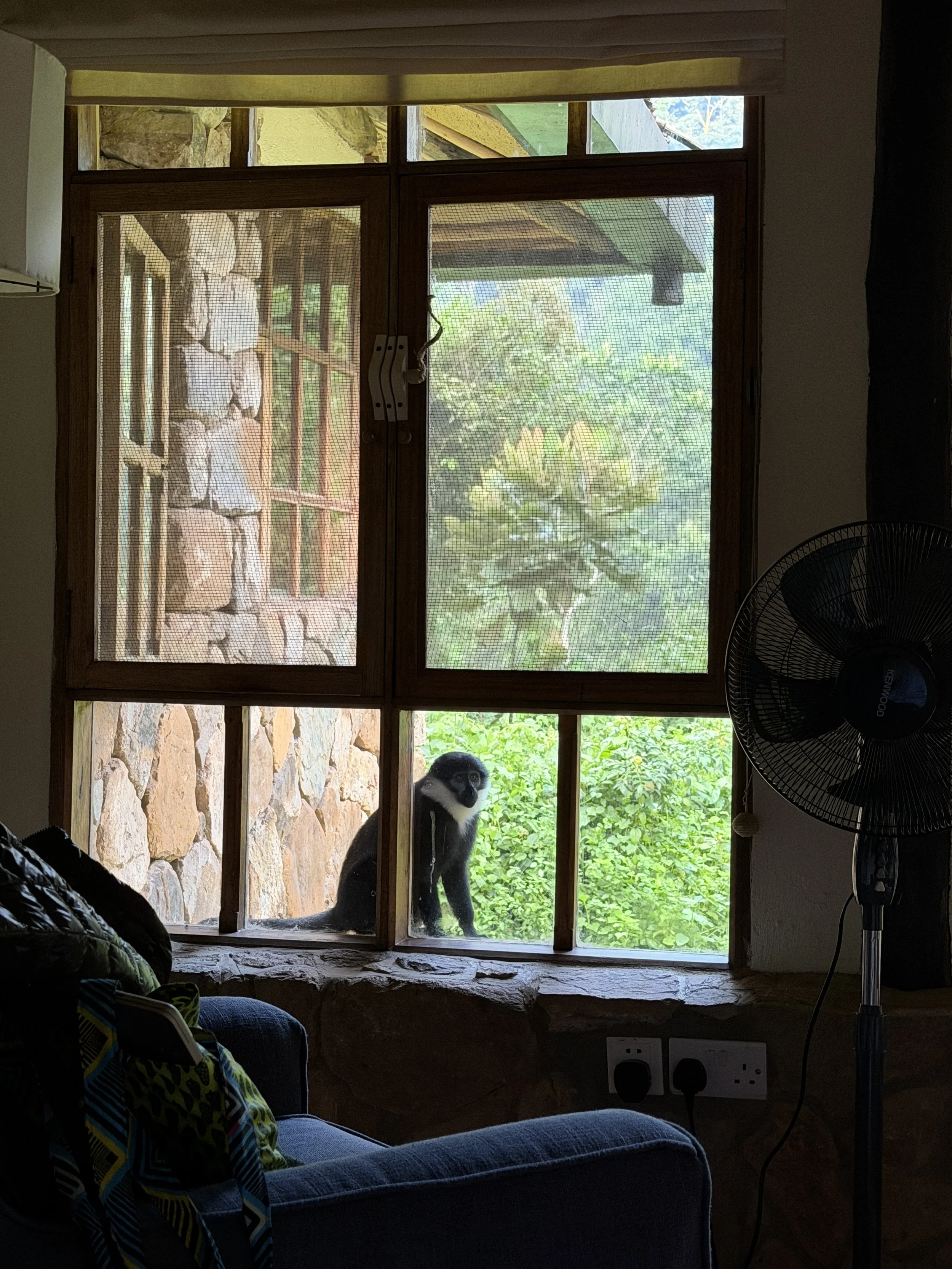
The lodge in Bwindi sits right in the forest, and the wildlife comes astonishingly close. Monkeys often appeared just outside our windows, and occasionally even gorillas wander onto the lodge grounds.
Redemption achieved.
Mount Gahinga and the Batwa
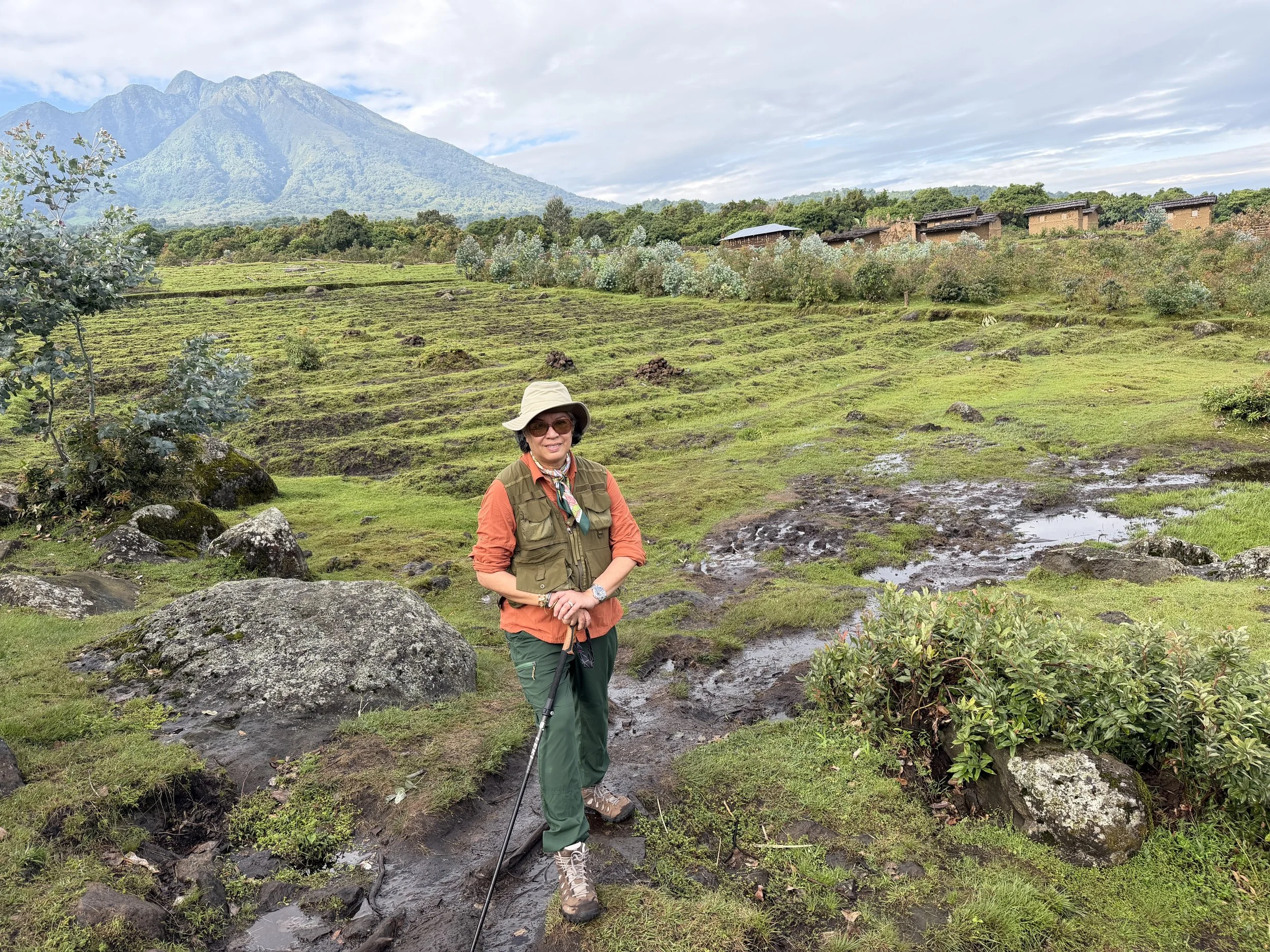
From Bwindi we flew north to Mount Gahinga Lodge, perched at 2,300 meters at the base of the Virunga volcanoes. It was the first lodge built by Volcanoes Safaris and still feels wonderfully intimate—more like a mountain home than a hotel.
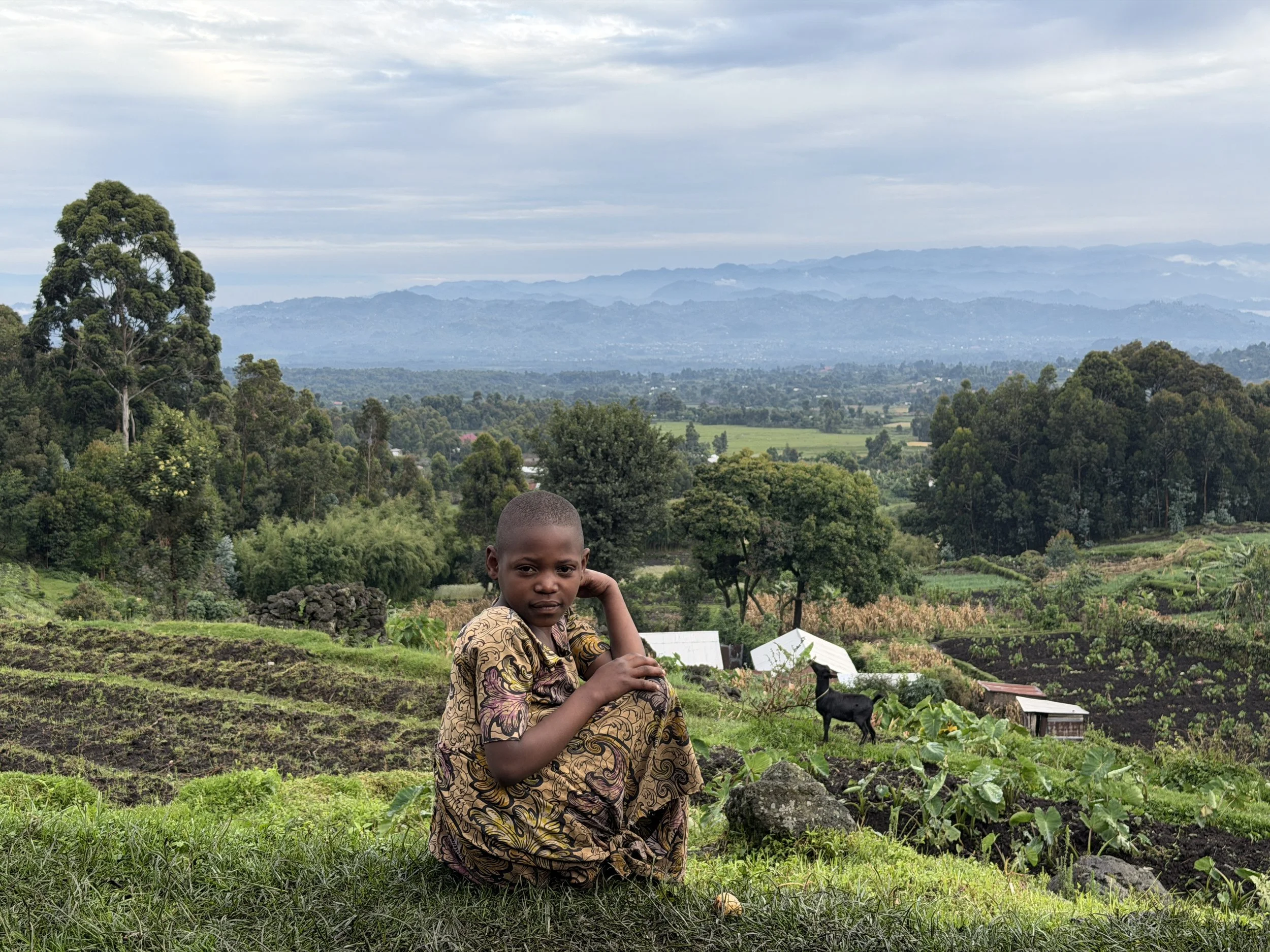
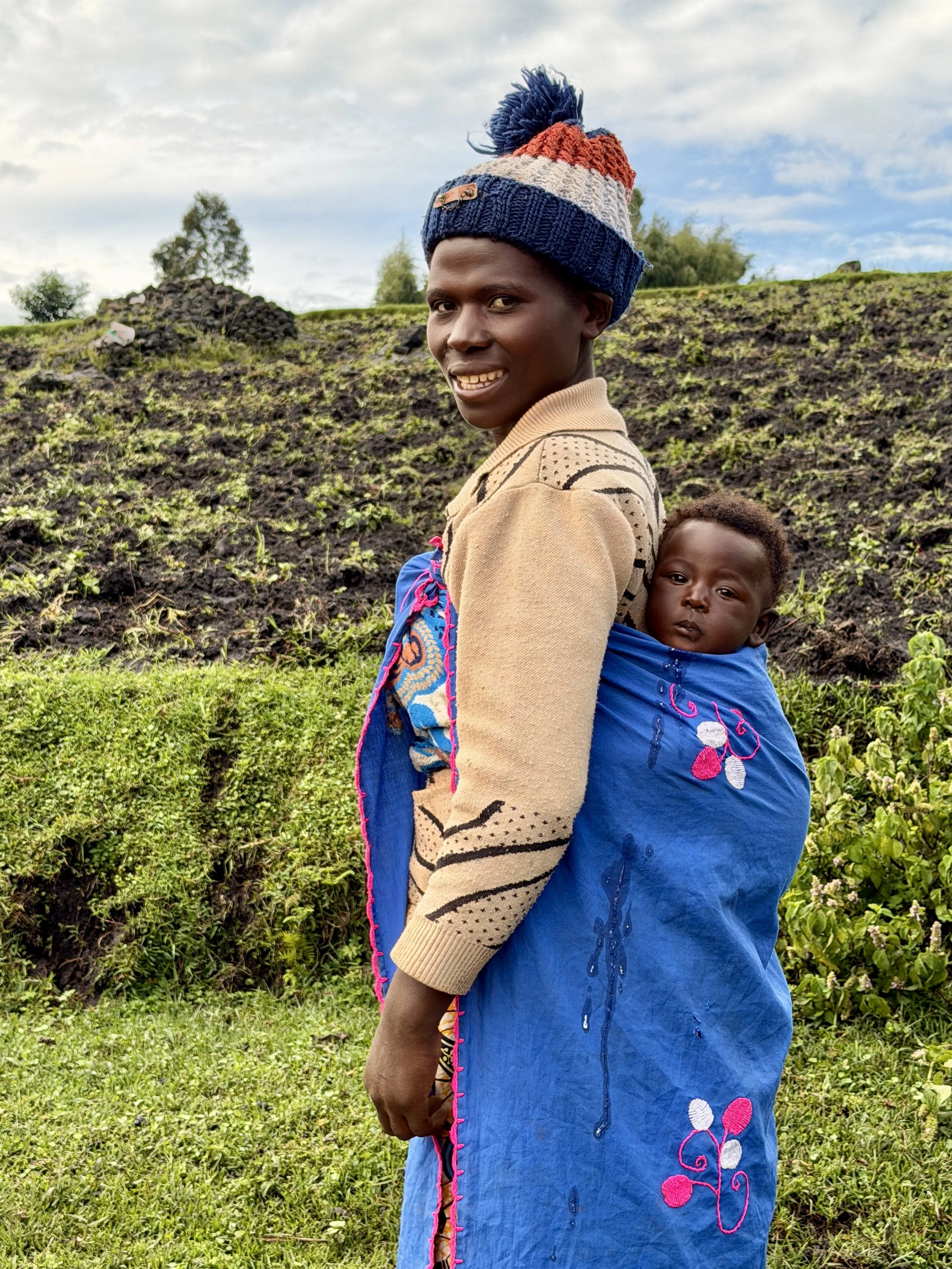
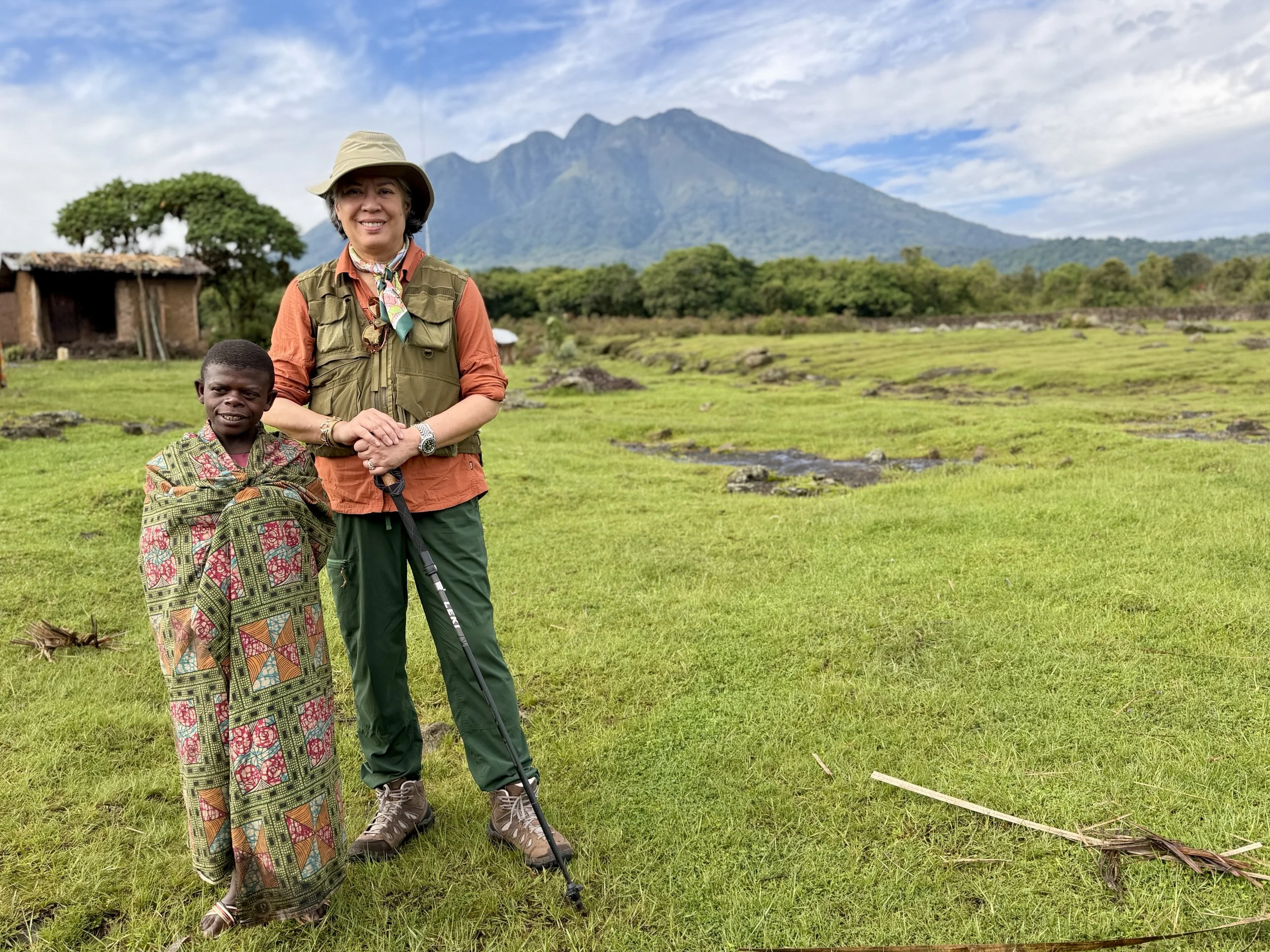
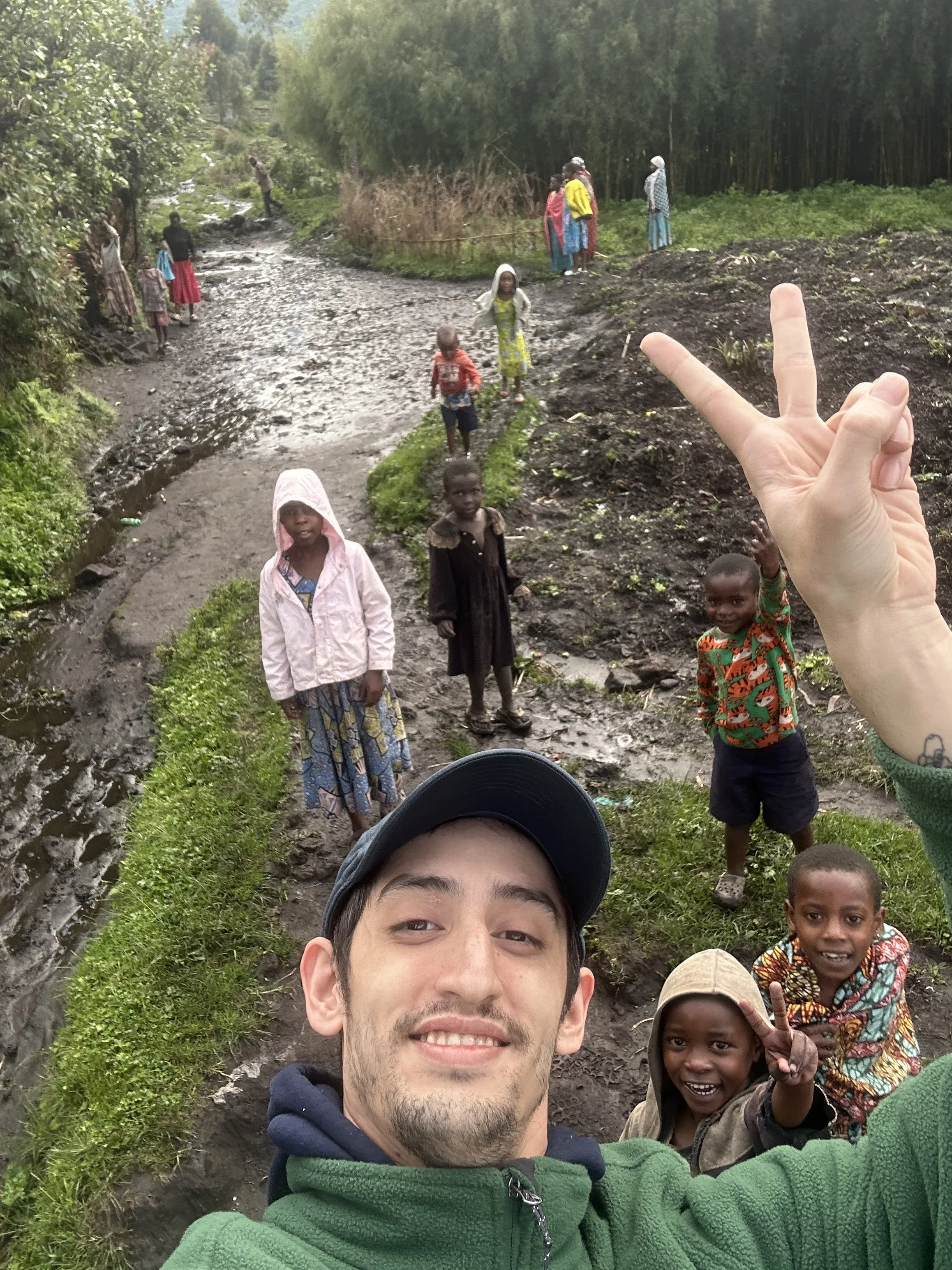
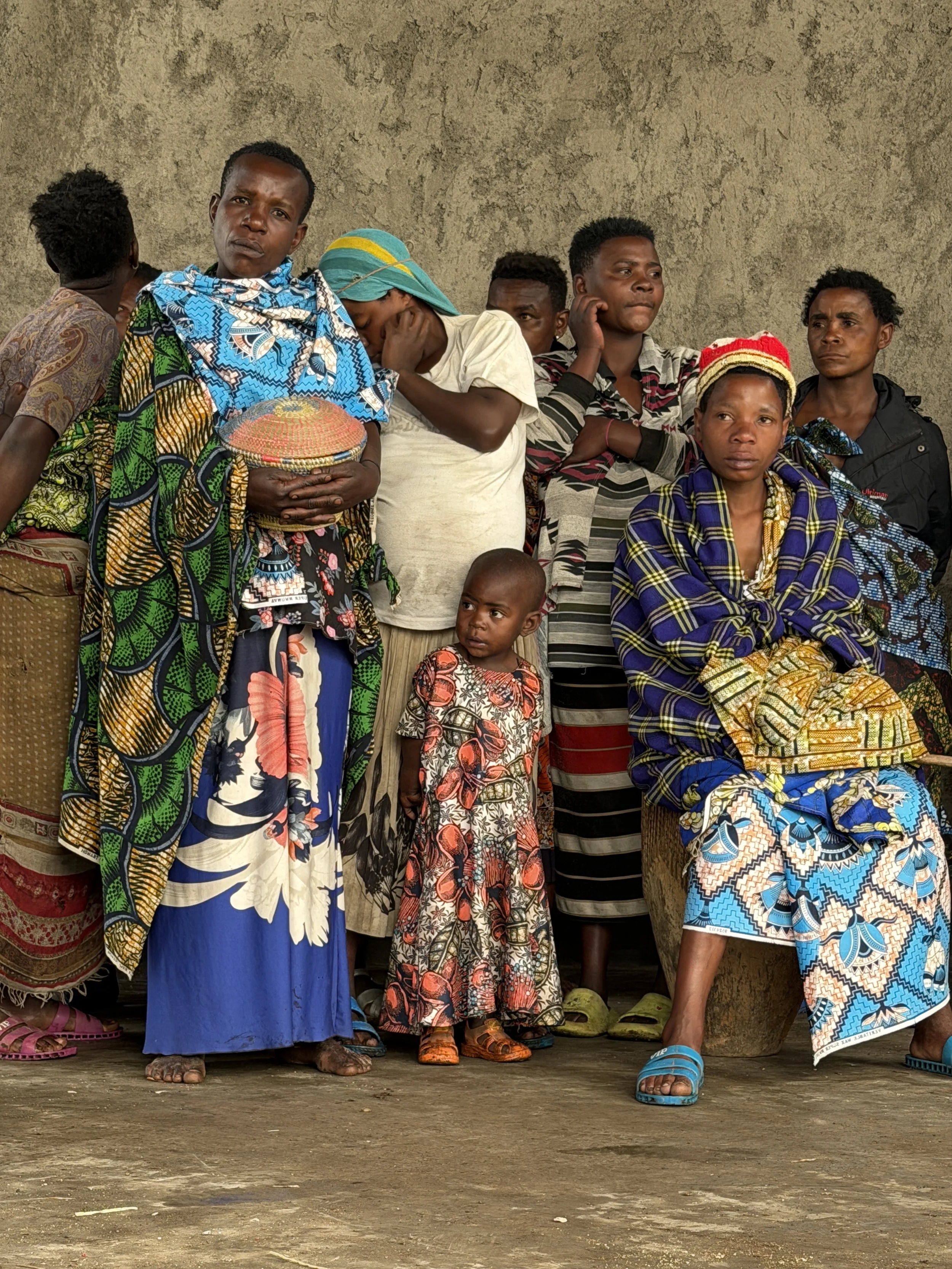
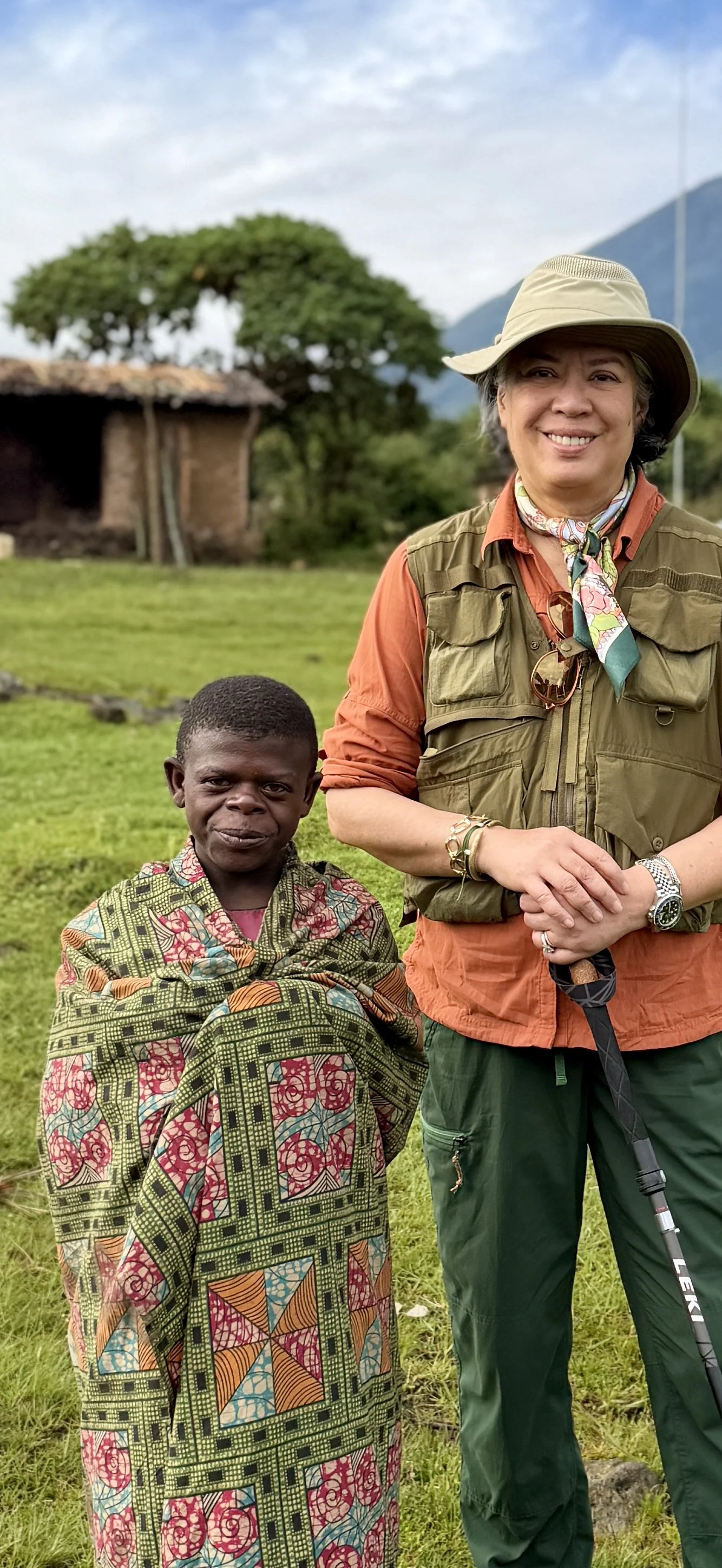
One of the most meaningful experiences here was visiting the Batwa community, the original forest dwellers of this region who were displaced when national parks were created to protect the gorillas.
Walking through the fields into the village, listening to stories and songs that have been passed down through generations, was a powerful reminder that conservation must include the people who have lived alongside these forests for centuries.
Rwanda: One Last Trek
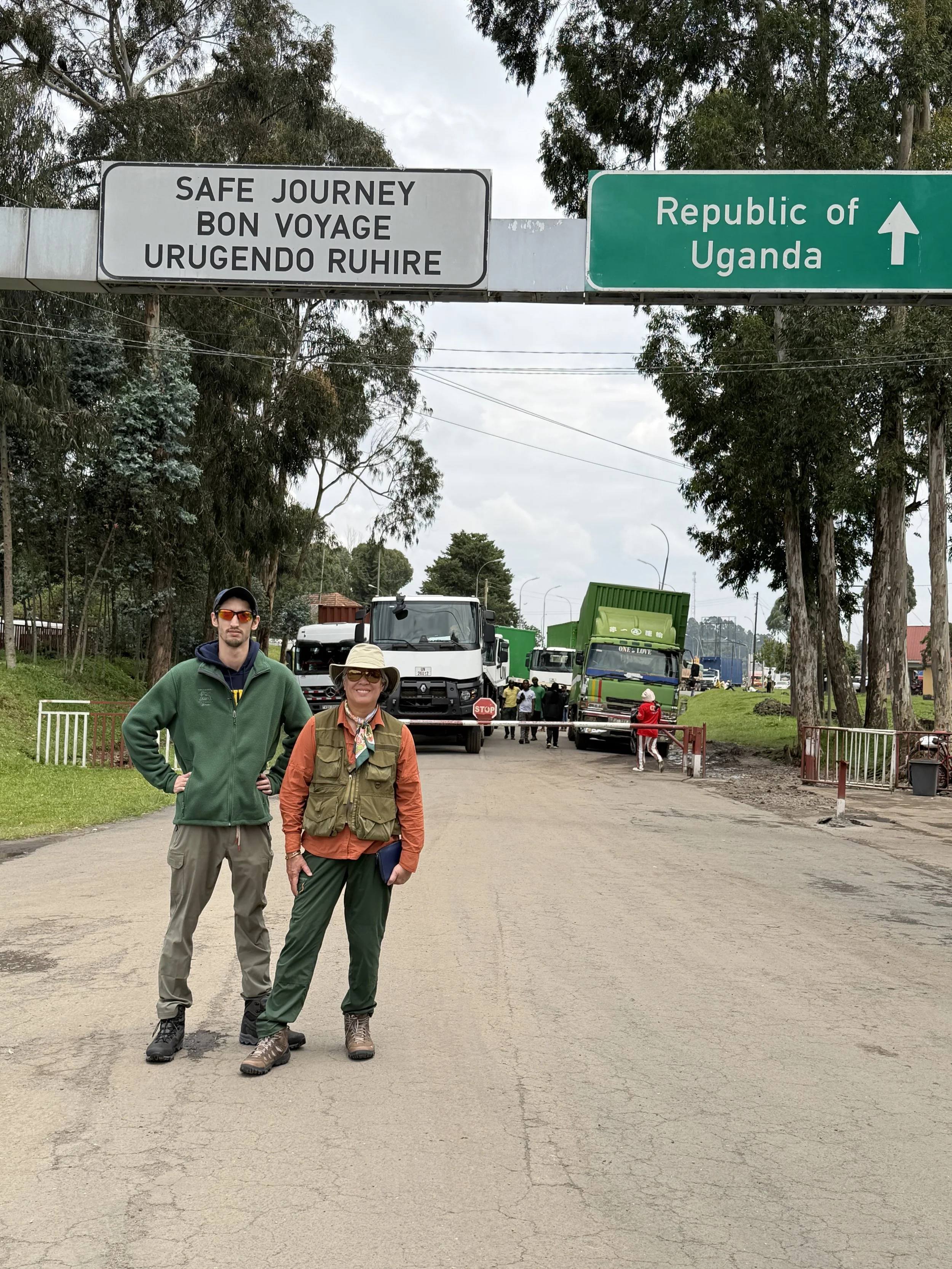
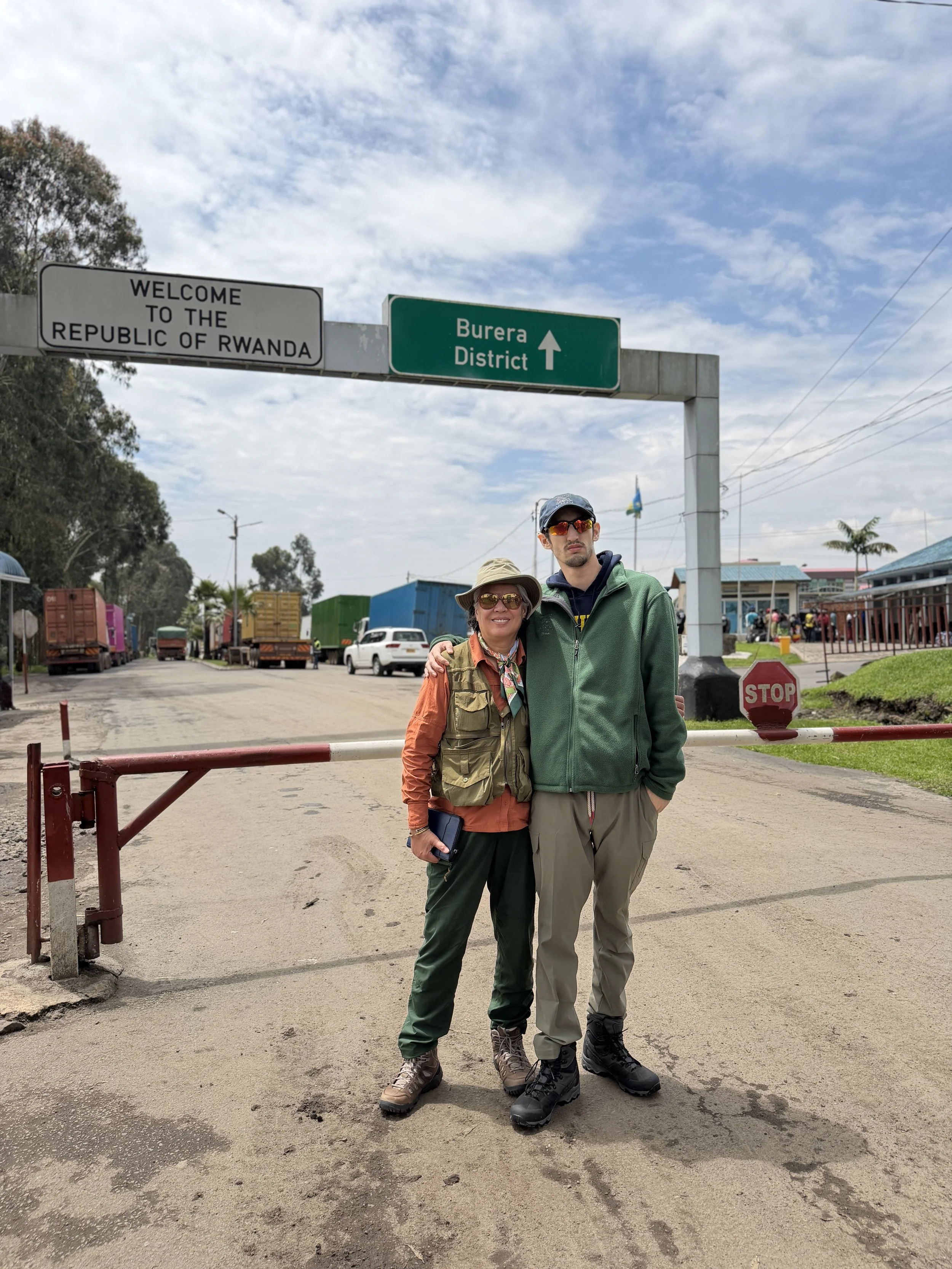
From Mount Gahinga we crossed the land border into Rwanda.
The difference was immediate. Rwanda’s roads are immaculate, its towns orderly, and the rolling green landscape makes clear why it is known as the Land of a Thousand Hills.
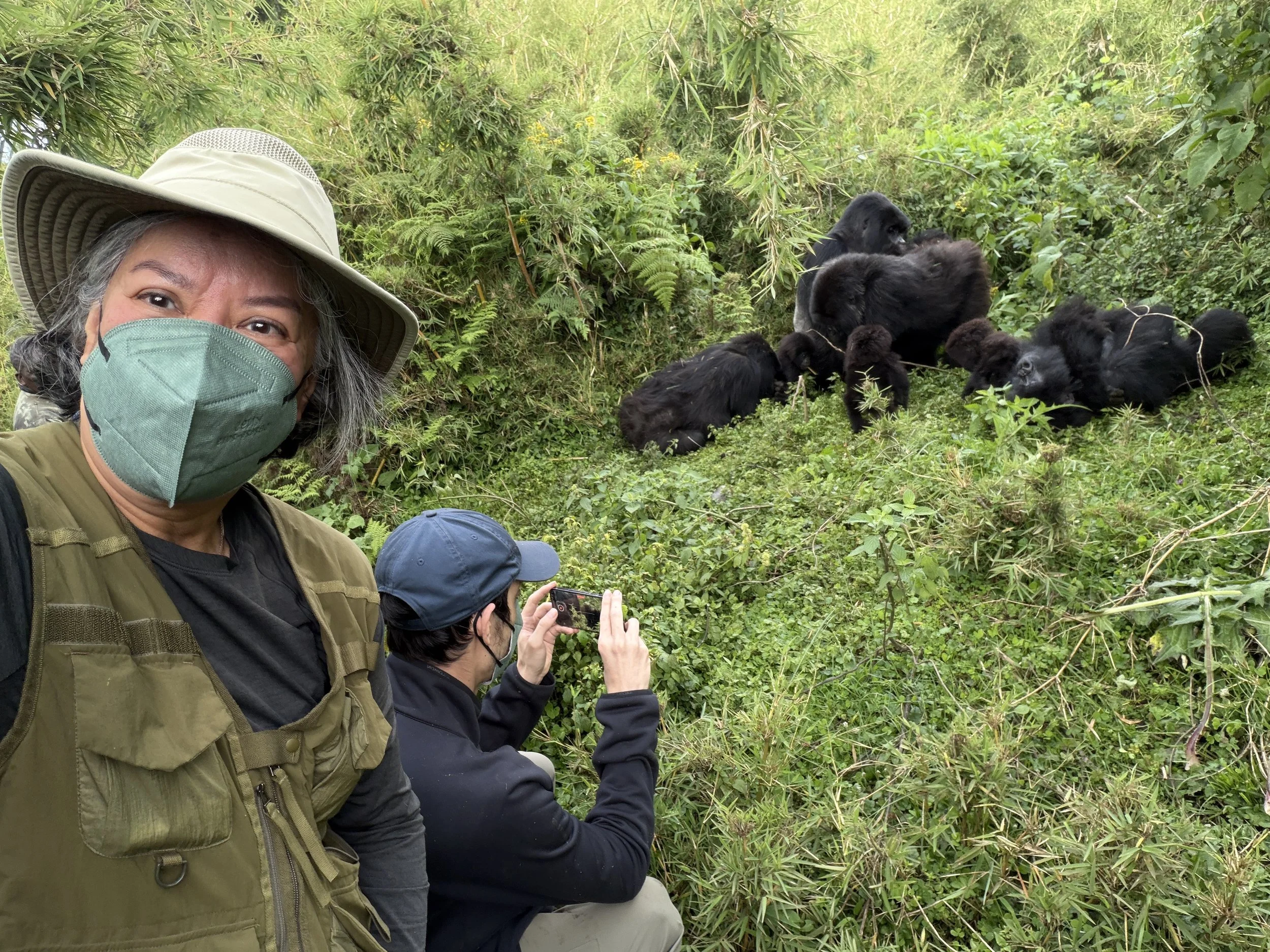
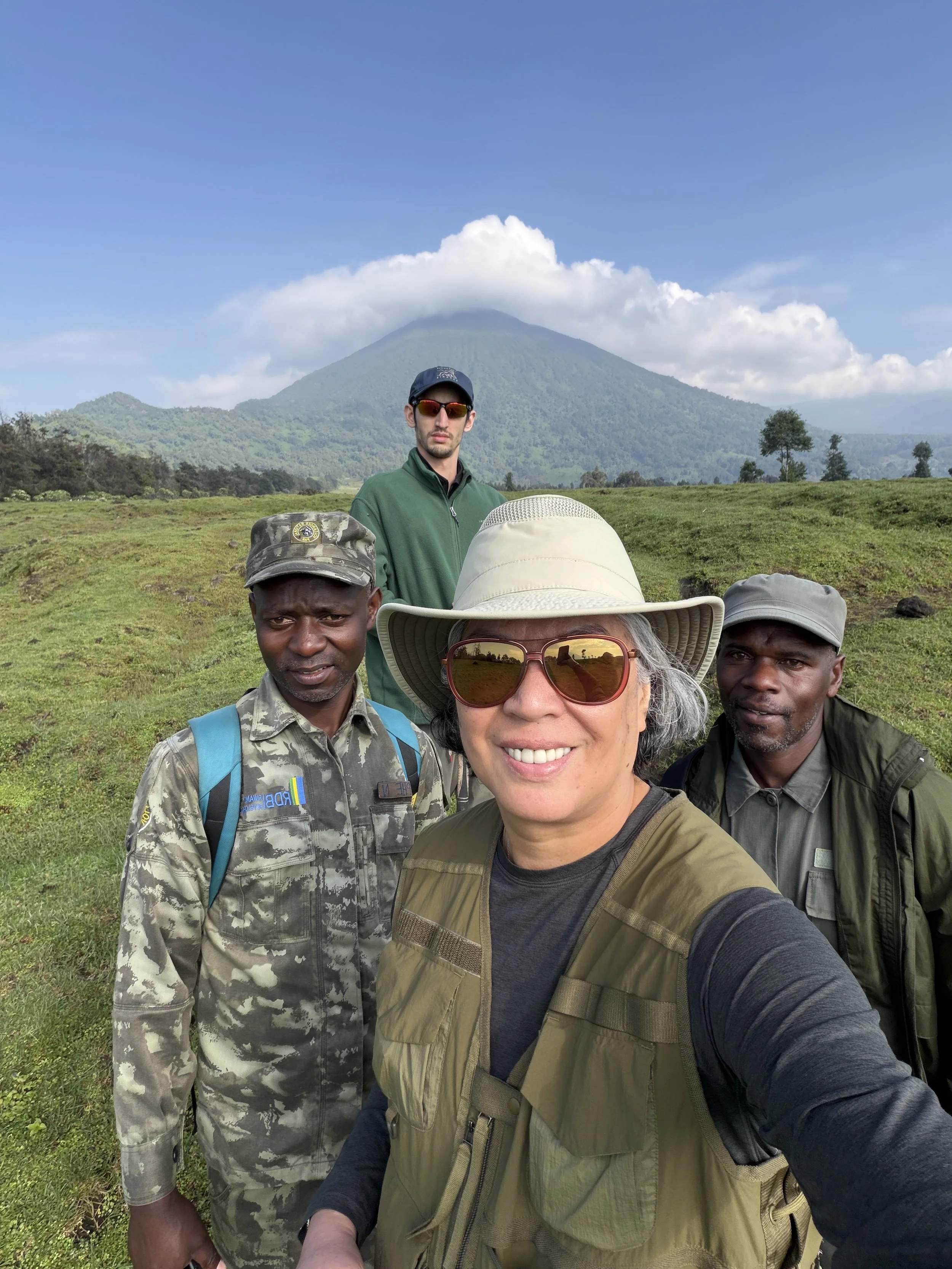
At Virunga Lodge, perched high above shimmering lakes, Abe and I prepared for my final gorilla trek.
By sheer luck, we were the only guests assigned to our ranger.
A private trek.
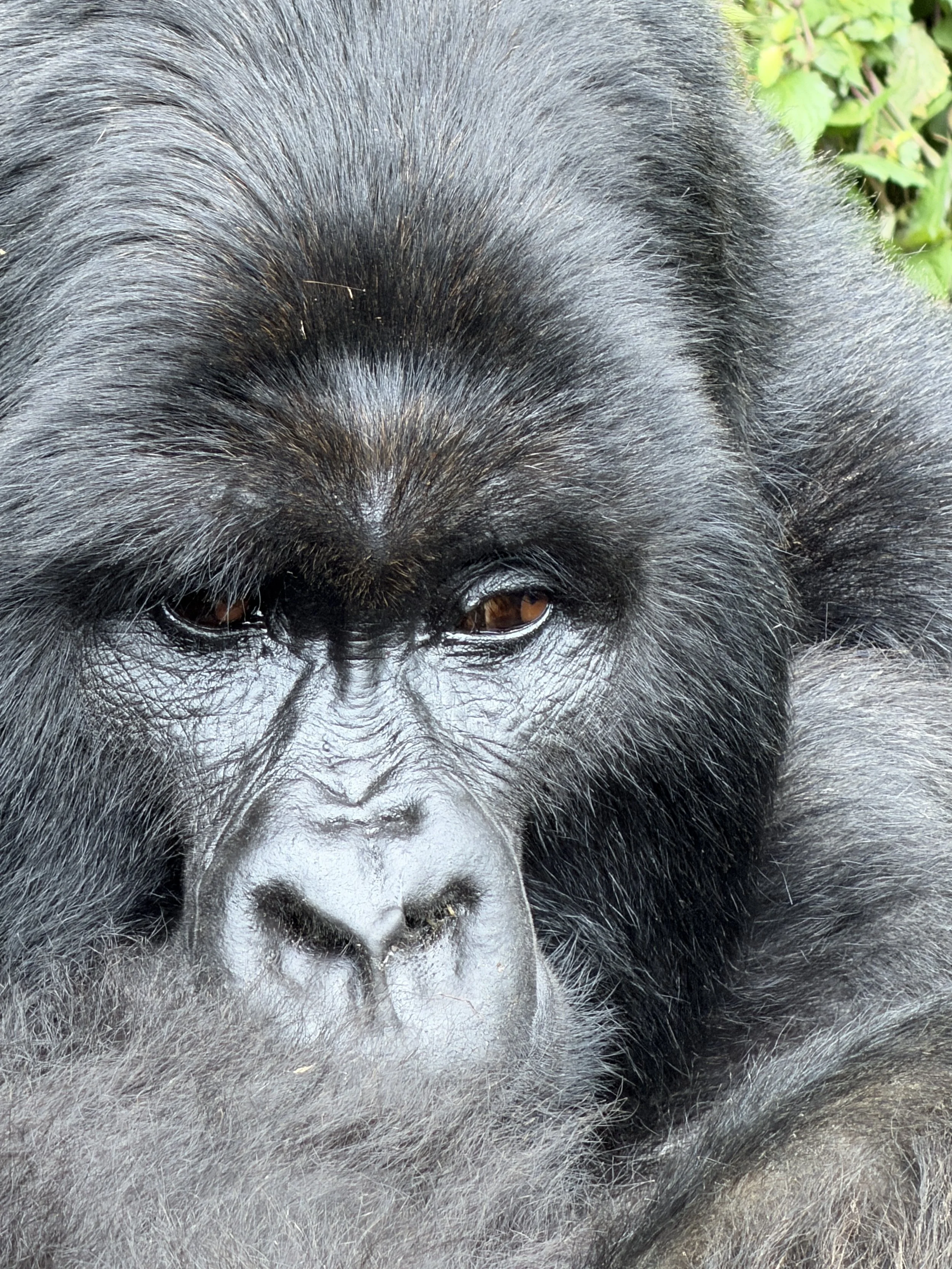
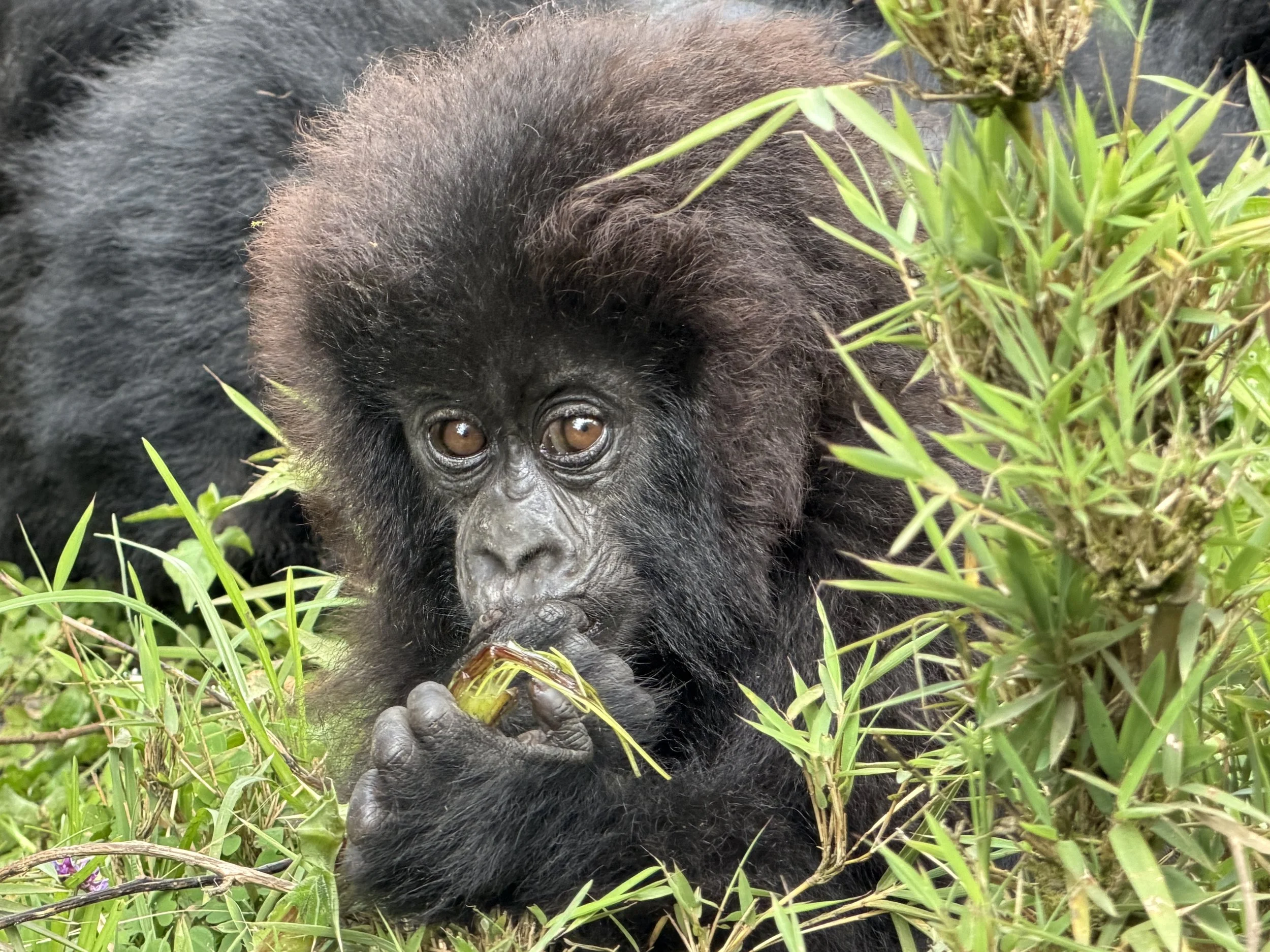
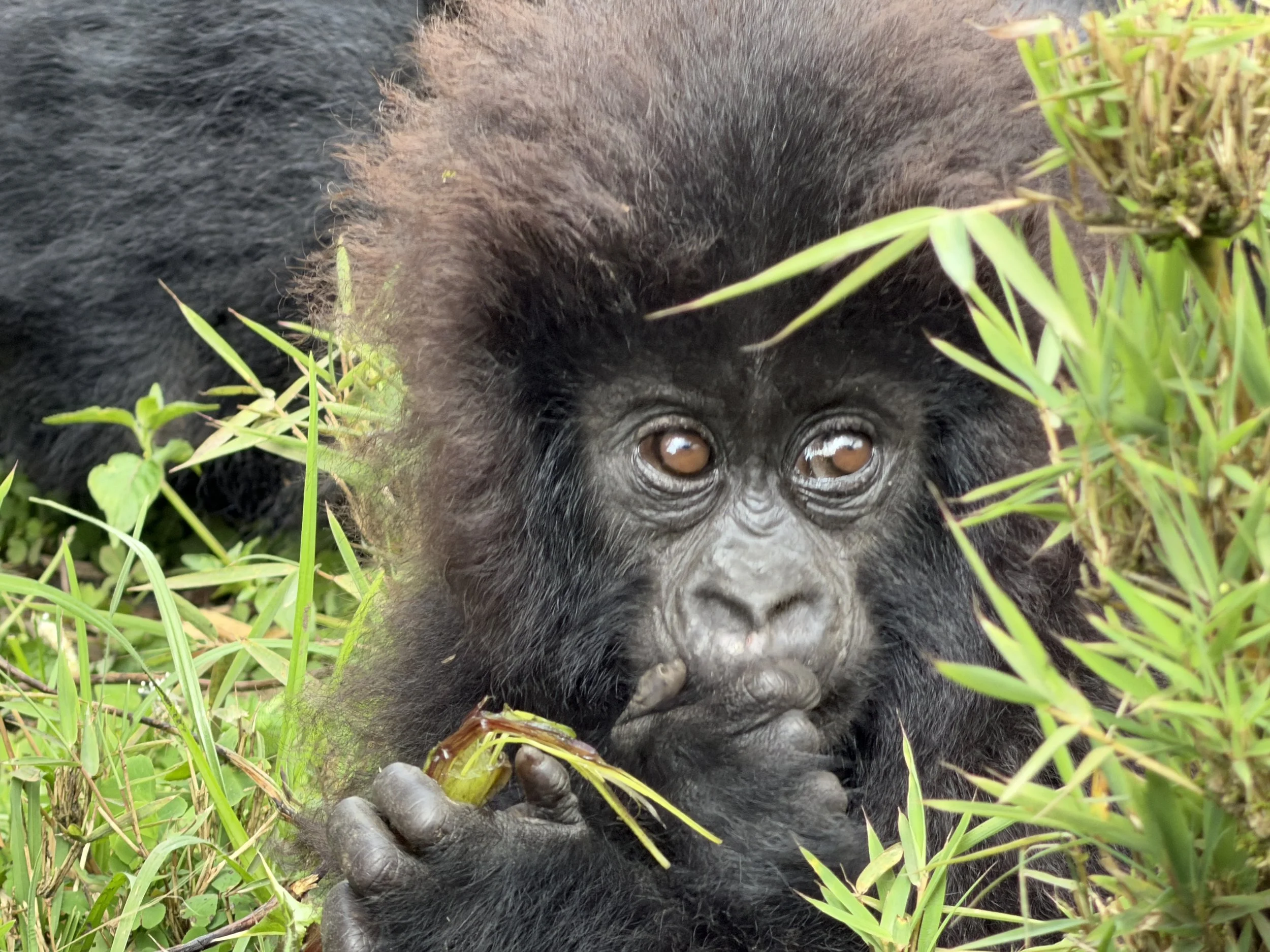
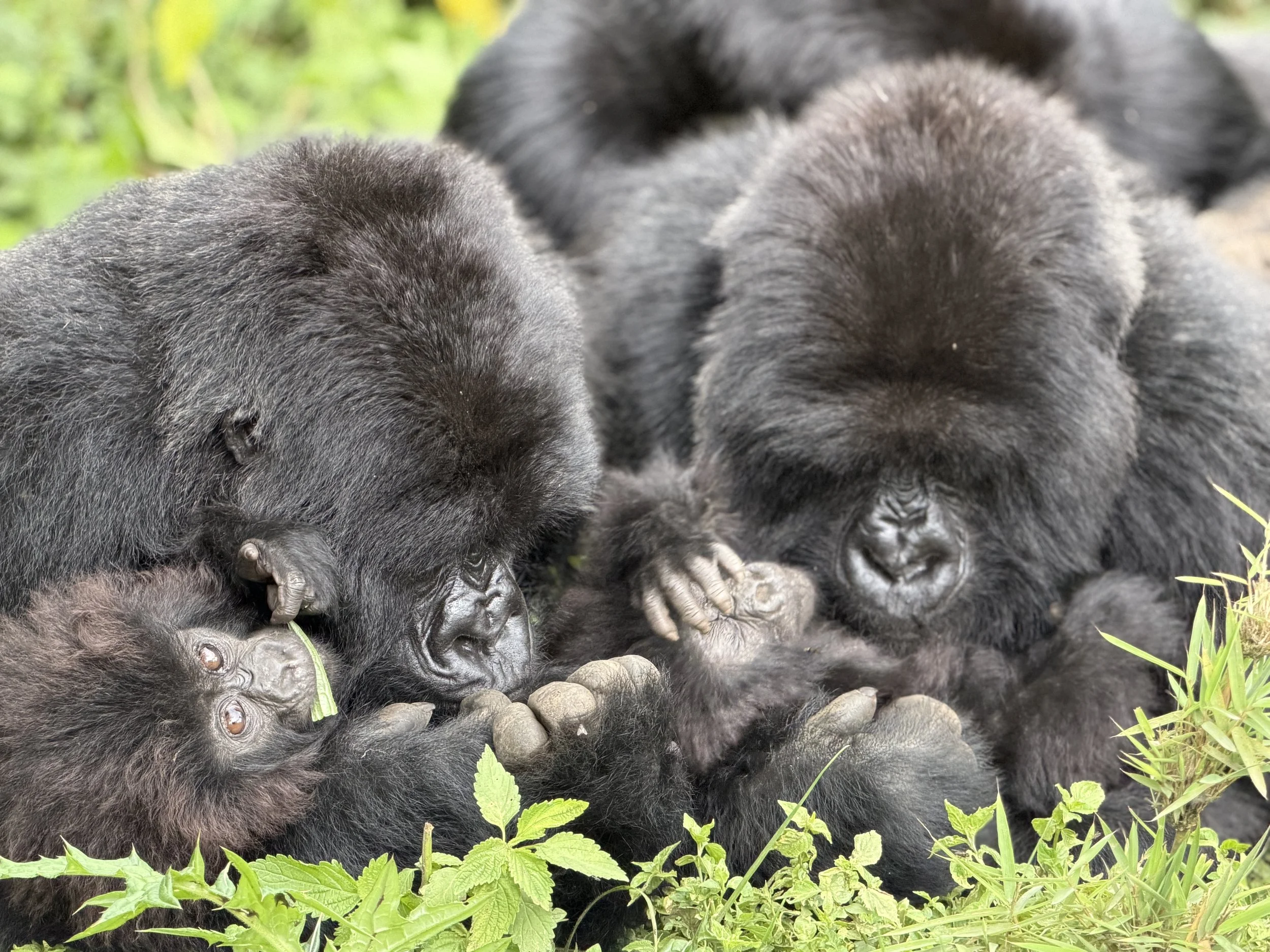
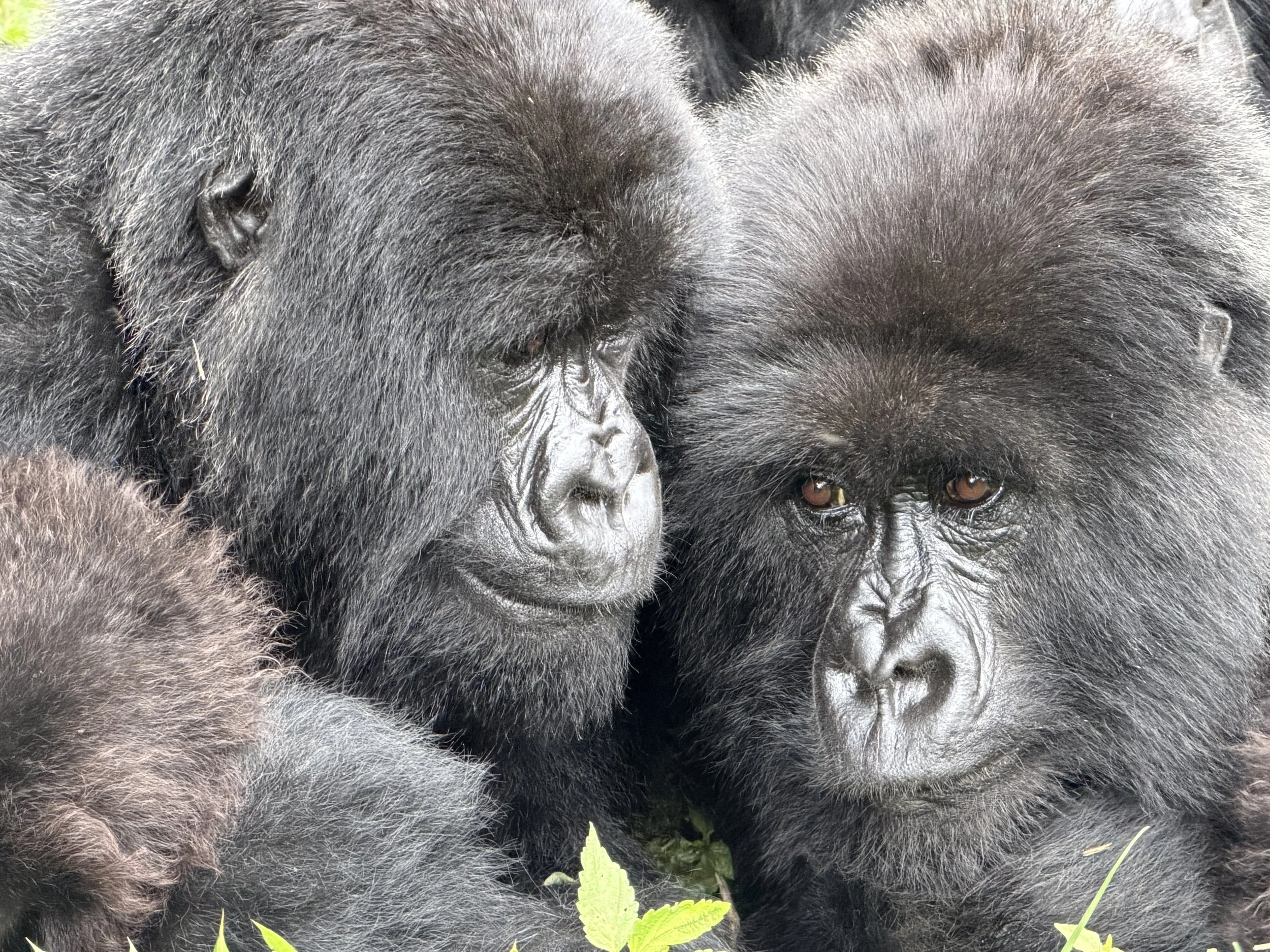
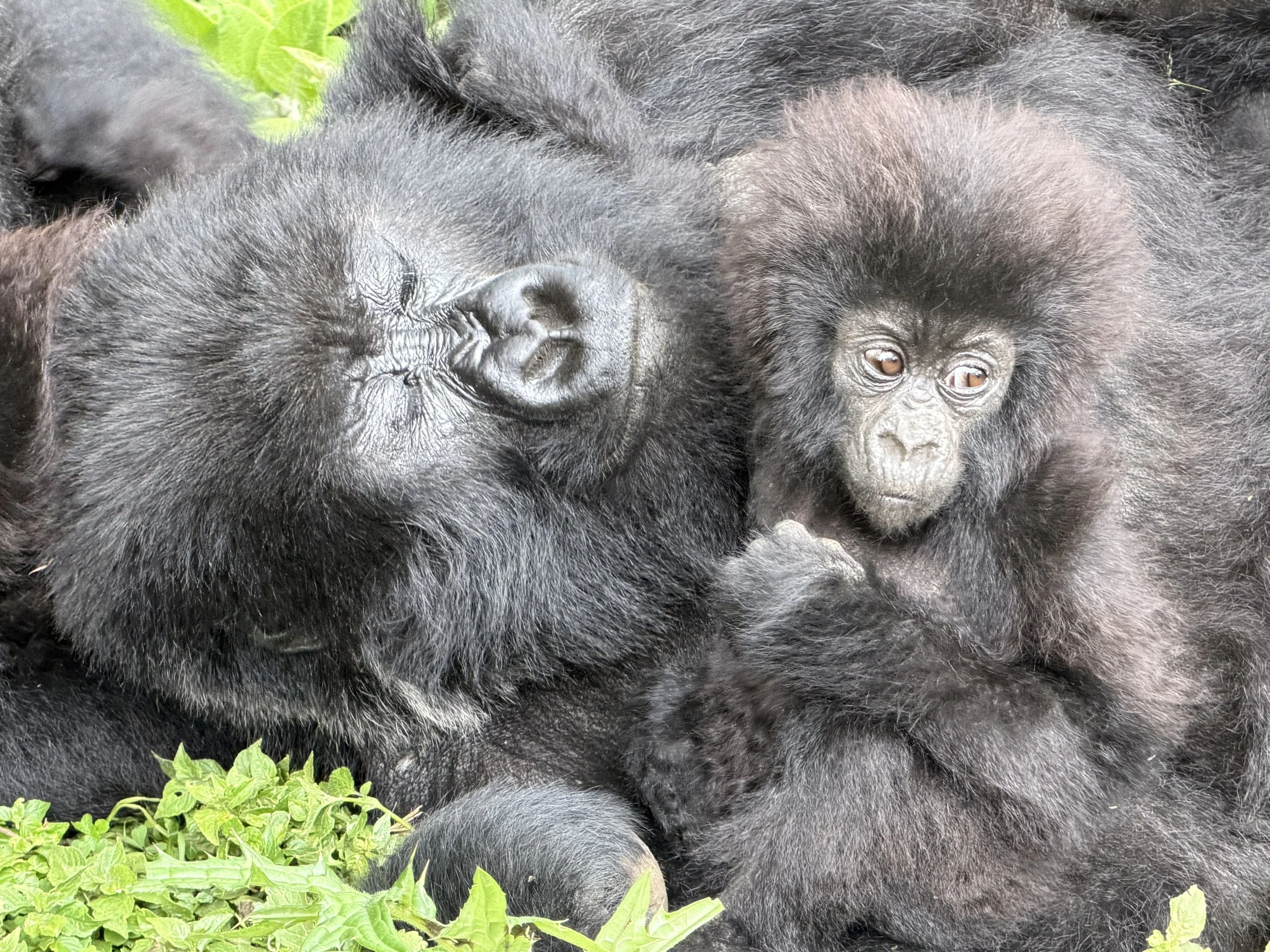
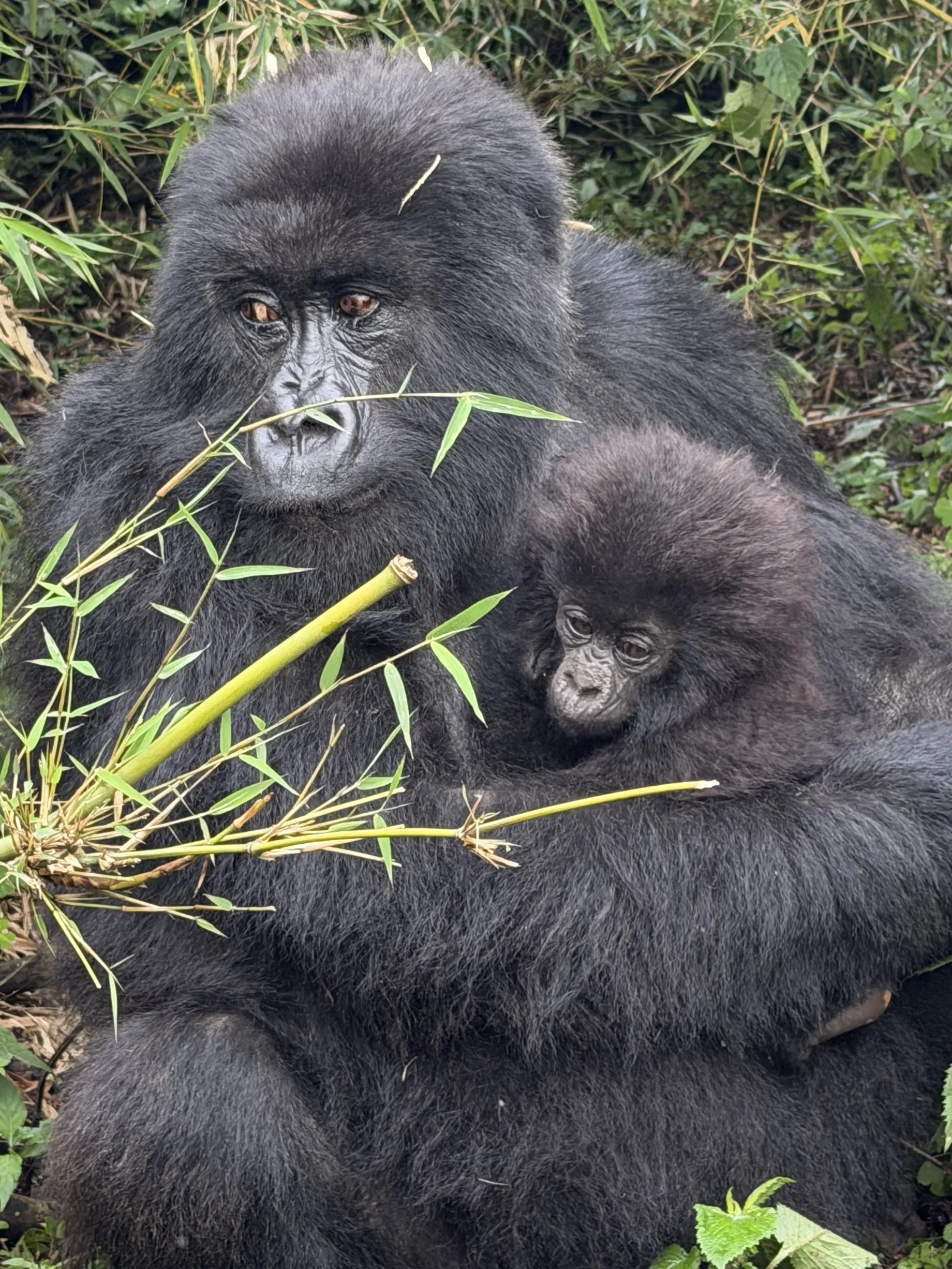
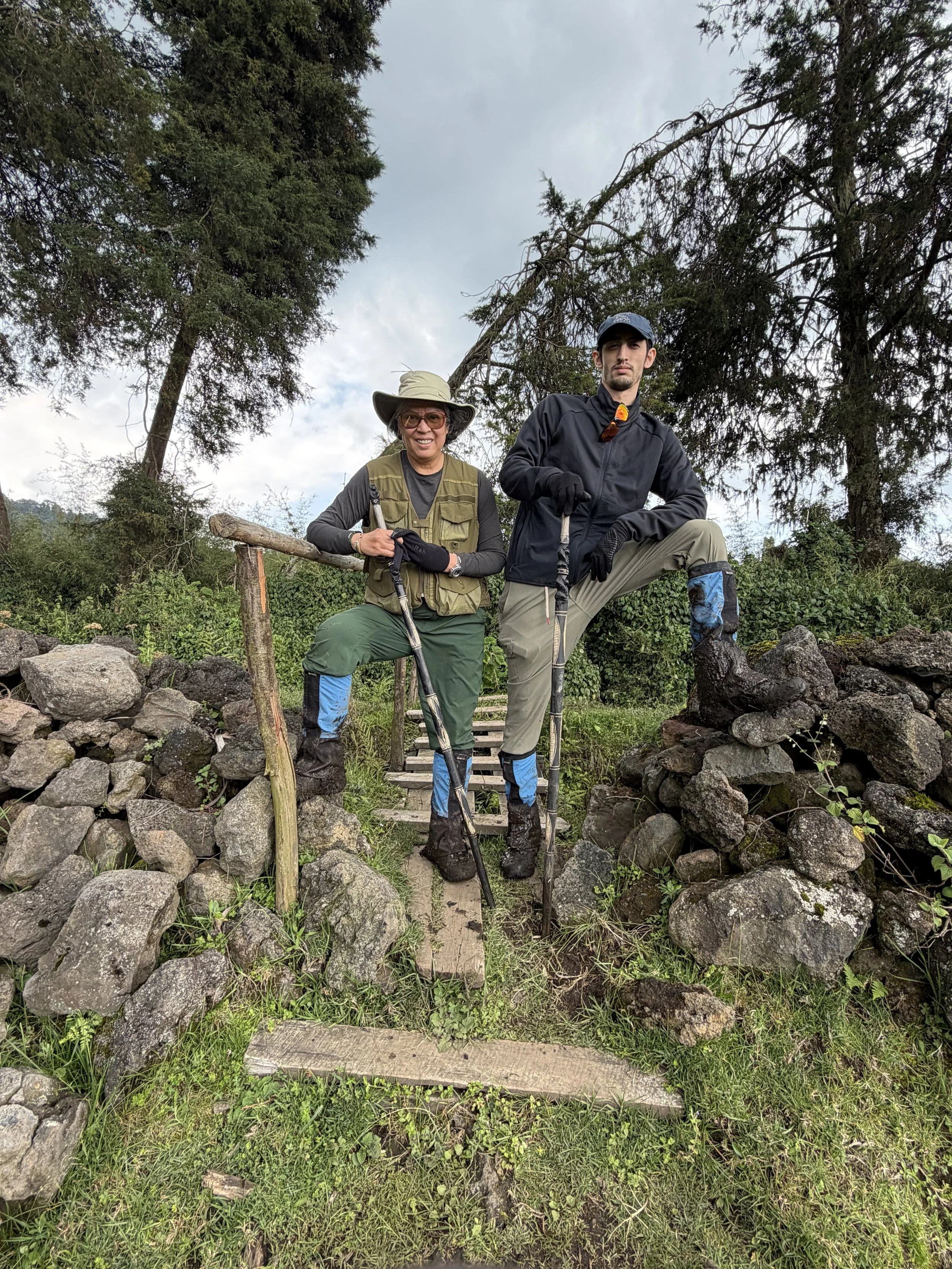
After navigating muddy slopes and dense bamboo forest, we found the Izuba family—one silverback, seven females, and four young gorillas.
For a moment the forest goes completely quiet. The gorillas move slowly through the undergrowth, pulling leaves from branches with an ease that feels almost meditative. You hear the soft tearing of stems, the rustle of bamboo, the low rumble of the silverback communicating with his family.
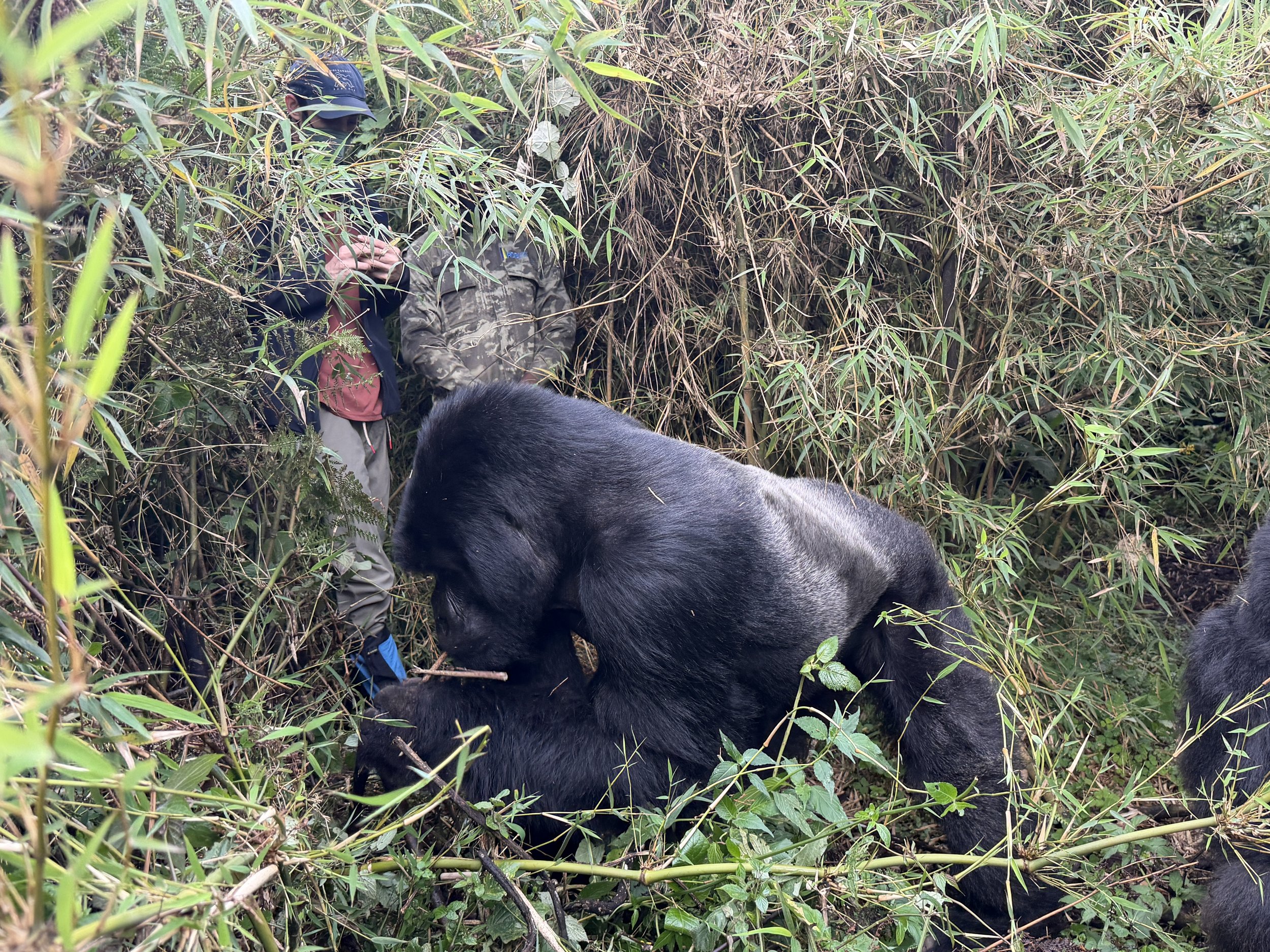
Then, unexpectedly, the silverback begins walking toward us.
Our ranger calmly signals for Abe to stay still. The great animal moves past him with quiet authority, brushing against Abe’s leg as he proceeds to forage bamboo right in front of him.
No aggression. No drama. Just the effortless confidence of a creature completely at home in his world.
In that moment the distance between human and animal feels astonishingly small.
The Legacy of Dian Fossey
The forests of the Virunga Mountains are inseparable from the legacy of Dian Fossey, whose pioneering work in gorilla conservation began here in the 1960s and fundamentally changed the fate of mountain gorillas.
Today, the Dian Fossey Gorilla Fund continues that work through long-term research, veterinary care, anti-poaching patrols, and community partnerships that protect gorillas and their habitat across Rwanda and the greater Virunga region. The Fund has monitored several gorilla families across generations, including the legendary Pablo group, formed by the dominant silverback Pablo in 1993.
During our visit to the Ellen DeGeneres Campus of the Dian Fossey Gorilla Fund, just outside Volcanoes National Park, it became clear how essential this work is—not just for protecting gorillas, but for supporting the communities who share the landscape with them.
Their story will soon reach a wider audience with the release of A Gorilla Story, narrated by David Attenborough, premiering on Netflix on April 17, 2026.
Standing there, after spending an hour with a gorilla family that very morning, the connection between conservation, science, and tourism felt immediate and deeply meaningful.
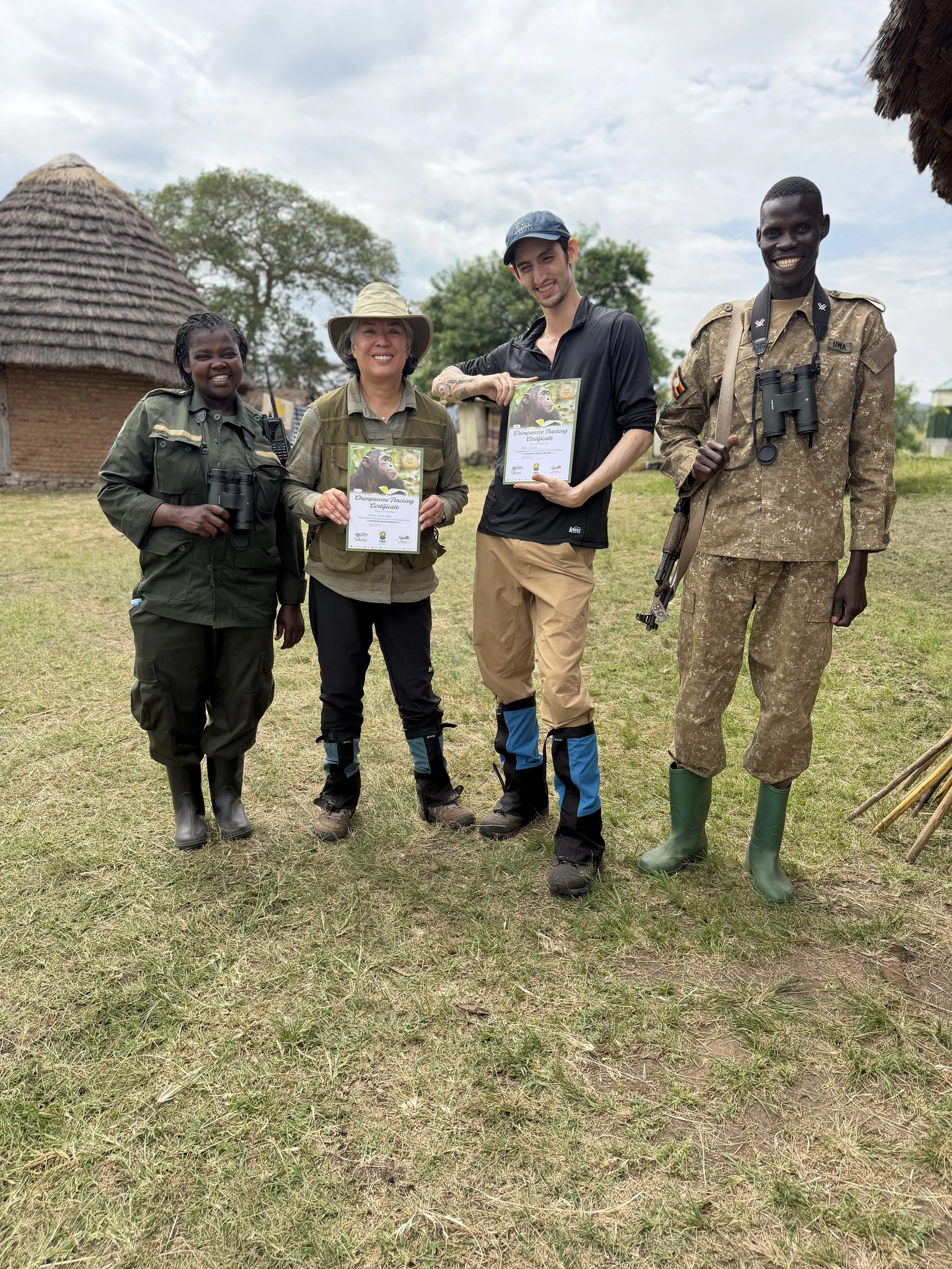
Three Treks
2020 — Bwindi, Uganda
Eight hours in the mud and humidity of Bwindi Impenetrable Forest. A mountain that defeated me and two porters who carried me down when my legs stopped working.
2026 — Bwindi, Uganda
A gentler trek, a silverback watching quietly from the forest, and the quiet satisfaction of redemption.
2026 — Volcanoes National Park, Rwanda
A private trek with my son Abe, through bamboo forest and rain, to meet the Izuba family—twelve gorillas moving peacefully through the mist.
Remembering Rwanda
Rwanda’s extraordinary recovery over the past three decades is impossible to understand without confronting the tragedy that shaped it.
A visit to the Kigali Genocide Memorial honors the lives lost during the 1994 genocide, when nearly one million Tutsis were killed in just 100 days. The memorial is both a place of remembrance and an educational center dedicated to recognizing the warning signs of hatred and extremism so that such atrocities are never repeated.
Walking through the exhibits is sobering, but also deeply moving. It offers a profound reminder of the resilience of the Rwandan people and the importance of remembrance in building a more hopeful future.
By the end of the journey, I had completed my third gorilla trek.
And this time, I walked down the mountain on my own.
The real journey was never about the mountain.
It was about returning—to the wild places that humble us, and the people we love enough to bring along for the climb.
A Final Thought
Encounters like these are why gorilla trekking remains one of the most extraordinary wildlife experiences on earth.
If Uganda and Rwanda are calling to you the way they once called to me, I would be delighted to help design a journey that allows you to experience these remarkable landscapes responsibly and meaningfully.
Because some journeys change you.
And some places call you back.